Fall Lawn Renovation in New Jersey: What to Finish Before Winter
The most useful fall projects do more than improve appearances. They help grass establish roots, correct the conditions behind recurring trouble spots, and prepare the property for winter.
Key Takeaways
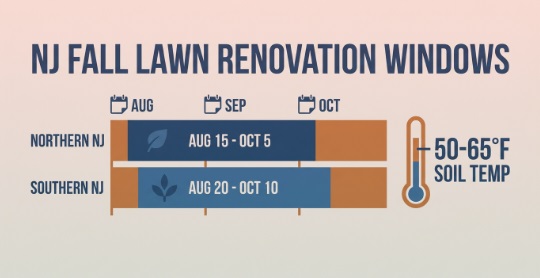
- Fall lawn renovation generally works best from August 15 through October 5 in northern New Jersey and August 20 through October 10 around Trenton and farther south. Earlier planting within those windows gives seedlings more time to establish.
- First-frost timing varies by location and weather. Plan around conditions in your area rather than treating a statewide average as a firm deadline.
- New Jersey’s winter fertilizer restrictions begin in mid-November for homeowners and December for professional applicators. Applications containing nitrogen or phosphorus cannot resume until March 1.
- Checking the yard after rain can help reveal low spots, erosion, and water collecting near the house.
- Soil testing and an evaluation of the property’s drainage can help separate the work your lawn needs from treatments that may not address the problem.
Summer can leave a New Jersey lawn looking worn out. Bare patches, hard soil, and areas that never quite recovered from the heat become more noticeable as the weather cools. Fall offers a chance to address those problems—but seeding conditions and fertilizer deadlines put limits on how long you can wait.
Shorter days and cooler evenings signal a change in the lawn’s growing season. For cool-season grasses, late summer and early fall are an important opportunity to recover and establish new growth. Rutgers identifies this period as the preferred time for lawn renovation in New Jersey.
The sections below cover the work worth prioritizing, including seeding, aeration, drainage repairs, fertilizer planning, and fall planting.
Plan Before Frost Arrives
New Jersey properties do not all experience their first frost at the same time. A sheltered yard near the coast can have different conditions from an exposed property inland. That makes local forecasts more useful than a single date circled on the calendar.
It also helps to distinguish the first frosty morning from the arrival of frozen ground. Fall work does not share one universal cutoff. Seeding, soil preparation, drainage construction, and planting each depend on different conditions.
For lawn renovation, the goal is to give new grass time to establish—not simply to get seed down before frost appears. Waiting until the end of the season leaves less room for slow germination, dry weather, or other setbacks.
Choose Your Seeding Window
New Jersey lawns commonly contain cool-season grasses such as tall fescue, Kentucky bluegrass, and perennial ryegrass. These grasses grow well during cooler parts of the year, making late summer and early fall a good fit for renovation.
Northern and Southern Timing
Rutgers Cooperative Extension lists these primary lawn-establishment periods:
- Northern New Jersey, from Trenton north: August 15 through October 5.
- Southern New Jersey, from Trenton south: August 20 through October 10.
These are planning windows, not a promise that the final day will deliver the same results as the first. Rutgers notes that the earlier dates are preferable. As the season advances, seedlings have less time to develop before winter slows growth.
If you have missed the recommended window, avoid assuming that spreading more seed will make up for lost growing time. The next step should account for the grass variety, current conditions, and the condition of the lawn.
Why Fall Seeding Helps
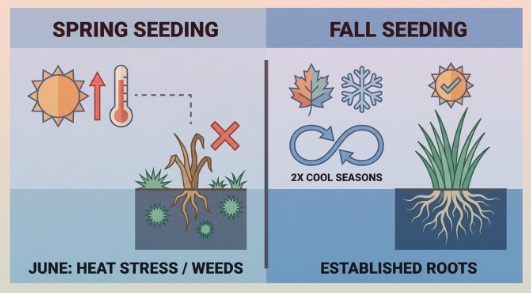
Spring is another opportunity to establish grass, but Rutgers ranks it behind late summer and early fall for renovation.
One advantage of fall seeding is the growing time that follows. Seedlings can develop through fall and then continue growing during the next spring before encountering summer heat. Those two cool growing periods support root development and improve their ability to handle summer stress.
Watering remains part of the job. Cooler weather does not eliminate the need to keep newly seeded areas moist during germination and establishment. Rutgers recommends light, frequent watering when needed to help new lawn grasses get started.
Repair Thin and Wet Areas
Aerate Before Overseeding
When a lawn looks thin, adding seed may be only part of the solution. Compacted soil or a heavy thatch layer can interfere with establishment, so the surface needs attention before new grass can grow successfully.
Core aeration removes small plugs of soil. Rutgers includes core aeration among its lawn-renovation methods, alongside other preparation steps selected according to the lawn’s condition.
Following aeration with overseeding can help put new grass into areas that have lost density. The important detail is seed-to-soil contact. Seed left sitting on top of thatch is less likely to establish well than seed placed into prepared soil.
Choose a seed mixture suited to the property’s use and expected maintenance level. A lawn renovation should address the conditions that caused thinning rather than simply cover the same area with another round of seed.
Inspect After Fall Rain
A walk around the yard after a substantial rain can be more revealing than an inspection on a dry afternoon. Look for where water gathers, the route it takes across the property, and whether it drains away from the house.
Signs worth investigating include:
- Puddles that remain after surrounding areas have drained.
- Soft, muddy patches that repeatedly develop in the same locations.
- Soil or mulch washing out of planting beds.
- Runoff crossing patios, paths, or the driveway.
- Water collecting beside the foundation.
A bare patch in a low area may be more than a lawn-care problem. Repeatedly reseeding it without examining the water movement can leave the underlying issue unresolved.
Match Repairs to the Cause
Drainage work should start with the source of the water and the shape of the property. A depression in the lawn requires a different approach from a slope that directs runoff toward a building.
Rutgers recommends establishing a grade that slopes away from buildings and correcting naturally wet areas with an appropriate subsurface drainage system where needed.
Depending on the property, a solution may involve grading adjustments or a designed drainage system. Sage Landscape Contractors & Tree Experts offers property-specific drainage work, including slope corrections, French drains, sump pumps, and foundation systems.
The objective is not merely to move water out of one troublesome patch. It is to give that water a suitable route without creating another problem elsewhere.
Schedule Fertilizer and Planting
Respect the Fertilizer Cutoff
New Jersey’s fertilizer rules belong on the fall maintenance calendar. Homeowners face a mid-November cutoff for applications containing nitrogen or phosphorus, while professional applicators must complete their late-fall service cycle by December 1. Those applications cannot resume until March 1.
Do not leave fertilizer planning until the last available day. The lawn’s needs, product directions, and suitable application conditions should guide the schedule—not just the legal deadline.
A soil test can help determine the appropriate fertilizer grade and identify whether amendments are needed. Rutgers recommends selecting fertilizer based on soil-test results rather than using the same product on every lawn.
That approach makes fall feeding a targeted part of renovation rather than an automatic extra treatment.
Consider Fall Tree Planting
Fall planting can also be part of a broader property improvement plan, but it should not be treated as a last-minute addition to lawn work. Tree and shrub selection needs to account for the planting location, available space, soil, and drainage.
For example, an area that stays wet after rain deserves attention before a new planting goes into the ground. Choosing a plant and then trying to change the site to suit it can complicate the project.
Sage’s landscape planting services emphasize selecting material for the property’s soil, sun exposure, and design goals. That site-first approach is useful when coordinating new trees or shrubs with grading and lawn renovation.
Prepare for a Better Spring
Fall lawn work is most effective when each task addresses a specific problem. Seed helps rebuild thin areas. Soil preparation supports establishment. Drainage repairs tackle persistent wet spots. Fertilizer decisions should reflect the lawn’s needs and New Jersey’s application restrictions.
You do not have to complete every possible project at once. Start with the issues most likely to undermine the rest of the work. If water repeatedly pools in a bare area, investigate drainage before reseeding. If the soil needs correction, use test results to guide the plan.
For help coordinating fall lawn care, grading, drainage improvements, or landscape planting, Sage Landscape Contractors & Tree Experts offers services that address both the lawn and the surrounding property.