Retaining Wall Ideas for a Sloped Backyard: Practical Solutions With Lasting Style
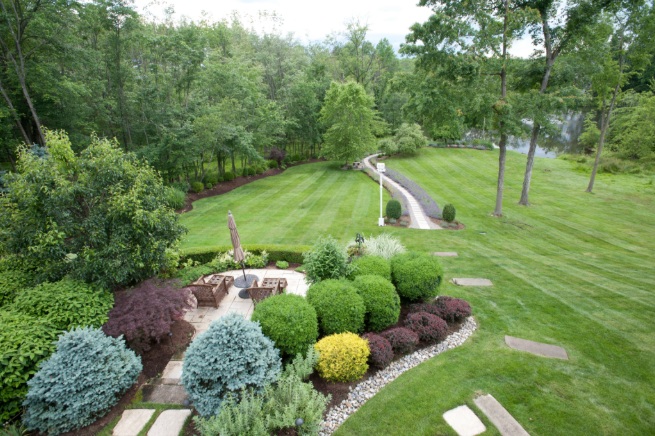
A sloped backyard does not have to remain difficult, unusable ground. With the right retaining-wall design, an awkward grade can become a series of functional garden areas, a level patio, built-in seating, or an attractive focal point that gives the entire landscape more character.
Key Takeaways
- Retaining walls stabilize sloped landscapes by holding soil in place and reducing erosion.
- They can create level areas for patios, gardens, play spaces, walkways, and outdoor seating.
- Popular material options include natural stone, manufactured stone veneer, concrete landscape block, brick, timber, gabion baskets, and weathering steel.
- Tiered walls, curved designs, raised beds, and seat walls can make the structure feel like an intentional part of the landscape rather than a purely practical addition.
- Project pricing varies widely based on wall height, site access, drainage requirements, material selection, engineering, and installation complexity.
- Proper grading and drainage behind the wall are essential to long-term performance.
Whether your goal is to control erosion, improve drainage, expand usable outdoor space, or simply make the yard feel more finished, a retaining wall can deliver both structural support and visual appeal.
A sloped backyard does not have to remain difficult, unusable ground. With the right retaining-wall design, an awkward grade can become a series of functional garden areas, a level patio, built-in seating, or an attractive focal point that gives the entire landscape more character.
Whether your goal is to control erosion, improve drainage, expand usable outdoor space, or simply make the yard feel more finished, a retaining wall can deliver both structural support and visual appeal.
Why Retaining Walls Work So Well on Sloped Properties
Backyards with a significant grade can be frustrating to maintain. Heavy rain may carry away topsoil, mulch can wash out of planting beds, and steep terrain limits where homeowners can place a patio set, grill, swing set, or garden.
A retaining wall holds back soil at different elevations, allowing the landscape to be reshaped into flatter, more useful sections. Instead of treating a slope as a limitation, homeowners can use it to create layers, define spaces, and add depth to the property.
A properly designed wall may help:
- Reduce soil erosion caused by stormwater runoff.
- Prevent mulch, gravel, and planting soil from washing downhill.
- Support level planting areas on uneven terrain.
- Create a more stable setting for patios, paths, or seating areas.
- Improve the visual transition between different sections of the yard.
- Protect nearby landscape features from soil movement.
On New Jersey properties, rainfall, freeze-thaw cycles, clay-heavy soil conditions, and shifting grades can all affect how a sloped yard performs over time. That is why retaining wall construction should be planned alongside drainage, grading, and landscape design—not treated as a cosmetic project alone.
For homeowners considering a project, professional retaining wall design and installation can help determine the right wall type, drainage approach, and layout for the property.
Retaining Wall Materials to Consider
The material you choose influences more than the final appearance. It also affects installation requirements, maintenance needs, wall strength, longevity, and overall cost.
Natural Stone
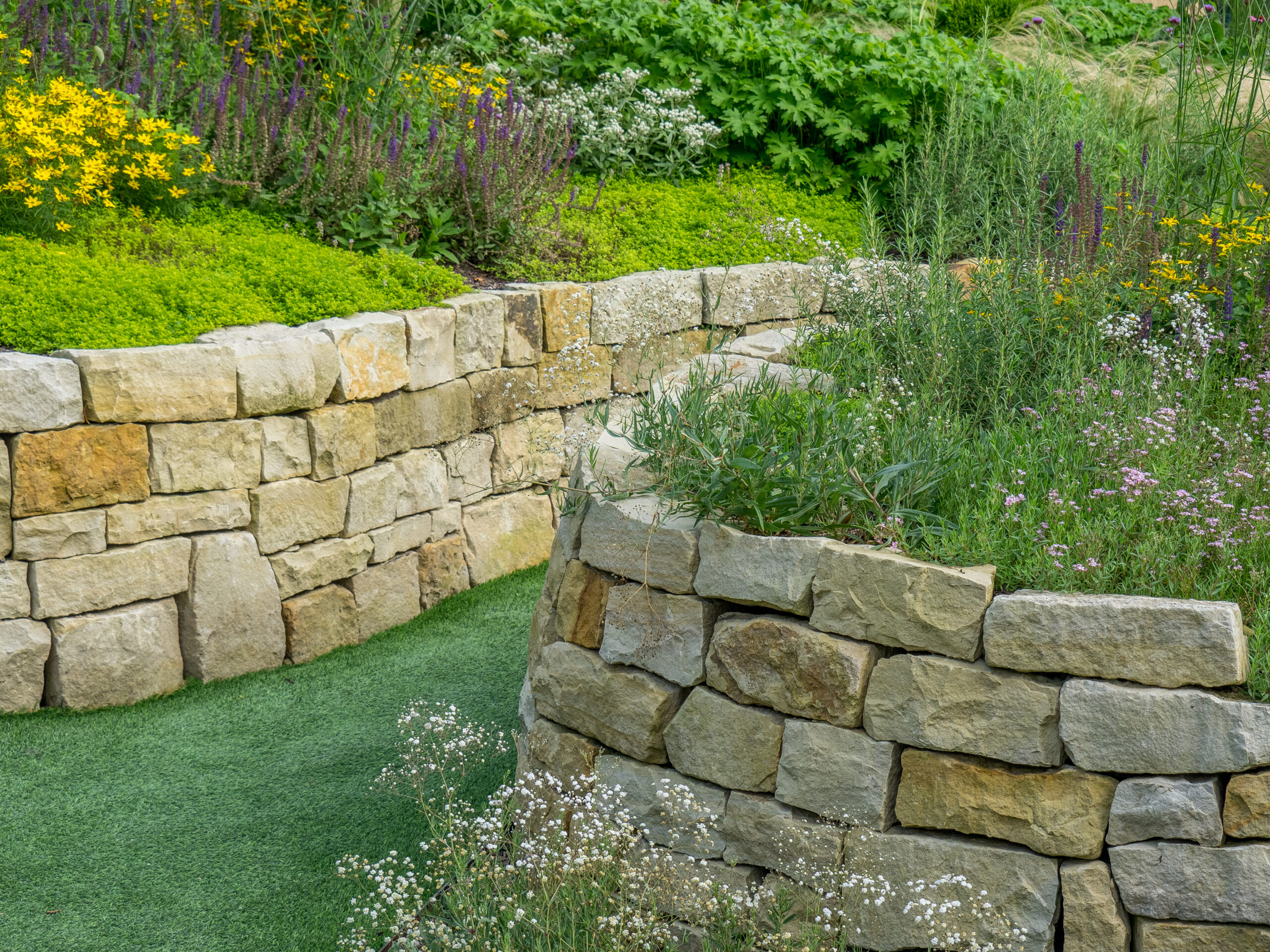
Natural stone is a strong choice for homeowners who want a timeless, high-end landscape feature. Fieldstone, bluestone, granite, limestone, and similar materials can blend beautifully with gardens, mature trees, and traditional homes.
Because every stone varies in shape, color, and texture, a natural-stone wall has a more organic appearance than manufactured alternatives. It can work especially well in wooded yards, cottage-style landscapes, and properties with existing stone steps, walkways, or patios.
Natural stone is often among the more expensive options, but its durability and distinctive appearance can make it a worthwhile long-term investment.
Stone Veneer
Stone veneer offers the look of natural stone at a lower material cost. Manufactured panels or facing materials can recreate the texture and color variation of real stone while providing a more consistent installation.
This option is often used when appearance is the priority but a full natural-stone wall is outside the project budget. It can also coordinate well with stone accents on the home, outdoor kitchens, fireplaces, and patios.
Concrete Landscape Blocks
Interlocking concrete retaining-wall blocks are one of the most widely used choices for residential slopes. Many systems include rear lips, pins, or interlocking features that help each course lock into place.
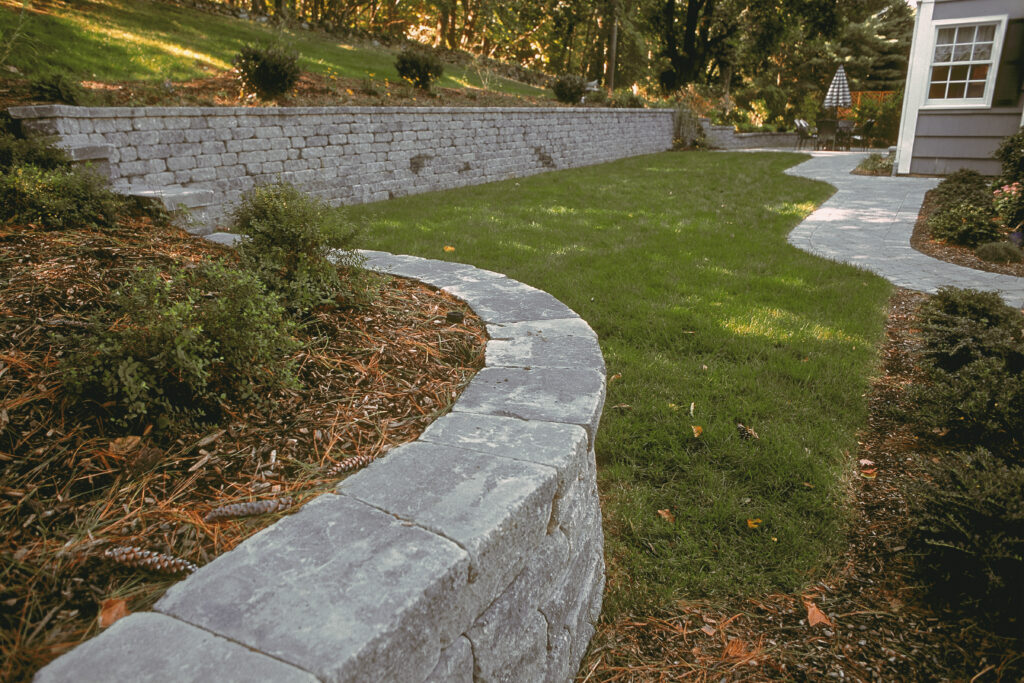
Landscape block walls can provide a clean, uniform appearance and are available in a range of colors, textures, and sizes. They are a practical fit for contemporary yards, suburban properties, raised beds, and moderate-height retaining walls.
Their modular design can also make them easier to repair or extend than some masonry alternatives.
Brick
Brick retaining walls create a classic, structured look that pairs well with colonial homes, traditional landscapes, and formal garden designs. Warm red, brown, or blended brick tones can make green plantings and flowering beds stand out.
Brick can be a strong stylistic choice when the house already includes brick siding, a brick chimney, or brick walkways. Matching the wall to existing architectural details helps the landscape feel more cohesive.
Timber
Pressure-treated timber walls remain a budget-conscious option for smaller landscape projects. Wood brings a natural, casual appearance that works well near vegetable gardens, rustic patios, and informal outdoor spaces.
However, timber has a shorter service life than stone, masonry, or concrete block. Moisture exposure, insects, and ground contact can eventually lead to deterioration, so material quality, drainage, and installation details matter greatly.
Timber may be best suited to shorter walls, garden borders, or projects where a relaxed, organic style is the main goal.
Gabion Walls
Gabion walls use wire baskets or cages filled with stone. Their rugged, textured look can complement naturalistic, modern, or woodland-inspired landscapes.
One advantage of gabions is drainage. Because water can pass through the stone-filled baskets, they can work well in areas where runoff management is a concern. They also create a substantial visual presence without requiring a smooth or highly formal finish.
Corten Steel
Corten steel, sometimes called weathering steel, is a bold choice for modern landscape designs. It develops a rust-toned protective patina over time, giving it a warm, industrial look without requiring regular painting.
Steel retaining walls can create crisp lines, clean edges, and a contemporary contrast against green lawns, ornamental grasses, gravel, or light-colored stone. It is particularly effective in minimalist or architectural landscape designs.
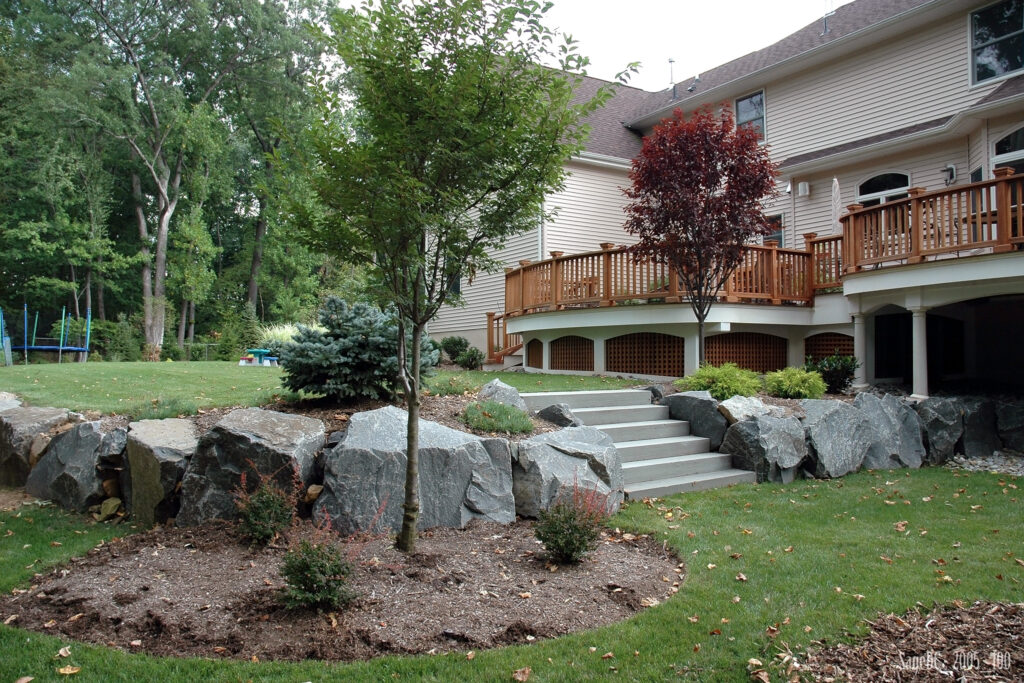
More Than Erosion Control
The main purpose of a retaining wall is to support soil, but the most successful projects often do much more. A wall can help organize the backyard into defined outdoor rooms and add amenities that would be difficult to build on a slope.
Raised Garden Beds
Retaining walls can form attractive raised planting beds for flowers, shrubs, herbs, vegetables, and small ornamental trees. Raised beds often give homeowners more control over soil quality, drainage, and planting layout.
They may also offer practical gardening benefits:
- Soil can drain more effectively than in compacted low-lying areas.
- Gardeners can add better-quality planting soil where existing soil is poor.
- Planting beds are easier to define and maintain.
- Raised edges can help keep mulch and soil in place.
- Taller beds can reduce the need to bend while planting or weeding.
- Elevating plants may make them less accessible to certain ground-level pests.
A tiered retaining-wall garden can turn a steep slope into a productive and colorful part of the yard rather than an area that requires constant maintenance.
Built-In Seating Walls
Short retaining walls can serve double duty as seating walls around patios, fire pits, outdoor kitchens, and entertaining areas. A wall approximately seating height can give guests an informal place to sit without filling the space with additional chairs.
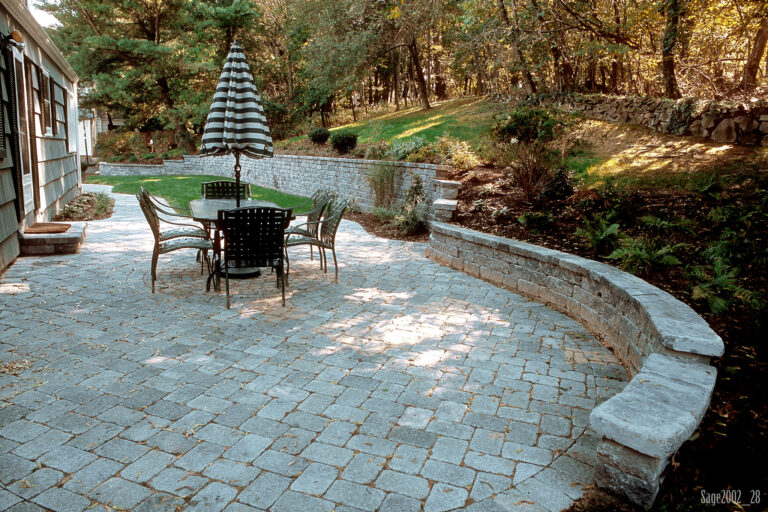
This approach works especially well around circular patios, fire features, and garden terraces. Add a capstone with a smooth, comfortable surface, and the retaining wall becomes a functional outdoor furnishing.
Better Drainage Management
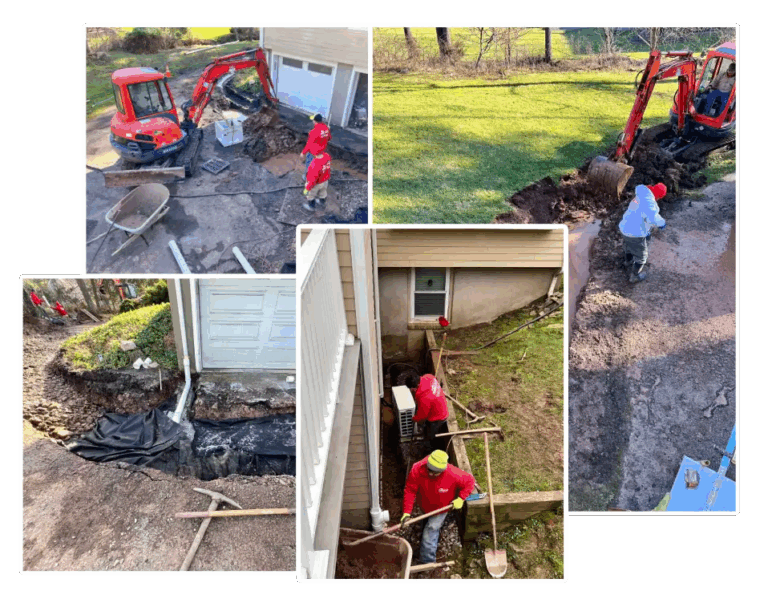
A retaining wall should not trap water behind it. Instead, it should direct water safely away from the structure through proper grading, gravel backfill, drainage pipe, filter fabric, and carefully planned outlets.
This is one of the most important parts of the project. When water builds up behind a wall, it creates hydrostatic pressure. Over time, that pressure can cause bowing, cracking, shifting, or complete wall failure.
A professionally designed wall often includes:
- Compacted base material beneath the wall.
- Gravel backfill behind the structure.
- Perforated drainage pipe where appropriate.
- Filter fabric to help keep soil out of the drainage zone.
- Proper surface grading to move water away.
- Drainage outlets that release water safely.
Drainage planning is particularly important in sloped yards where stormwater naturally travels downhill and can concentrate behind retaining structures.
Design Ideas for Sloped Backyards
A retaining wall can become a defining landscape feature when the design responds to the natural shape of the property.
Create Tiered Levels
Tiered retaining walls divide a steep grade into several smaller, more manageable levels. Instead of one tall wall, the landscape uses a sequence of shorter walls with planting areas, paths, or patios between them.
Each tier can have a different purpose:
- A lower patio for dining and entertaining.
- A middle level for flowering shrubs or ornamental grasses.
- An upper terrace for a vegetable garden.
- A play area or open lawn space.
- A tucked-away bench or reading corner.
Tiering often makes a steep yard feel larger and more approachable because the slope is visually broken into separate usable spaces.
Use Curves Instead of Straight Lines
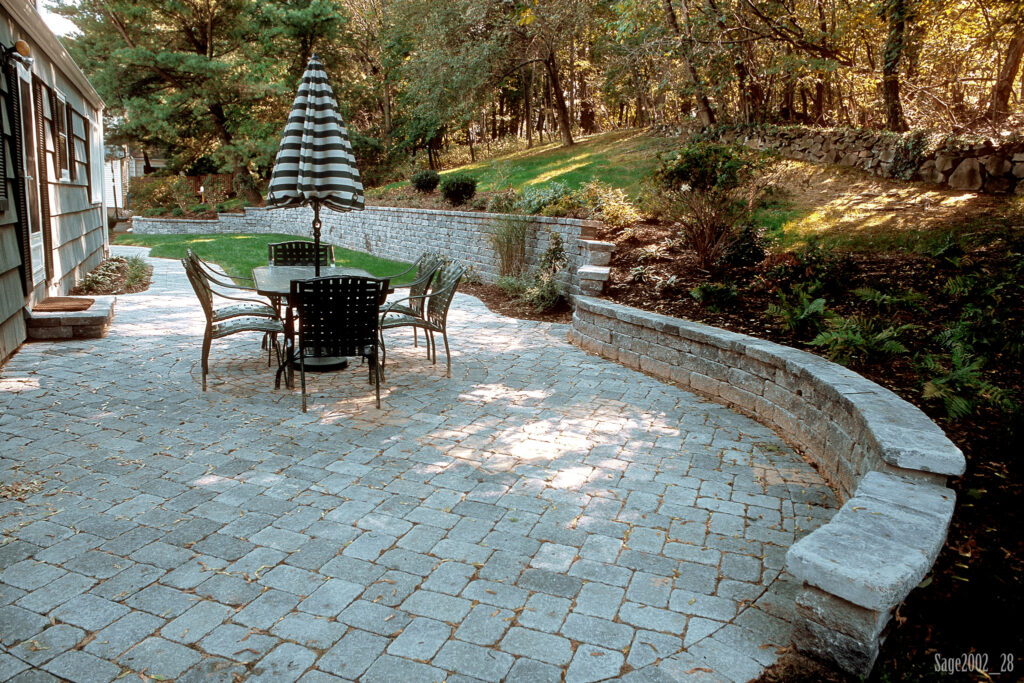
Straight retaining walls can look formal and architectural, but curved walls often feel more natural in a backyard. A gentle curve can follow the contour of the land, soften the transition between levels, and create a more relaxed landscape design.
Curved walls pair well with rounded patios, winding walkways, ornamental planting beds, and informal garden layouts. They can also make a smaller yard feel less boxy or rigid.
Add a Patio or Fire Pit
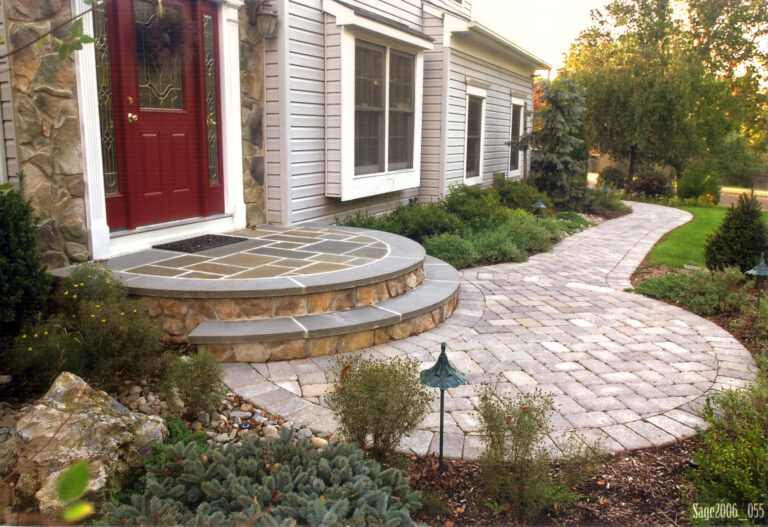
One of the best uses for a retaining wall is creating the level ground needed for a patio. Once a slope is stabilized and graded, the new terrace can become an outdoor dining space, lounge area, grilling station, or fire-pit gathering place.
A seating wall around a fire feature can make the patio more inviting while helping define the outdoor room. The result is a backyard that can be used throughout spring, summer, fall, and even during mild winter evenings.
Build Around a Water Feature
Sloped properties are naturally suited to water features. A retaining wall can help create elevation changes for a cascading waterfall, stream, pondless waterfall, or small fountain.
For example, an upper retaining-wall tier can feed a short waterfall into a lower planting area or pond. The wall provides the structure, while the water feature adds movement, sound, and a relaxing focal point.
Highlight Plantings and Focal Points
Retaining walls can frame landscape elements that might otherwise disappear into the slope. Consider using them to showcase:
- A flowering ornamental tree.
- A collection of native shrubs.
- A decorative boulder arrangement.
- Ornamental grasses.
- Perennial gardens.
- Landscape lighting.
- A sculpture, fountain, or specimen plant.
Lighting installed near walls, steps, and planting beds can make the landscape safer and more dramatic after dark.
What Does a Retaining Wall Cost?
Retaining-wall pricing depends heavily on the specific property and design. A short, straightforward block wall will cost far less than a tall, engineered, multi-tier stone wall with drainage, stairs, lighting, excavation, and planting work.
Many residential retaining-wall projects fall in the range of roughly $3,500 to $9,400, though smaller garden walls may cost less and larger or more complex installations can exceed that range.
Important cost factors include:
| Cost factor | Why it matters |
|---|---|
| Wall height | Taller walls require more material, excavation, reinforcement, and engineering |
| Wall length | A longer wall increases labor, base preparation, drainage, and material needs |
| Material | Natural stone and specialty finishes generally cost more than basic landscape block or timber |
| Site access | Tight backyards, steep grades, and limited equipment access increase labor time |
| Drainage work | Gravel, pipe, fabric, grading, and drainage outlets are essential project components |
| Engineering and permits | Taller walls may require engineered plans and local approvals |
| Added features | Steps, lighting, caps, seating walls, patios, and plantings add to the total project scope |
Natural stone can cost substantially more per square foot than manufactured stone or concrete block, while veneer-style materials may provide a similar aesthetic at a lower price point. The best value is not always the lowest initial cost; a properly constructed wall with drainage and a suitable foundation is far more likely to perform well over time.
Turn the Slope Into an Asset
A retaining wall starts as a solution for soil erosion and uneven ground, but it can quickly become one of the most useful and attractive features in the landscape. It can create room for a patio, shape a raised garden, define a fire-pit area, support healthier planting beds, and make a difficult backyard easier to enjoy.
The strongest results come from pairing the right material with the right design. Natural stone may suit a traditional garden, interlocking block may fit a clean and practical family yard, and tiered walls may be the best answer for a major grade change.
For homeowners planning a project, exploring retaining wall ideas based on the property’s drainage needs, slope, architecture, and intended use is the best way to turn an underused backyard into a finished outdoor living space.