Sod vs Hydroseeding in NJ: What Works Best for Your Yard?
Key Takeaways
- Hydroseeding costs significantly less upfront: roughly $0.12, $0.20 per sq ft installed vs. $0.40, $0.70 per sq ft for sod (based on typical NJ residential conditions; published averages vary by site prep, turf type, and local labor)
- Sod delivers an instant-looking lawn; hydroseeding takes 4, 6 weeks before you can even walk on it
- Late August through early October is New Jersey’s best planting window for both methods
- Central NJ’s clay-heavy soils slow rooting and germination for both options; proper site prep is non-negotiable
- A site-specific assessment from a local expert matters more than any generic recommendation you’ll read online
Picture this: construction is finally done, the contractors are gone, and you’re left staring at bare, compacted dirt where a lawn should be. Or maybe last winter was brutal and your NJ lawn never bounced back. Either way, you need a plan, and the two most common professional solutions are sod and hydroseeding. When weighing sod vs hydroseeding in NJ, the right choice depends on your budget, your timeline, the shape and grade of your yard, and the condition of your soil.
Both methods work. Neither is universally better. At Sage Landscaping New Jersey, we’ve been installing both options across Somerset, Union, and Morris Counties for years, and this question comes up on nearly every new lawn project we handle.
By the end of this article, you’ll have the real numbers, the honest timelines, and a clear framework for deciding which method fits your yard. No filler, no best-case marketing claims.
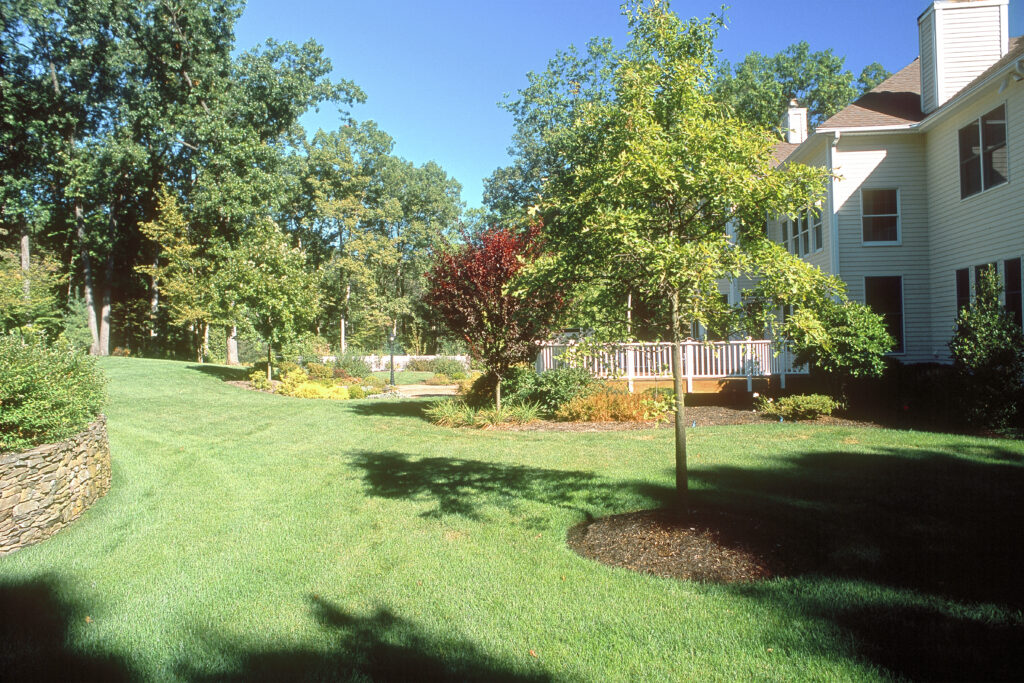
Sod vs hydroseeding in NJ: cost breakdown for both methods
Cost is usually the first filter homeowners apply, and the gap between hydroseeding and sod is large enough to drive the decision for most budgets. Before comparing anything else, it’s worth knowing what each method actually costs when installed by a professional crew in New Jersey. Keep in mind that published averages can vary significantly depending on turf type, site prep requirements, and local labor rates, the figures below reflect typical residential planning ranges for standard conditions.
Hydroseeding cost in New Jersey
Installed hydroseeding in New Jersey typically runs $0.12, $0.20 per square foot for standard residential work. On a 5,000 sq ft lawn, that translates to roughly $600, $1,000 for the full job. Small projects often trigger contractor minimums, which can push your effective per-sq-ft rate higher if your lawn is under 2,000 sq ft.
That price generally includes the slurry application, seed, hydromulch, tackifier, and starter fertilizer mixed together and sprayed in one pass. Site prep, such as grading, debris removal, or soil amendment, is usually quoted separately, so get clarity on what’s included before you sign anything. Always ask your contractor to itemize inclusions and exclusions upfront.
Sod installation cost in New Jersey
Installed turf sod in New Jersey typically runs $0.40, $0.70 per square foot, putting a 5,000 sq ft lawn between $2,000 and $3,500 installed. Steep slopes, irregular shapes, and significant site prep push costs toward the higher end of that range. Some published 2026 sources cite broader averages for sod installation cost that run considerably higher, particularly for premium turf varieties or sites requiring substantial grading, so treat these figures as a planning baseline rather than a guaranteed quote.
That price premium reflects what you’re actually buying: turf that was professionally grown, harvested, and delivered ready to lay. You’re not just paying for installation; you’re paying for a lawn that’s already been grown once. For homeowners on a tight budget, that difference is often the deciding factor.
From bare dirt to usable lawn: how the timelines actually compare
If you need to use your yard by a specific date, a party, a fence installation, kids back from school, timeline becomes the most important variable. The two methods are not even close when it comes to how fast you get a functional lawn.
Hydroseeding timeline in New Jersey
After the hydroseeding crew leaves, you’ll see germination in about 1, 2 weeks under good conditions. The first mow typically happens around week four. Light foot traffic is generally safe at around six weeks, but full establishment takes one to two growing seasons. That last part surprises a lot of homeowners who expect a lawn that looks mowable to also be durable, those are two very different milestones.
Rushing foot traffic onto a hydroseeded lawn before it’s truly rooted is one of the most common reasons we’re called back to fix bare patches. Patience in the first season pays off with a lawn that performs well for years.
Sod timeline: faster, but not instant
Sod arrives already grown, so the surface looks finished on day one. That said, the root system still needs 2, 3 weeks to knit into the soil before the lawn can handle regular use. Heavy activity too soon causes seams to lift and roots to lose contact with the soil beneath.
Even with that caveat, sod is clearly the faster path to a functional lawn. If your yard needs to be usable before a specific date, sod is your answer. No hydroseeding timeline can compete with the speed of laying pre-grown turf.
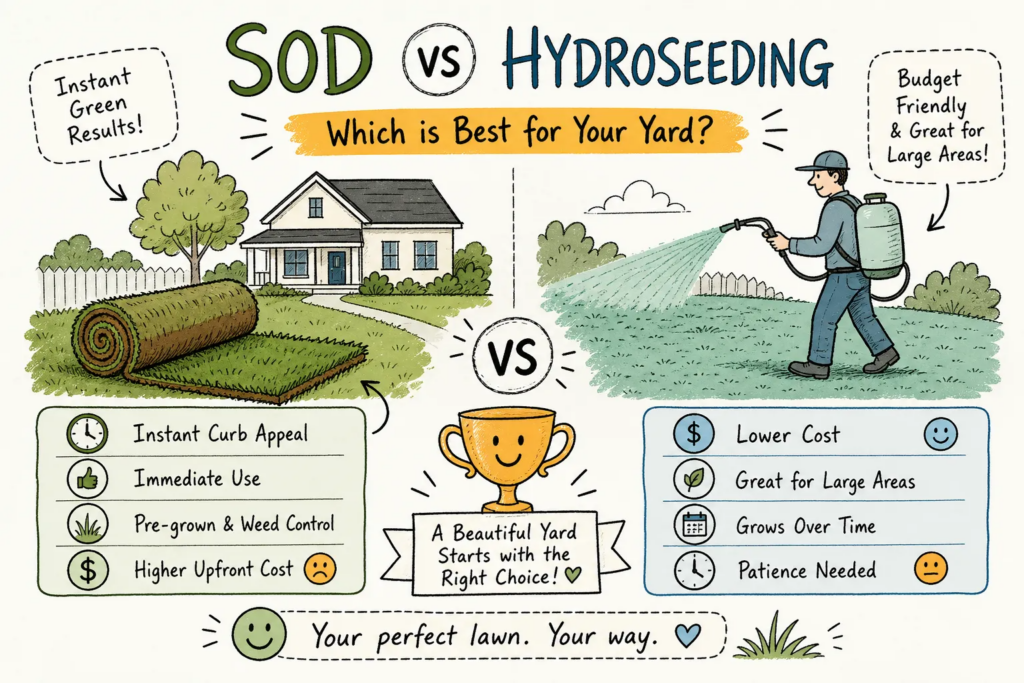
How New Jersey’s climate and soil shape which method performs
New Jersey isn’t a generic lawn climate. Clay-heavy soils, cold winters, and a narrow fall planting window create real constraints that affect both methods in ways a national guide won’t mention. This is where local knowledge makes an actual difference.
Clay soils and what they do to lawn establishment
Central NJ’s native soils are predominantly clay-heavy. Clay compacts easily, drains poorly, and can crust at the surface, all of which hurt both methods. Sod laid directly over unloosened clay often fails to knit because roots can’t penetrate the dense soil below. Hydroseeded seed can germinate unevenly if the clay surface seals over and restricts air and moisture movement.
The fix is the same for both methods: proper site prep before anything gets installed. That means loosening the top 4, 6 inches, incorporating compost or screened topsoil, and addressing any drainage issues before the first seed or roll of turf touches the ground. Skipping this step is the most expensive mistake we see on new lawn projects.
NJ’s best planting windows and why fall beats spring
Rutgers Cooperative Extension identifies late August through early October as the gold standard for cool-season lawn seeding in New Jersey. Warm soil combined with cooling air temperatures creates the ideal combination for germination and early root development. Lawns established in this window harden off before winter and come back stronger in spring.
For the seed mix itself, the most reliable blend for New Jersey conditions is roughly 80% Turf-Type Tall Fescue, 10% Kentucky Bluegrass, and 10% Perennial Ryegrass. The ryegrass establishes quickly, the fescue provides the drought and heat tolerance NJ summers demand, and the bluegrass handles cold winters and spring recovery. Sod can be installed in spring or fall with adequate irrigation, but hydroseeding is more forgiving when timed to the fall window.
Slope, yard size, and erosion: which method fits your site conditions
Not every yard is a flat suburban rectangle. Grade, soil disturbance history, and exposure to runoff all affect which installation method holds up better over time.
Hydroseeding on slopes and disturbed ground
The hydromulch slurry conforms to uneven or graded terrain in a way that dry seeding simply can’t match. It reduces seed washout and protects the soil surface during germination, which is why hydroseeding is frequently specified for post-construction slope stabilization and disturbed sites. The mulch layer slows runoff and holds moisture without requiring an instant mature turf layer.
On larger post-construction slopes or irregular areas where sod would require hundreds of seamed rolls, hydroseeding is generally the more cost-effective and practical choice. The coverage is more uniform, and the slurry adapts to the terrain rather than needing to be fitted like puzzle pieces.
When sod is the better call for slope and erosion work
Sod provides immediate surface cover, which matters on high-visibility slopes or any area exposed to heavy rain before hydroseeded grass can establish. If your slope adjoins a pool or patio, consider our Pool Landscaping Ideas for NJ Homeowners to coordinate erosion control with finished landscape details. For smaller slopes with a tight timeline, sod delivers faster protection and a finished appearance from day one. On steep grades, rolls need to sit flush and anchor correctly, local erosion-control standards often call for matting or additional stapling on pitches above 3:1, so check NJ guidance for the specific thresholds that apply to your site.
When budget and coverage area are the driving factors on a large post-construction site, hydroseeding with proper mulch and NJ-standard erosion control stabilization tends to be the stronger call. For smaller, high-visibility slopes where appearance matters before roots can establish, sod earns its price premium.
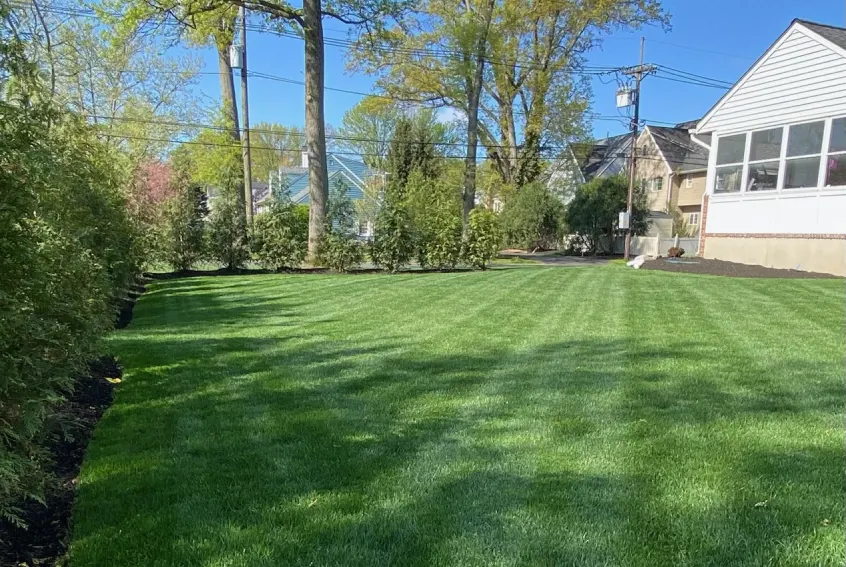
First-season maintenance: what each method actually demands from you
Installation is just the beginning. The first season determines whether your lawn investment holds or turns into an expensive repair job. Both methods require real commitment in the early weeks, but the demands look different. For detailed watering and feeding schedules, see our Lawn Care Archives for examples and guidance used on local projects.
Hydroseeded lawn care in the first 6 weeks
Hydroseeded lawns need 3, 4 light waterings per day for the first 4, 6 weeks. This is strongly recommended, letting the seedbed dry out even once during germination can create bare patches that require reseeding. After the lawn reaches mowing height, watering tapers to deeper, less frequent sessions as roots deepen into the soil.
Keep all foot traffic off the lawn until the grass is mowable, and watch for thin or patchy areas during the first month. Many contractors recommend a follow-up starter fertilizer application around weeks 6, 8 to help the lawn thicken before the first winter, though exact timing varies by soil conditions and whatever product was mixed into the initial slurry. Hydroseeding is lower cost upfront, but it demands more attention during that critical first growing period.
Sod maintenance after installation
New sod needs heavy watering immediately after installation, typically daily for the first 1, 2 weeks. The goal is to keep both the sod and the soil beneath it consistently moist while roots anchor. After the rooting period, watering tapers and the lawn transitions to a standard cool-season schedule much faster than hydroseeded turf.
The risk of bare patches is lower with sod than with hydroseeding, but poor soil contact, lifting edges, and inadequate irrigation in the first two weeks cause sod failure more often than homeowners expect. Once rooted, mowing starts sooner and the first-season care routine is comparatively manageable.
How to pick the right method: sod versus hydroseeding in New Jersey
Bringing this comparison together comes down to three practical questions: What’s your budget? When do you need the lawn to be usable? And what does your site actually look like on the ground?
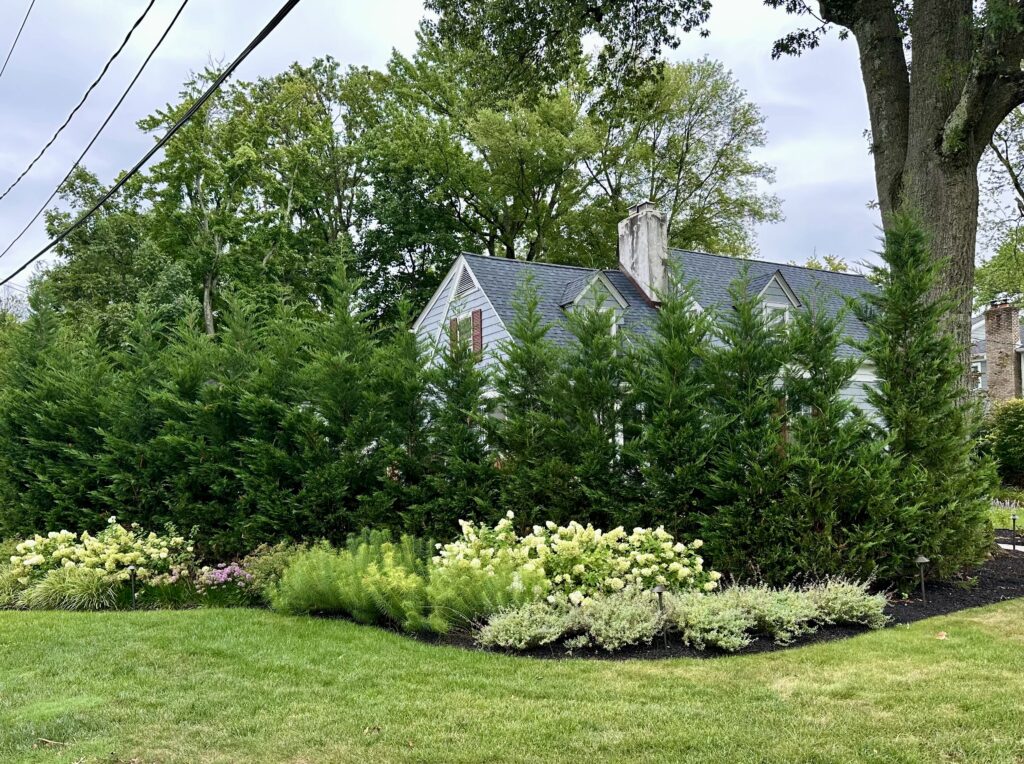
The three questions that usually settle the decision
If the budget is tight and the timeline is flexible, hydroseeding wins in most cases. When the yard needs to look finished fast, has visible erosion exposure before fall, or is a smaller area where the sod premium is manageable, sod is worth the cost. However, If the site has significant clay issues, drainage problems, or steep grades, the right method should follow a proper site assessment, not a coin flip based on what you read online.
The biggest mistakes we see happen when homeowners choose based on price alone, skip proper site prep, or hydroseed in June when the fall window would have given them a dramatically better result. The method matters less than the prep and timing behind it.
Getting a site-specific recommendation in Central NJ
At Sage Landscaping New Jersey we install both sod and hydroseeded lawns and can assess which approach makes sense for your yard’s specific soil type, grade, drainage situation, and project goals. With decades of hands-on experience across Somerset, Union, and Morris Counties, our team brings the kind of local knowledge that turns a lawn project into a clean, lasting result instead of a year-one repair job. Review examples of our past work in the Lawn Installation Archives and contact us at 1-908-668-5858 to request a project consultation and get a recommendation built around your actual yard.
The bottom line on sod vs hydroseeding in NJ
There’s no universal answer. The choice between sod and hydroseeding in New Jersey is a site-specific decision shaped by budget, schedule, soil, and slope. Both methods work well when properly matched to the conditions and followed up with the right first-season care. The method that fails is usually the one that is chosen without accounting for these factors.
The good news: with the right information and a reliable contractor, establishing a new NJ lawn is a manageable project. Get the timing right, prep the soil properly, and commit to the early watering schedule, and either method will deliver a lawn worth coming home to.
Frequently asked questions
What is cheaper, sod or hydroseeding in New Jersey?
Hydroseeding is significantly cheaper. Installed hydroseeding in NJ typically runs $0.12, $0.20 per square foot, while installed sod runs $0.40, $0.70 per square foot for typical residential work. On a 5,000 sq ft lawn, that’s roughly $600, $1,000 for hydroseeding vs. $2,000, $3,500 for sod. Note that published sod averages can run higher depending on turf variety and site conditions. The tradeoff is that sod gives you an instant surface and a lower risk of bare patches in the first season.
How long does hydroseeding take to grow in NJ?
In New Jersey, hydroseeded turf typically germinates in 1, 2 weeks, reaches mowing height around week four, and is generally safe for light foot traffic after about six weeks. Full establishment, meaning a durable lawn that handles regular use and a full winter, takes one to two growing seasons. Timing the installation for the late August to early October window significantly improves those outcomes.
Can you hydroseed in the spring in New Jersey?
Yes, spring hydroseeding is possible in NJ, but it’s not the preferred window. Cool-season grasses establish best when seeded in late summer to early fall, when soil is warm and air temperatures are cooling. Spring-seeded lawns have less time to develop deep roots before summer heat arrives, which increases the risk of summer stress, thin patches, and inconsistent establishment. Fall is the recommended window whenever the project schedule allows.
Which method works better on a sloped yard in NJ?
It depends on the slope severity and your timeline. Hydroseeding is generally better suited to larger or irregularly graded slopes because the mulch slurry conforms to the terrain and reduces seed washout during establishment. Sod provides instant surface cover, which matters on smaller, high-visibility slopes or areas exposed to heavy rain before hydroseeded grass can establish. On steep grades, erosion-control matting or additional anchoring is often required regardless of which method you use, consult local NJ erosion-control standards for specific slope thresholds.
What grass seed blend is best for hydroseeding in New Jersey?
The most reliable blend for NJ conditions combines approximately 80% Turf-Type Tall Fescue, 10% Kentucky Bluegrass, and 10% Perennial Ryegrass. The ryegrass establishes quickly and provides early cover, the fescue delivers drought and heat tolerance during NJ summers, and the bluegrass ensures cold hardiness and strong spring recovery. Rutgers Cooperative Extension recommends using endophyte-enhanced seed varieties when perennial ryegrass, fine fescue, or tall fescue is included in the blend.