Pool Landscaping Ideas for NJ Homeowners
Key Takeaways
- Work with a NJ design‑build firm that handles both pool and landscape under one coordinated plan to avoid costly rework and contractor finger‑pointing.
- Design the pool and landscape as one project so grading, drainage, lighting, and plantings work together instead of fighting each other.
- Choose materials for NJ freeze–thaw conditions: pavers and quality natural stone typically outperform basic concrete over several winters around a pool.
- Plan privacy and screening early using layered evergreens and natives so you block neighbor views without creating a dark, walled-in yard.
- Use climate-tested NJ plants like switchgrass, coneflower, inkberry holly, and mountain laurel to avoid messy, high-maintenance poolside beds.
- Budget in tiers: simple grading and plantings often start around a few thousand dollars, while full-scope pool landscapes with stone, lighting, and water features can exceed $25,000–$40,000+ (landscape surround only).
- Check local NJ codes for setbacks, fencing, impervious coverage, drainage, and retaining wall permits before finalizing your plan.
How to Make Your Pool A Relaxing Retreat
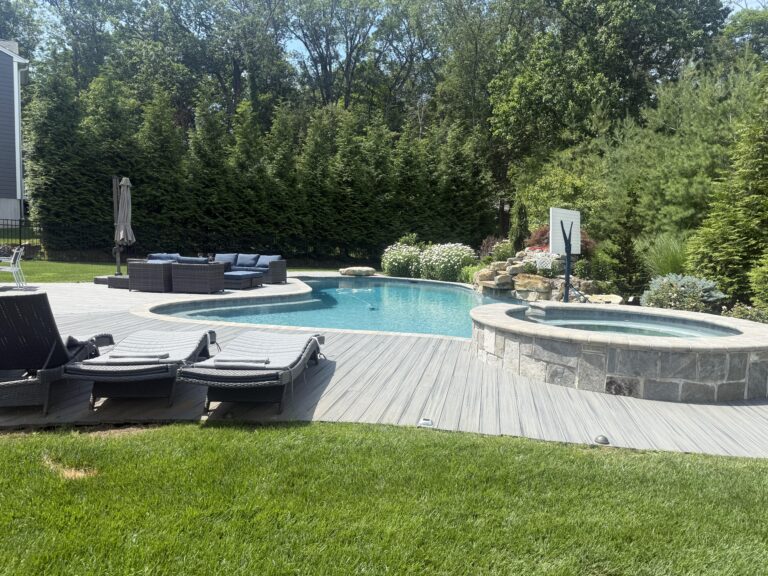
A pool sitting in the middle of a flat lawn is just a hole with water in it. A fully designed backyard pool retreat, on the other hand, stops you in your tracks the moment you walk outside. The difference between those two outcomes has nothing to do with the pool itself. It comes down to every decision made around the pool: the coping edge, the patio surface, the privacy screening, the lighting at dusk, and the planting beds that frame the whole composition.
For homeowners planning pool landscaping NJ projects, the surrounding decisions make the final difference. New Jersey yards face real winters, variable soils (including clay in many areas), tight suburban setbacks, and a permit process that scrutinizes every square foot of hardscape you add. The most seamless results happen when the pool construction and the surrounding landscape design are treated as one coordinated project from the start, not two separate jobs handed off to two separate contractors. That integrated approach is what separates a cohesive outdoor retreat from a series of mismatched contractor phases.
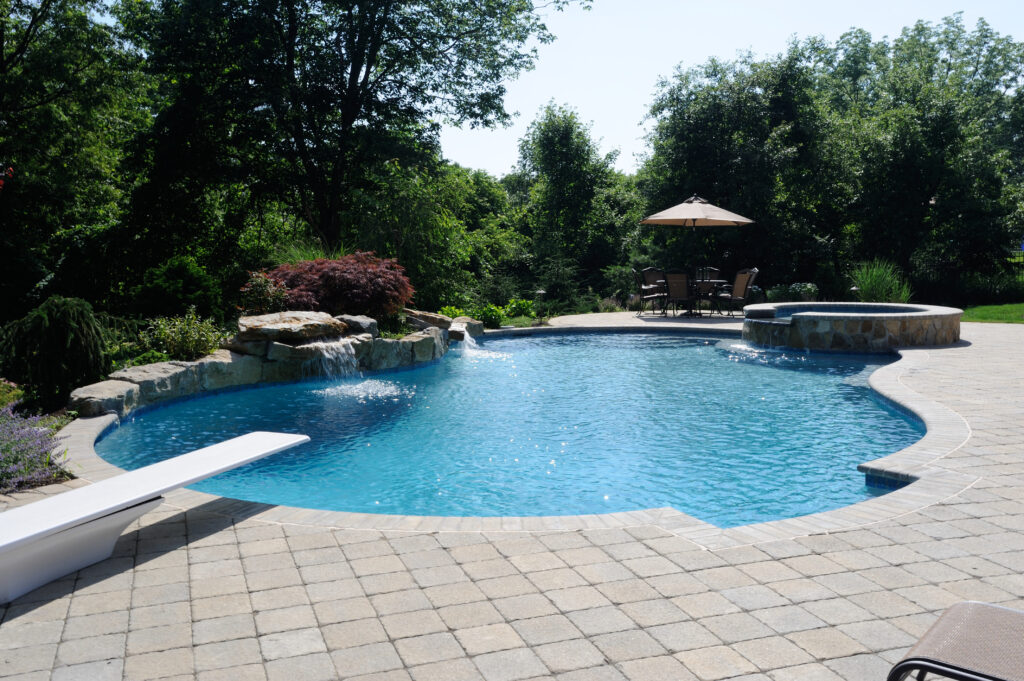
This guide covers what you need to make smart decisions across five areas: design styles, hardscape materials, plant selection, realistic NJ costs, and how to find the right contractor to pull it all together.
Pool Landscaping NJ: Design Styles That Create a Real Outdoor Retreat
The style you choose shapes every other decision in the project. New Jersey’s four-season climate, suburban lot sizes, and varied architecture all influence which poolscape approach fits a given property. The four directions below cover the range of what works well for backyard pool design in NJ, from naturalistic native plantings to hardscape-forward entertaining spaces.
Privacy Plantings and Natural Screening
Neighbor sightlines are among the most common complaints from NJ pool owners who didn’t address screening at the design phase, and wind exposure on exposed sites runs a close second. A layered planting screen, using staggered evergreen and deciduous material, solves both without giving the yard a walled-in feel. The key detail most homeowners miss is sun angle: a screen that blocks the late-afternoon sun on one side of the pool can also eliminate the warmest sitting areas if it’s placed without thinking through the solar orientation first.
Hardscape Surrounds and Outdoor Living Zones
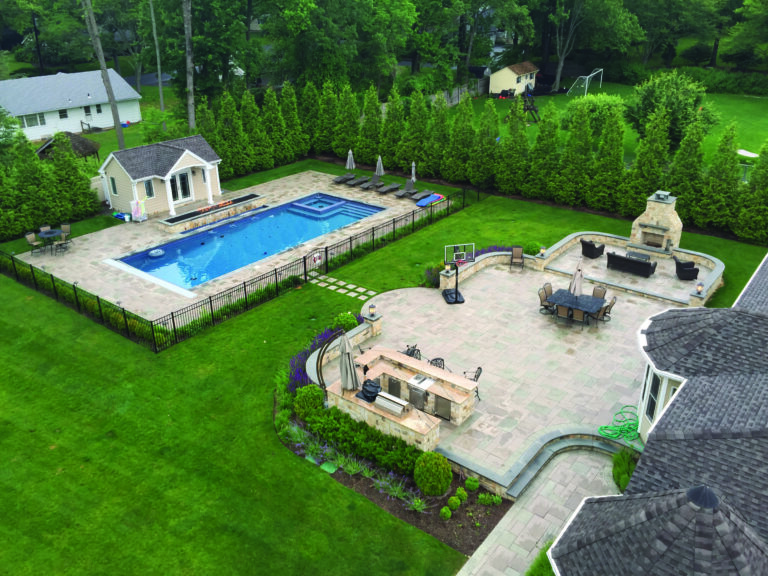
The patio surround is where design decisions have the greatest visual impact. A basic concrete apron gets people from the door to the water; a well-designed patio zone with an outdoor kitchen, seating wall, and fire feature creates an entire outdoor room. The hardscape layout defines traffic patterns, separates sunning areas from dining areas, and sets the overall character of the space. Getting this right at the planning stage is far less expensive than reworking it after the concrete is poured.
Landscape Lighting and Water Features
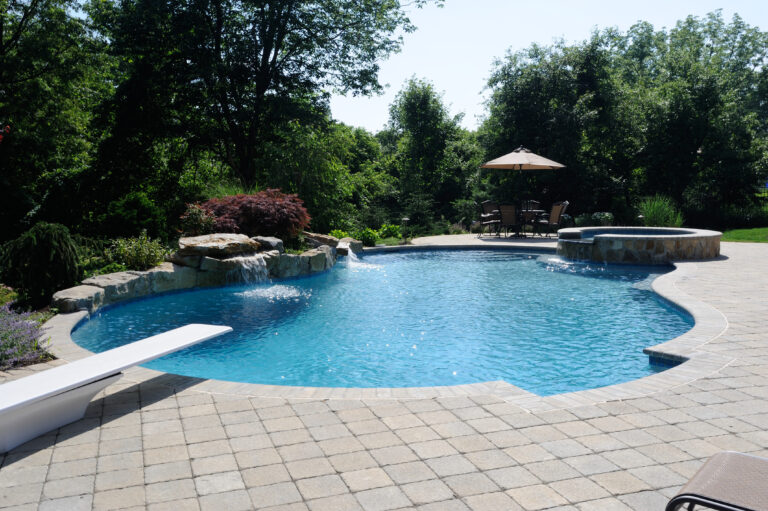
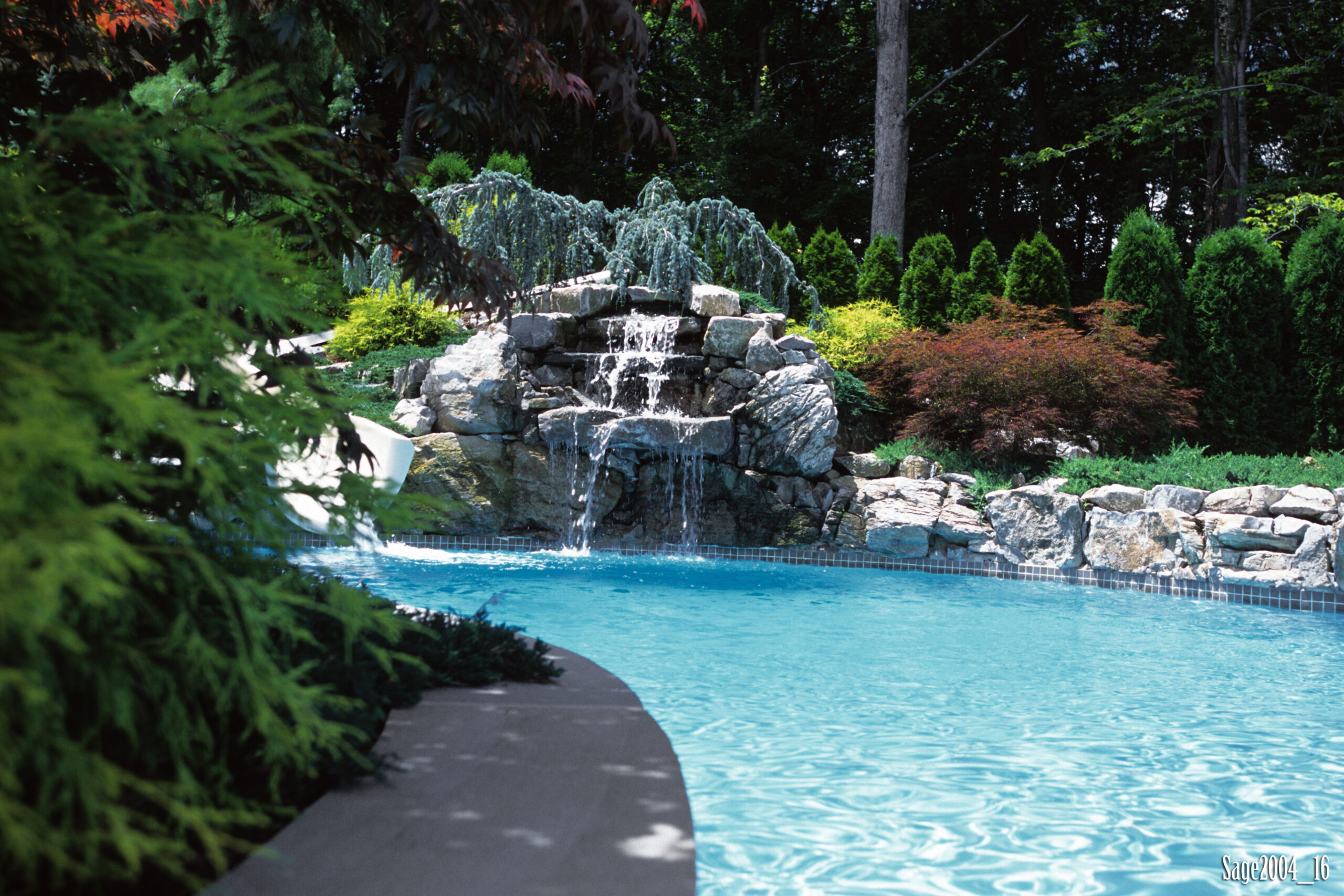
A pool that goes dark at sunset loses usable hours and a significant portion of its perceived value. Low-voltage LED pathway lighting, underwater pool lighting, and accent spotlights on plantings extend the evening and add a dimension of drama that daylight alone can’t produce. Water features like deck jets, spillover spas, and sheer descent waterfalls layer in sound and movement; they read as luxury additions but don’t require dramatically expanding the project footprint or the budget.
Designing Pool and Landscape as One Cohesive Project
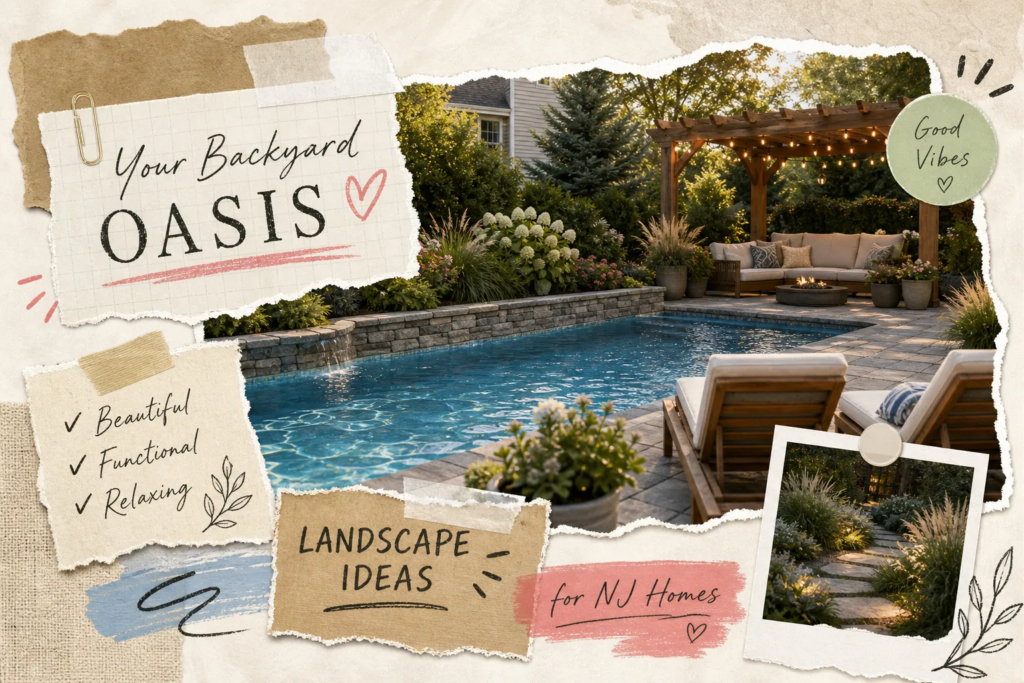
When pool construction and surrounding landscape design are planned together, the grading, drainage, lighting conduit, and planting beds are coordinated from day one. That single-plan approach eliminates the expensive back-and-forth that happens when a pool contractor finishes and a separate landscaper arrives to work around an already-set hardscape. The team at Sage Landscaping New Jersey takes exactly this approach, one coordinated plan covering pool construction, hardscape, and planting, so nothing falls through the gaps between trades.
NJ Pool Landscaping: Hardscape Options That Hold Up Through Winter
New Jersey’s freeze-thaw cycle is the single most important factor when selecting pool surround materials. A material that performs beautifully in a milder climate can crack, heave, or become dangerously slippery around a New Jersey pool after two or three winters. Each of the three main options below has real advantages and real limitations in a NJ climate.
Pavers: The Most Durable Choice for Freeze-Thaw Climates
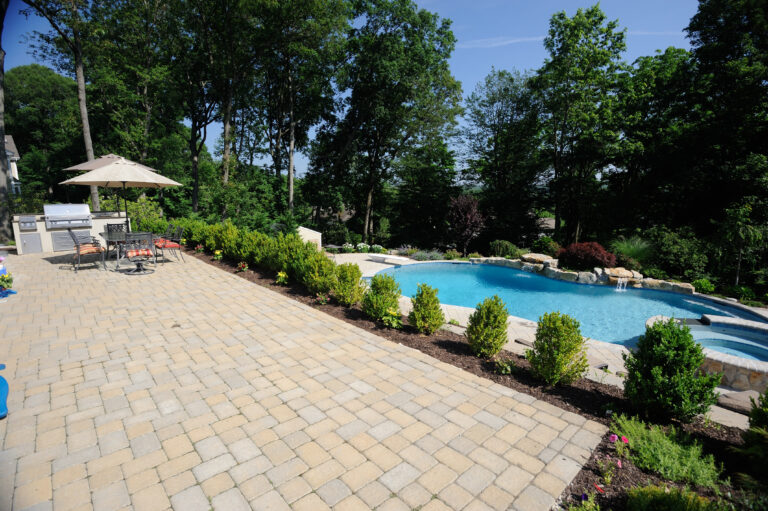
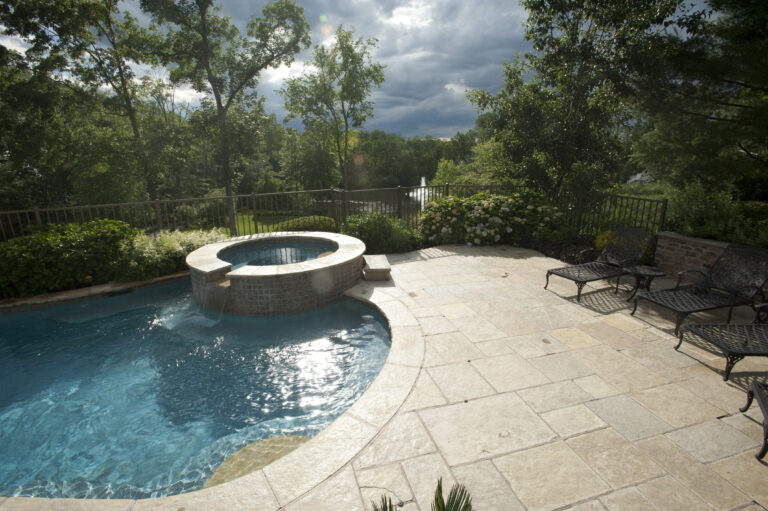
Interlocking pavers consistently outperform other options in inground pool landscaping NJ projects because individual units can shift slightly with temperature changes instead of cracking as a monolithic slab. A well-installed paver surround holds up for decades, and repairs are straightforward: pull the affected unit, address what’s underneath, and reset. Installed cost in New Jersey typically runs $12 to $30 per square foot depending on material and pattern complexity, which makes pavers competitive with natural stone while offering easier long-term maintenance.
Bluestone and Natural Stone: Premium Look With Serious Longevity
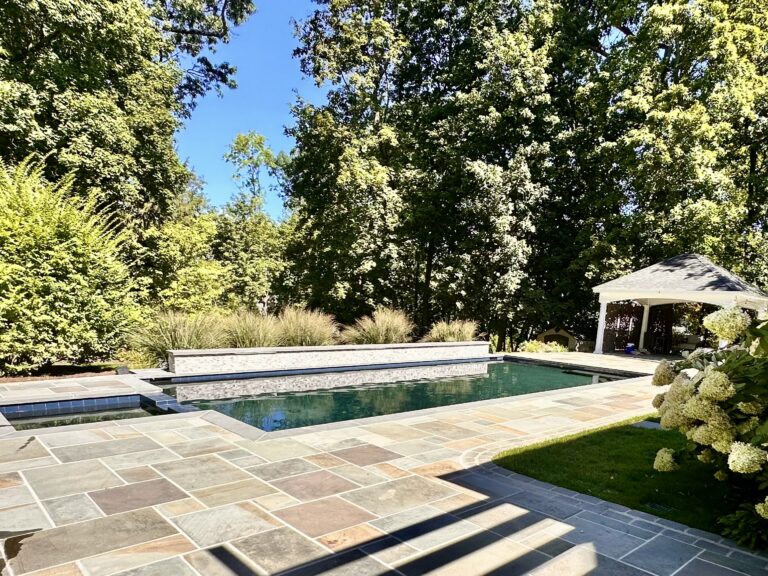
Natural cleft bluestone has one of the strongest track records around NJ pools. The textured finish provides genuine slip resistance, and lower-absorption stone handles freeze-thaw cycling well when set on a properly prepared base. Travertine is another natural-stone option worth considering, offering a warmer, more Mediterranean look. Both materials should be sealed for stain resistance and require professional installation to perform correctly over the long term.
Concrete: The Budget-Friendly Option and Its Trade-Offs
Concrete is durable, affordable, and easy to clean. Those advantages come with real limitations in a NJ climate, however: any large concrete slab will eventually crack in a climate with significant temperature swings, and stamped or sealed finishes can become slippery when wet. If budget points you toward concrete, a textured finish and proper drainage slope away from the pool are non-negotiable, not optional upgrades. For inspiration and practical details on concrete pool finishes, see Designing Your Concrete Dream Pool: Inspiration Guide For New Jersey Homeowners.
Plants That Actually Thrive Alongside a NJ Pool
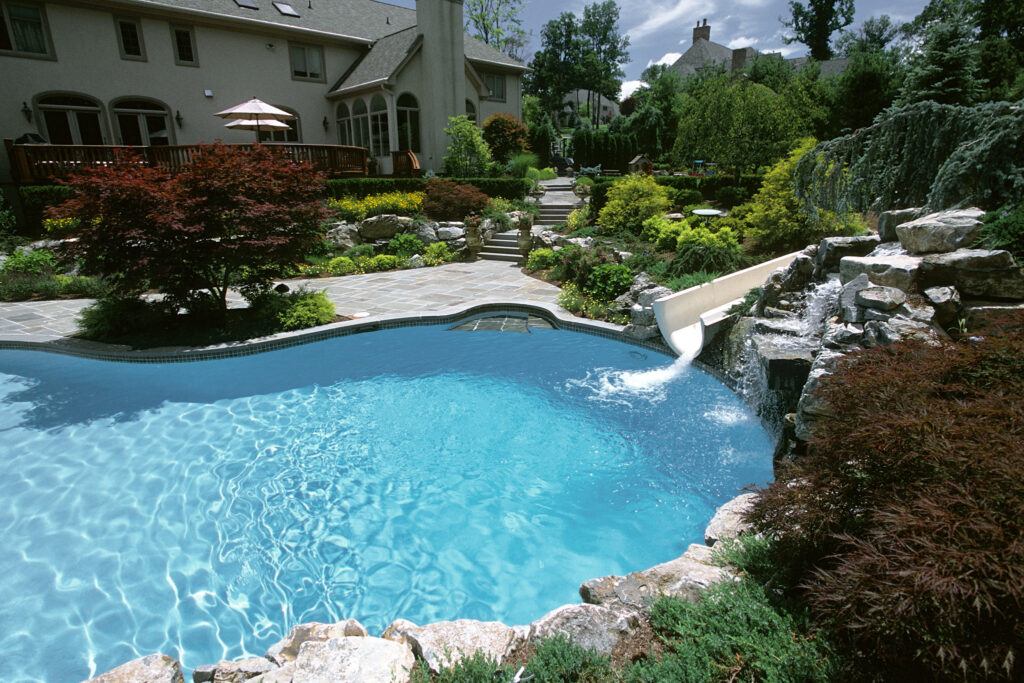
Poolside planting fails when the wrong species lands in the wrong spot. Too messy, too shallow-rooted, too sensitive to chlorine splash, too tender for a NJ winter, any one of these mismatches turns a planting bed into a maintenance headache. These are the climate-tested picks that hold up.
Sun-Tolerant Natives for Hot Poolside Beds
Switchgrass, coneflower, black-eyed Susan, and butterfly weed form the core native perennial palette for sunny poolside beds in New Jersey. All four are drought-tolerant once established, handle the reflected heat from hardscape surfaces, and stay compact enough that debris into the pool is minimal. Native perennials also require less irrigation, fertilizer, and intervention once they settle in, which matters a lot in a zone where summers are humid and maintenance windows are short.
Evergreen Shrubs for Year-Round Structure and Privacy
Inkberry holly and mountain laurel are two of the best native evergreen shrubs for NJ poolside use. Inkberry provides dense screening, tolerates a range of soil conditions including wetter areas near drainage zones, and stays tidy without aggressive pruning. Mountain laurel adds a refined woodland texture in part-shade situations and holds its structure through winter. For seasonal interest alongside the evergreen framework, Virginia sweetspire and serviceberry bring spring flowers, summer foliage, and fall color without dropping messy fruit into the water.
For homeowners who need faster, taller screening, Nellie Stevens holly and skip laurel are well-established performers in USDA zones 6a and 6b, which cover most of New Jersey. Both stay dense through winter and respond well to shaping when the pool area calls for a more formal look.
What Pool Landscaping Costs in New Jersey
Cost ranges for NJ pool landscaping projects are wide because scope varies enormously. Here is a practical framework organized by project tier, not vague estimates.
What Each Tier of NJ Pool Landscaping Actually Costs
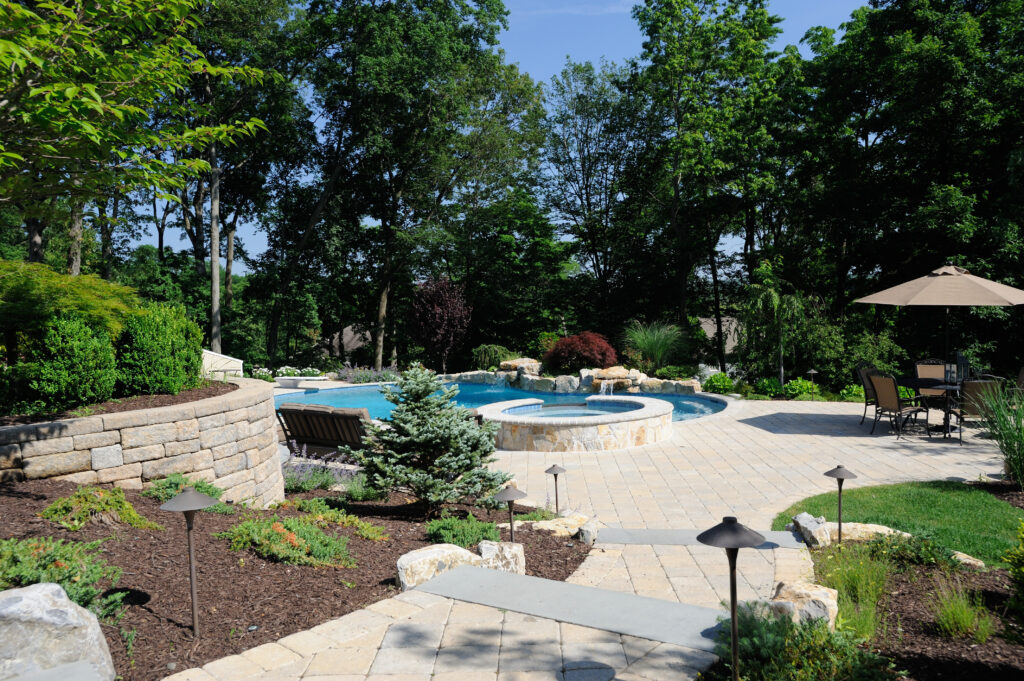
Basic grading, sod, and simple planting around a pool typically runs $2,000 to $8,000. A more complete project with pavers, privacy plantings, and drainage work falls in the $8,000 to $25,000 range. Full-scope projects with natural stone, expanded patios, custom lighting, water features, and a formal design plan reach $25,000 and above, with hardscape-focused designs frequently exceeding $40,000. These figures cover the landscape surround and are separate from pool construction costs.
What Pushes a Project From Mid-Range to High-End
Several specific decisions move a project up the cost ladder. Upgrading from concrete to natural stone is the biggest single jump. Adding a retaining wall for a sloped yard, installing a drainage system as part of the design, and incorporating a full landscape lighting plan each add meaningful cost. Engaging a landscape architect for a formal design plan adds to the upfront investment but typically protects the pool construction by ensuring grading, drainage, and plantings are coordinated correctly from the start. These are investments in long-term performance and property value.
NJ Permits and Codes That Affect Your Pool Landscape
Most homeowners research the pool permit carefully but underestimate how much the surrounding landscape work is also regulated. In New Jersey, the entire pool area, including decking, fencing, drainage, and hardscape, is reviewed as part of the overall project package.
Setbacks, Fencing, and Drainage Requirements
Pools are typically required in the rear yard, with setbacks ranging from 7 to 10 feet depending on the municipality. Somerset and Morris County towns each set their own specific numbers, so confirming your local ordinance before finalizing a design is essential. Fencing requirements apply broadly across NJ municipalities, with a minimum 4-foot barrier and specific requirements for self-latching gate hardware being common standards, though exact requirements vary by town. Some NJ municipalities, including Hamilton Township, also require a planted landscape buffer between the pool structure and lot lines, which connects directly to the planting design.
Impervious Surface and Stormwater Rules
Pool area plus patios, walkways, and decking all count toward impervious lot coverage in most NJ municipalities. Towns like Hillsborough, East Brunswick, and Princeton require formal impervious coverage calculations when a pool and patio are added, and when coverage thresholds are exceeded, stormwater infrastructure such as dry wells or French drains may be required as part of the permit package. Retaining walls, even as landscape elements, typically require a building permit in NJ because they are treated as structural improvements. Pull your local ordinance and walk through the permit requirements with your contractor before finalizing any design decisions.
How to Hire the Right Pool Landscaping Contractor in NJ
With a design vision, a realistic budget, and a working understanding of local codes, the remaining question is who builds it. The biggest mistake NJ homeowners make is hiring a pool contractor and a landscaper separately and expecting them to coordinate smoothly on a shared site. When you’re comparing pool landscaping companies in NJ, the most important question is whether they handle both pool and landscape under one plan or hand off between trades.
What Separates a Design-Build Firm From a Subcontractor
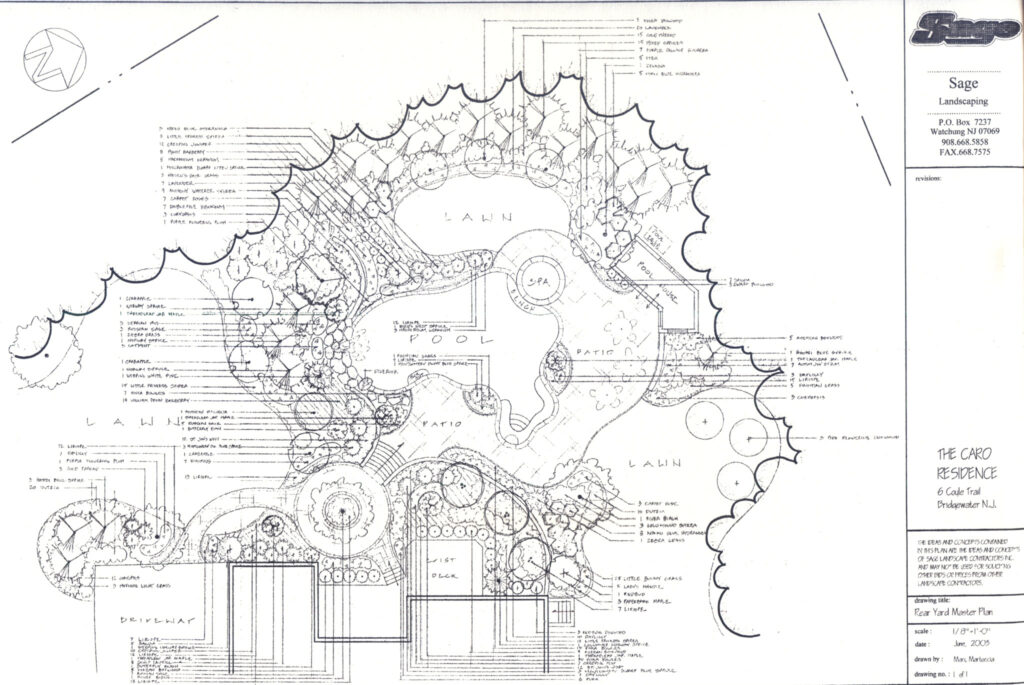
A design-build firm carries the design vision through every trade on the project. That means drainage, grading, lighting conduit, and the planting plan are all connected under one coordinated design. For a pool project specifically, this integration is critical: the grading around the pool affects drainage, drainage affects the planting plan, and the planting plan affects the hardscape layout. When those decisions are split between two contractors, design conflicts and scheduling gaps are almost inevitable.
Questions to Ask Before Signing a Contract
Before signing anything, run every candidate through these questions:
- Are you licensed and insured in New Jersey?
- Do you handle pool construction and landscape design, or just one?
- Who manages permits and code compliance across the full project?
- Can you show me similar NJ projects with photos and client references?
- Do you have a landscape architect or certified designer on staff?What does the project timeline look like from permit approval to final walkthrough?
Why One Contractor for Pool and Landscape Makes the Difference
A full-service NJ firm eliminates the scheduling gaps, design conflicts, and accountability issues that arise when two separate contractors share a site. Sage Landscaping New Jersey offers deep experience in NJ pool landscape design, with a Rutgers-trained landscape architect on staff and complete hardscape and planting capabilities running under one project plan. For homeowners in Somerset, Union, or Morris County who want a finished outdoor retreat rather than a series of disconnected contractor phases, that kind of single-team accountability changes the experience and the final result.
Start With the Full Picture, Not Just the Pool
A pool landscaping project succeeds when the water, the hardscape, the plants, and the lighting connect into one cohesive outdoor room. You now have a practical framework for each of the key decisions: design style, materials, plant selection, cost planning, and hiring approach. The details matter, and so does the sequence in which those decisions get made.
If you’re ready to approach pool landscaping in NJ as a complete project rather than a piecemeal afterthought, Sage Landscaping New Jersey offers the full-service team and local expertise to get it done right. For seasonal planning tips, see Planning Your Outdoor Space This Spring in NJ. Contact us to schedule a consultation and start with a plan that covers every element, from the first grading stake to the last planted shrub.
Pool Landscaping FAQ for NJ Homeowners
What should I plan first when designing pool landscaping in New Jersey?
Start with the full layout, including pool placement, patio use, privacy, drainage, and circulation. Once those pieces are planned together, it becomes much easier to choose materials, lighting, and plants that work as one complete outdoor space.
What pool surround materials hold up best in NJ’s freeze-thaw climate?
Interlocking pavers and quality natural stone are usually the strongest choices because they handle seasonal movement better than large poured slabs. Concrete can still be used, but it needs the right finish, drainage slope, and realistic expectations for long-term cracking in New Jersey.
Which plants work best around a pool in New Jersey?
The best poolside plants are heat-tolerant, relatively clean, and able to handle New Jersey winters. Popular options include switchgrass, coneflower, black-eyed Susan, butterfly weed, inkberry holly, mountain laurel, and other structured shrubs and perennials that do not create excessive debris.
How much does pool landscaping usually cost in NJ?
Simpler grading, sod, and planting projects are typically the entry tier, while projects with pavers, drainage, privacy screening, and lighting rise into the mid-range. Full outdoor living plans with natural stone, expanded patios, custom lighting, and water or fire features generally fall into the premium range.
Do I need permits for pool landscaping work in New Jersey?
In many towns, yes. Fencing, decking, drainage, impervious coverage, retaining walls, and related site work are often reviewed alongside the pool itself, so local permit requirements can directly shape the final landscape design.
Why is it better to hire one contractor for both pool and landscape work?
One design-build team can coordinate grading, drainage, hardscape, lighting, and planting from the beginning. That reduces delays, costly rework, and disconnects between trades while producing a more cohesive finished backyard.