Finish Now or Wait? NJ Landscape Contractor on Fall Hardscape Planning
Dreaming of a new patio before winter hits? Your timeline hinges on more than frost dates – soil type, drainage, and even concrete temperature rules could delay or derail your project. Here’s what a 40-year NJ contractor says you need to know first.
Key Takeaways
- Fall is an ideal time for New Jersey homeowners to plan hardscape projects, but the construction timeline depends on more than just the season.
- Project completion is determined by factors like scope, ground conditions, drainage, and weather, not a strict frost deadline.
- Projects involving poured concrete require cold-weather precautions whenever air temperature falls below 40°F during placement or protection, with the concrete needing a minimum placement temperature of 55°F and protection from freezing until it reaches 500 PSI compressive strength.
- Permit requirements for features like retaining walls and permanent fire pits vary by municipality and must be confirmed locally before building.
- Planning hardscape improvements in the fall allows for thorough design and preparation, regardless of the final build date.
As summer fades and the crisp autumn air arrives, many New Jersey homeowners look at their backyards and think about what could be different. Perhaps the patio felt too small for summer barbecues, or the path to the pool became a muddy track. October is a good time to evaluate how your outdoor spaces performed and plan improvements. While finishing a project before winter sounds appealing, fall is really about smart planning rather than racing against the first frost.
Starting and completing a hardscape project this fall depends on several factors, not just the calendar. Sage Landscape Contractors & Tree Experts has over 40 years of experience weighing these variables to create outdoor living areas that last. Understanding how project scope, weather, and materials interact is key to a successful installation. You can look into a range of hardscaping services to see what’s possible for your property.
Fall Is for Planning, Not a Frost Deadline
Cooler temperatures and stable ground conditions make fall a strong season for hardscape work. It’s a good opportunity for detailed consultations and thorough site analysis. Rather than treating frost as a hard stop, consider fall the season to design, permit, and prepare for your project, whether construction begins now or in spring.
What Actually Decides Your Timeline
The real schedule for your new patio, walkway, or retaining wall comes down to the specifics of the job and the conditions on the ground. Weather matters, but it’s one factor among several.
Scope, Ground Conditions, and Drainage
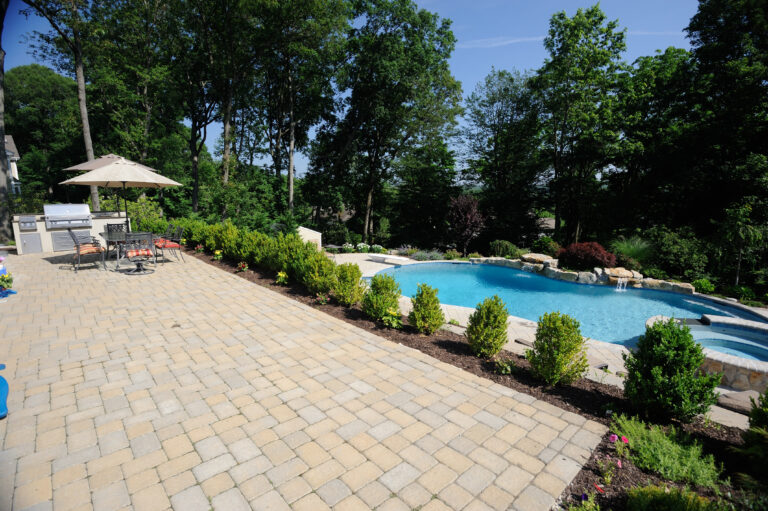
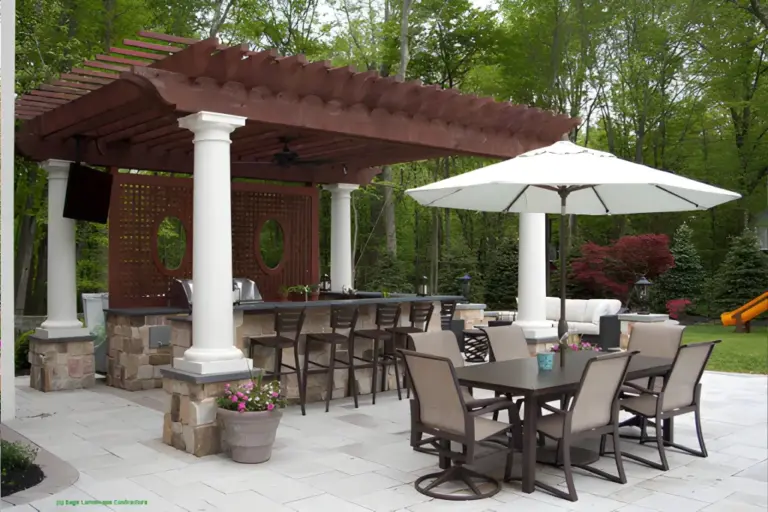
The size and complexity of your project are primary timeline drivers. A simple paver walkway will naturally be completed faster than a multi-level patio with an integrated outdoor kitchen. Beyond scope, the existing state of your yard plays a role. Soil stability and drainage both need evaluation, since poor drainage can lead to pooling water and long-term damage, making it a critical first step that influences the project schedule.
When Concrete Needs Extra Protection
Projects that involve poured concrete, such as footings for a retaining wall or a solid slab, need special attention as temperatures drop. Cold-weather concreting protocols activate whenever ambient air temperature falls below 40°F during placement or the protection period. Concrete must maintain a minimum temperature of 55°F at placement and must never be allowed to freeze before reaching 500 PSI compressive strength. To meet these requirements, crews may use insulated blankets or preheated materials so the concrete cures properly.
Patios, Walkways, and Base Preparation
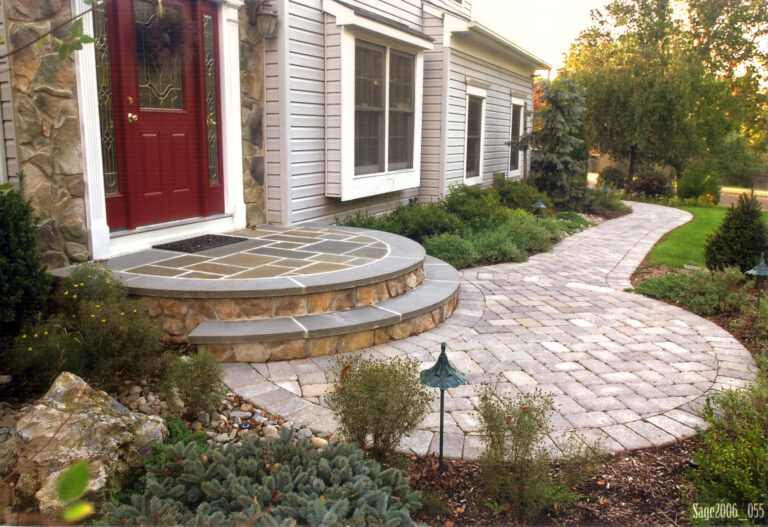
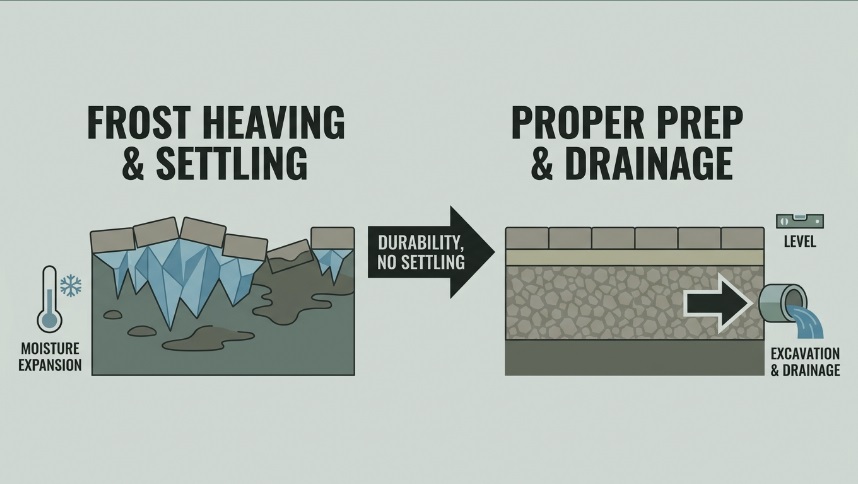
The longevity of any paver patio or walkway depends entirely on what’s underneath it. A solid, well-drained base is essential to prevent shifting, settling, and cracking over time.
Why Base Depth Isn’t One-Size-Fits-All
A common misconception is that every paver installation needs the same base depth. The correct base thickness actually depends on your soil conditions, local climate, and how the area will be used. A patio intended for heavy foot traffic and furniture in an area with clay soil and poor drainage will need a much more substantial base than a simple garden path on sandy, well-drained soil.
Frost Heave and Drainage Risks
In New Jersey, the freeze-thaw cycle is a major concern. As Rutgers explains, moisture in the ground freezes and expands in a process known as frost heave. This can push pavers out of alignment, creating uneven and unsafe surfaces. Proper base preparation and integrated drainage are the best defense, giving water a path to escape rather than letting it get trapped beneath your hardscape.
Retaining Walls and Fire Pits: Check Before You Build
Adding vertical elements like retaining walls or a cozy fire pit can transform your yard, but they often come with building requirements that vary by location.
Permit and Engineering Triggers for Walls
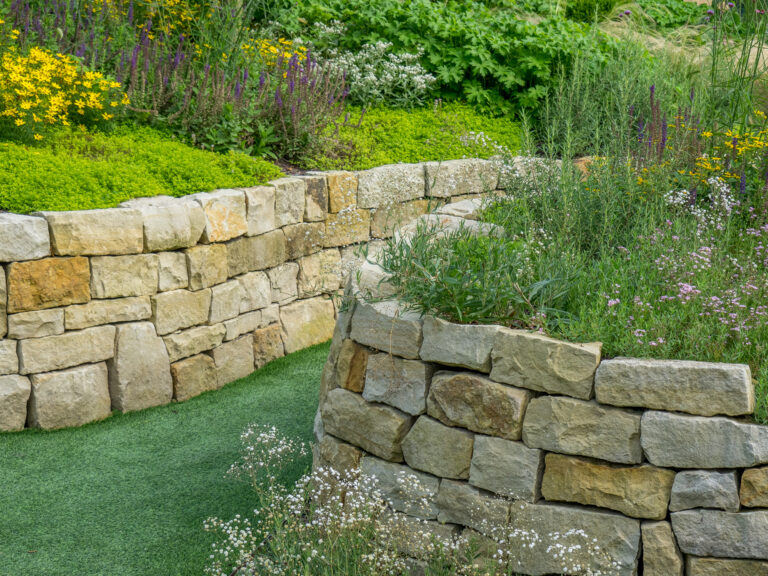
A retaining wall can create more usable, level space on a sloped property, but it’s a structural element with its own rules. In New Jersey, a construction permit is required for a retaining wall four feet or more in total height, measured from the bottom of the footing to the top of the wall, and also for a wall under four feet if it supports a surcharge such as a driveway, a structure, or a slope above it. A design from a licensed engineer is typically required as well. Check with your local municipality before construction begins.
Fire Pit Permits Vary by Municipality
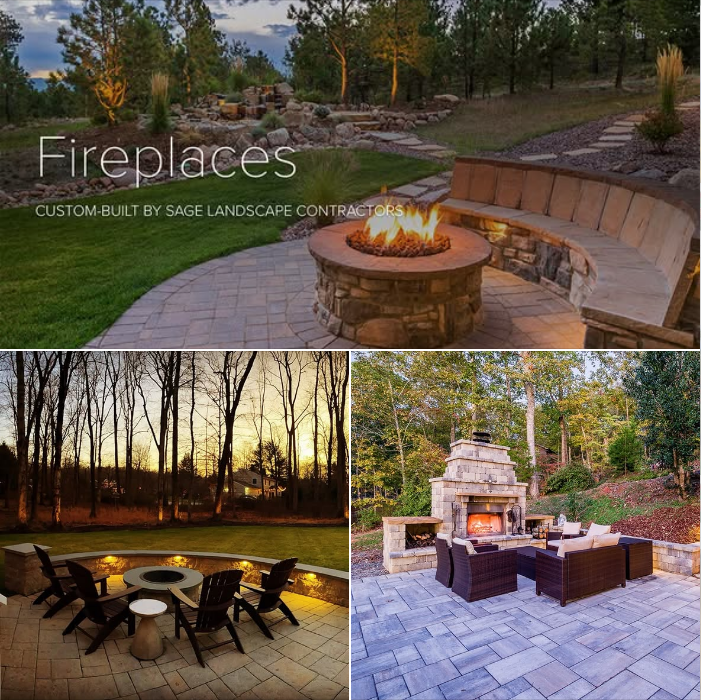
A built-in fire pit is a popular addition for extending the outdoor season. Most portable, code-compliant fire pits don’t need a permit, but permanent masonry or built-in fire pits generally need a construction permit under the Uniform Construction Code. These are also subject to local zoning rules, and gas-fueled fire pits generally require a separate plumbing permit. Always verify the specific requirements in your town before finalizing your design.
Fall Lawn Renovation Alongside Hardscape Work
If your hardscaping project is part of a larger backyard makeover, fall is also a prime time for lawn renovation. Cooler air temperatures paired with warm soil create good conditions for seed germination.
Soil Testing and Drainage Evaluation in Watchung
For homeowners in areas like Watchung, New Jersey, understanding your property’s specific conditions is key. Start with a soil test to determine what nutrients your lawn is missing, and evaluate drainage at the same time. Persistently wet soil, often a symptom of poor drainage, can hinder new seed establishment and lead to a weak, patchy lawn. Correcting these underlying issues helps your new turf thrive alongside your new hardscape.
Fall Planning Pays Off Regardless of Build Date
Using the fall season to plan your hardscape project is a wise investment. It allows for thoughtful design, proper material selection, and handling any necessary permits without the pressure of a looming deadline. Whether the work gets done this year or next spring, you’ll have a well-considered plan ready to go.
Taking the time now to design your outdoor space helps ensure it will be enjoyed for years to come. For a professional assessment of your property, consider a custom landscaping and hardscaping plan.