Is Professional Lawn Care Worth It? Costs, Tips & When To DIY vs Hire A Pro
Professional lawn care costs $100-$500 monthly in 2026, but here’s the surprising part: a well-maintained lawn can add 5-15% to your home’s value. Before you decide between DIY and hiring out, there’s some math that might completely change your thinking about what lawn care actually costs.
- Professional lawn care in 2026 costs between $100 and $500 per month for standard residential properties — but the right service can actually save money by preventing costly mistakes.
- A well-maintained lawn can add 5% to 15% to a home’s resale value, and homes with professional landscaping consistently sell faster than comparable properties with DIY upkeep.
- DIY lawn care has genuine advantages, but hidden costs and time demands catch most homeowners off guard — the real math might surprise you.
- There are proven strategies to cut professional lawn care costs by 20-30% without sacrificing quality.
Whether the goal is a lush, healthy yard that boosts curb appeal or simply keeping the grass under control without burning every free Saturday, the question facing most homeowners is the same: is it worth paying a pro, or should this be a DIY job? The answer depends on more than just price. It comes down to time, results, long-term costs, and what a healthy lawn is actually worth.
Lawn Care Now Costs More Than Ever
Maintaining a lawn has gotten noticeably pricier. The Consumer Price Index shows that the cost of gardening and lawn care services rose meaningfully in 2024, even as the price of outdoor equipment and supplies declined over the same period. Hiring help is getting more expensive, but doing it yourself isn’t getting proportionally cheaper once labor, time, and product costs are factored in.
Meanwhile, demand for professional lawn services keeps climbing. The U.S. had approximately 649,000 landscaping businesses as of 2023, growing around 3% from the prior year, and nearly 930,000 landscaping and groundskeeping workers employed nationally. This isn’t a niche industry — it’s a massive, growing market driven by homeowners who’ve done the math and concluded that outsourcing makes sense. A 2025 report found that over 65% of homeowners prefer outsourced lawn care to maintain curb appeal and property value.
So why is demand rising even as costs go up? Because for most homeowners, the value equation still tilts toward professional help — especially when the full picture is considered, not just the monthly bill. Services like those offered by Sage Landscape Contractors & Tree Experts illustrate how professional lawn care can be tailored to specific regional conditions, soil types, and grass varieties in ways that generic DIY approaches simply can’t match.
What Professional Lawn Care Actually Costs in 2026
Costs vary considerably based on how service is structured, yard size, and which add-ons are included.
Per-Visit vs. Monthly Pricing
For basic mowing, edging, and trimming, a single visit typically runs $50 to $205. Monthly maintenance plans — covering regular weekly or bi-weekly service — generally fall between $100 and $500 for a standard residential property, with a national average around $300. Homeowners who commit to full-year managed care (bundling mowing, fertilization, aeration, and seasonal cleanups) can expect to spend $1,000 to $3,500+ annually. One-time visits tend to cost more per service than ongoing contracts, so consistent scheduling usually delivers better value over time.
Cost by Yard Size
Yard size is the single biggest driver of lawn care pricing. The following ranges reflect full-service monthly maintenance costs based on lot size:
- ⅛ Acre: $100-$200/month
- ¼ Acre: $200-$400/month
- ½ Acre: $400-$800/month
- 1 Acre: $800-$1,600/month
- 2+ Acres: $1,600-$3,200+/month
Geography also plays a role. Monthly lawn care in Dallas, TX runs about $100-$425, while New York, NY averages $130-$525, and Honolulu, HI falls between $120-$500. Grass type matters too — fast-growing varieties like Bermuda and St. Augustine typically require weekly mowing, while Fescue or Kentucky Bluegrass can go bi-weekly, lowering overall service frequency and cost.
Add-On Services That Raise the Bill
Basic mowing is just the starting point. A truly healthy lawn often needs additional seasonal treatments, and these add-ons can meaningfully increase the total bill:
- Aeration: $75-$200
- Fertilization & Weed Control: $71-$380 per treatment, or $300-$800 annually for a full seasonal program
- Dethatching: $160-$225 for a typical residential lawn
- Leaf Removal / Yard Cleanup: $190-$600+
- Tree Trimming: $270-$1,800 depending on size and complexity
- Shrub & Hedge Trimming: $450-$1,420
Bundling these services into a single seasonal visit — rather than scheduling them separately — is one of the most effective ways to keep costs manageable. Many providers offer package pricing that brings the per-service cost down considerably compared to individual one-off appointments.
The Real ROI: What a Healthy Lawn Is Worth
Curb Appeal’s Impact on Home Value
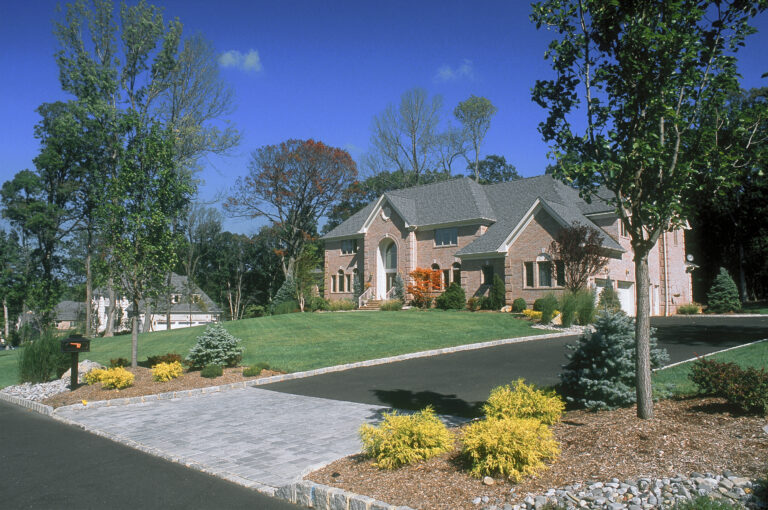
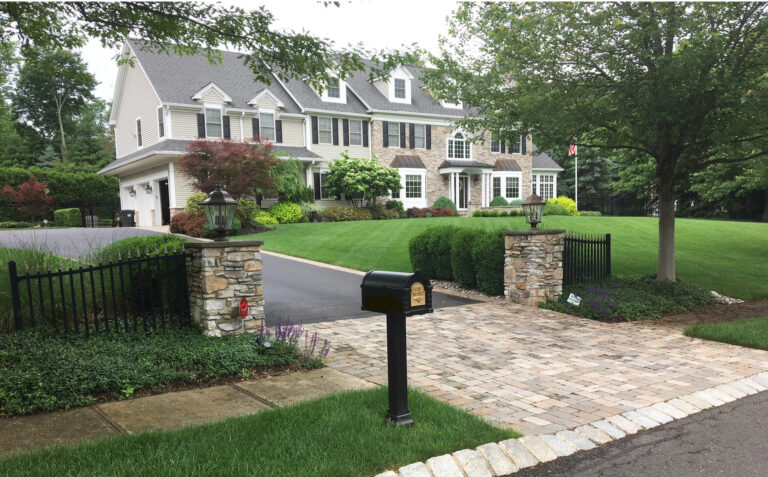
A well-maintained lawn and landscape can increase a home’s value by 5% to 15%, according to real estate and appraisal research. Curb appeal specifically — the first impression a home makes from the street — can account for up to 7% of a home’s sale price on its own.
Beyond resale, a healthier lawn simply requires fewer emergency interventions. Regular professional care prevents the kind of soil compaction, pest damage, and disease spread that can turn a manageable situation into a costly repair.
Homes With Pro Landscaping Sell Faster
Real estate data consistently shows that properties with professionally maintained landscapes sell faster than comparable homes with DIY upkeep. In a competitive market, that speed advantage can be the difference between accepting a strong offer and watching a listing go stale. Faster sales also mean reduced carrying costs — fewer mortgage payments, utility bills, and insurance premiums while waiting for closing.
DIY Lawn Care: Honest Pros and Cons
1. Lower Upfront Cost
The most obvious advantage of DIY is the potential to save on monthly service fees, which can run $100-$500 or more. For homeowners with smaller yards, basic equipment already on hand, and a willingness to stay consistent, going the DIY route can absolutely be cost-effective. The savings are most real when the work is done correctly the first time and ongoing maintenance is managed with discipline.
2. Physical Activity and Personal Satisfaction
There’s a legitimate lifestyle argument for DIY lawn care. Many homeowners spend several hours per week on lawn tasks during peak growing season — that’s meaningful physical activity, and a 2025 survey found that 25% of Americans say maintaining their lawn makes them happy. For homeowners who genuinely enjoy being outside and working with their hands, the time spent on lawn care isn’t lost — it’s recreational. That said, satisfaction tends to hold up better when results are good. When the lawn starts looking patchy or weeds take over, that pride can quickly erode.
3. Hidden Costs That Catch DIYers Off Guard
This is where the DIY math often falls apart. Equipment purchases — mowers, aerators, spreaders, edgers — add up fast and require ongoing maintenance. Products for weed control, fertilization, and pest treatment are sold in consumer-grade formulations that are often less effective than what professionals use, meaning more applications and more spending to get results. And when something goes wrong, the cost to fix the damage can easily exceed what a full season of professional service would have cost.
4. Time Commitment Most Homeowners Underestimate
Several hours per week during peak season adds up to well over 70-100 hours annually — and that doesn’t include research time, store trips, weather-watching, or equipment troubleshooting. Time is the most underestimated cost in the entire DIY calculation. When an hourly value is assigned to personal time, the financial case for DIY often weakens considerably.
Why Professionals Consistently Outperform DIY
Commercial-Grade Products and Equipment
Professional lawn care companies frequently work with commercial-grade fertilizers, herbicides, and pest treatments for years before manufacturers release consumer versions to the public. These products are often more concentrated, more targeted, and more effective — and because trained technicians apply them with calibrated equipment, the results are more consistent. Consumer-grade products bought at a hardware store are formulated for general use, not for the specific soil chemistry, grass variety, or regional pest pressure of a given lawn. That gap in product quality is one reason DIYers often keep spending without getting the results they want.
Early Problem Detection Saves Money
A trained eye visiting a lawn regularly can identify early signs of disease, pest activity, drainage problems, or soil compaction before they become serious — and expensive — issues. DIYers tend to notice problems only after they’ve become visible, which usually means they’ve already progressed. Catching a grub infestation early, for example, costs far less to treat than reseeding a yard that’s been destroyed. This proactive approach to lawn health is one of the most underappreciated financial benefits of professional service. The money saved by avoiding major repairs over several years can easily offset years of service fees.
Up to 10 Hours Saved Every Month
Outsourcing lawn care saves homeowners an average of 10-20 hours per month. That’s time that can go toward work, family, recreation, or simply rest. For many homeowners, particularly those with demanding schedules or physically demanding jobs, that time recovery alone justifies the cost. And unlike a DIY effort that requires constant attention to product timing, weather windows, and technique, professional service runs on a scheduled cadence — without any mental overhead on the homeowner’s part.
How to Cut Costs Without Cutting Corners
1. Sign a Seasonal Contract for Discounted Rates
Most lawn care providers offer discounted pricing for homeowners who commit to a full season or annual contract rather than booking one-time visits. Paying upfront for annual service often unlocks additional savings on top of the contracted rate. Consistent business is valuable to service providers, and they typically pass some of that value back to customers who commit early.
2. Be Flexible With Scheduling Windows
Offering a 2-3 day scheduling window — rather than demanding a specific day and time — allows service providers to group nearby properties into a single route. That operational efficiency usually translates into a lower price per visit. It’s a small adjustment that can meaningfully reduce the monthly bill with zero impact on service quality.
3. Get 3-5 Quotes to Save 20-30%
Collecting quotes from multiple local lawn care companies before signing anything is one of the highest-leverage steps a homeowner can take. Comparing 3 to 5 estimates typically yields meaningful savings compared to accepting the first quote — often in the range of 20-30%. Local providers often price competitively when they know a homeowner is shopping around, and the process also helps identify which companies offer the most value — not just the lowest price.
4. Use DIY Subscription Kits Like Ace Hardware’s YardRx
For homeowners who want to handle some tasks themselves while keeping costs down, subscription-based product kits offer a middle-ground option. Ace Hardware’s YardRx service packages season-specific lawn treatments — tailored to local climate, grass type, and problem areas — and delivers them in spring, summer, and fall with free delivery or store pickup. It’s a structured, expert-guided approach to DIY that reduces the guesswork around product selection and timing. Used strategically alongside professional mowing or fertilization service, it can help stretch a lawn care budget without sacrificing results.
For Most Homeowners, Hiring a Pro Pays Off
Running the full numbers — time, product costs, equipment, potential repair bills, and home value impact — the case for professional lawn care is strong for most homeowners. DIY works well in specific circumstances: smaller yards, homeowners with relevant knowledge, and those who genuinely enjoy the work and can stay consistent. But for the majority, the combination of time savings (10-20 hours per month), better results through commercial-grade products and expertise, early problem detection, and measurable home value gains makes professional service the smarter financial decision over the long term.
The over 65% of homeowners who already prefer outsourced lawn care aren’t just paying for convenience — they’re investing in an asset. A healthy, well-maintained lawn protects and grows home equity, reduces the risk of costly repair situations, and frees up time that has real value. The key is finding the right provider, comparing quotes, and structuring the service agreement to match actual needs — not just defaulting to the most expensive package available.