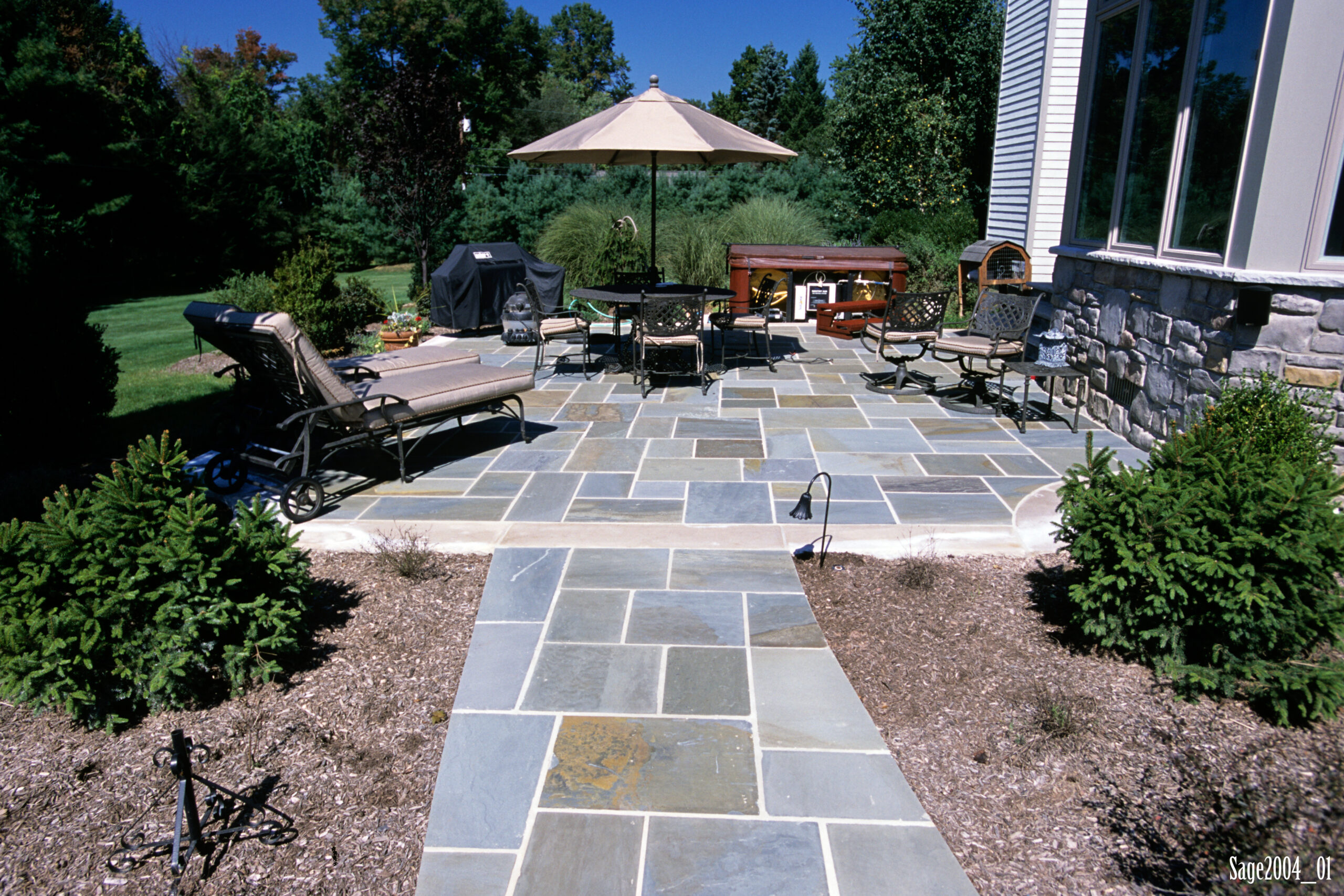
Best Patio Installation Contractors Services New Jersey
Summary
- In 2026, the cost of patio installation in New Jersey is between $10 and $43 per square foot, which is about 24% higher than the national average due to the cost of local labor and materials.
- The best patio contractors in NJ are those who not only provide labor, but also have expertise in design, proper site preparation, and knowledge of local frost lines and municipal permitting.
- Sage Landscaping, a full-service patio contractor in Central New Jersey, is the top-rated company with over 40 years of experience and more than 20,000 completed projects.
- About 55% of the total cost of your patio is for materials, which means the base preparation that a contractor includes is as important as the surface material you choose.
- Read on to learn about the red flags in a contractor quote that could cost you thousands in repairs within just a few years.
The difference between an outdoor space that you love for decades and one that cracks, settles, or floods after the first hard winter is finding the right patio contractor in New Jersey.
With a history dating back to the 1980s, Sage Landscaping, located in Central NJ, is a prime example of what a full-service patio installation company should be. They handle everything from design to drainage planning, base compaction, and material selection. Although New Jersey homeowners have more contractor options than ever, there is a significant quality gap between the best and the rest.
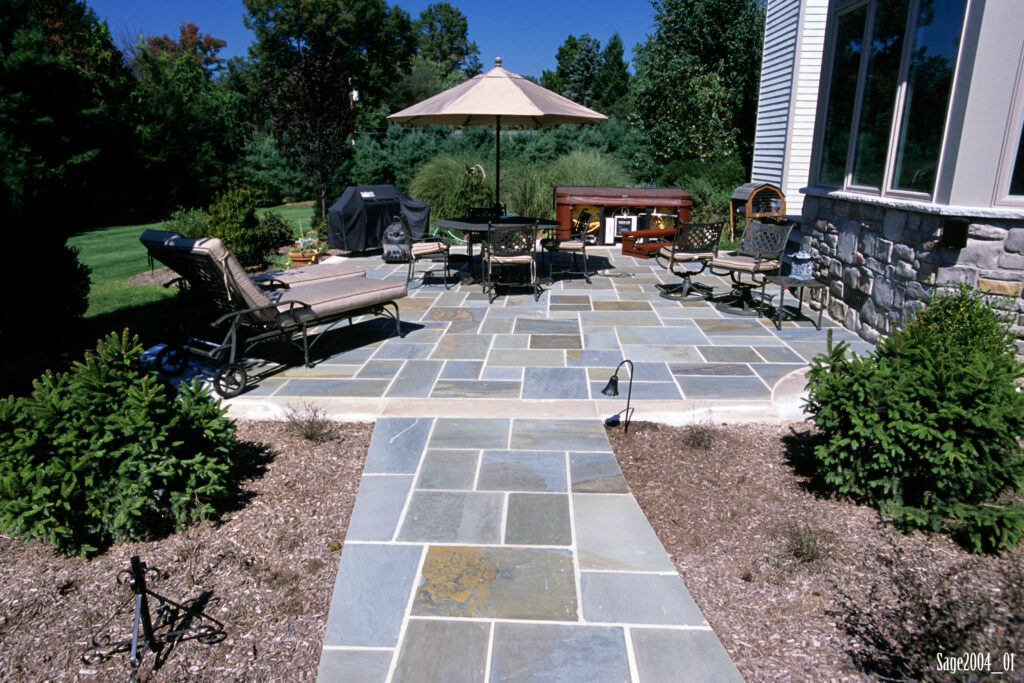
What to Know Before Hiring a Patio Installation Contractor in New Jersey
Right now, patio installation is one of the most popular outdoor upgrades in New Jersey. The demand for functional outdoor entertainment spaces and increasing home values have made it a top priority for homeowners throughout the state. Before you reach out to a contractor, it’s helpful to know what you’re getting into — and what it should cost.
How Much Does Patio Installation Cost in NJ in 2026?
In 2026, the cost of patio installation in New Jersey ranges from $10 to $43 per square foot, depending on the type of material used, site conditions, and design complexity. For a typical 300-square-foot patio, this means a total project cost of about $2,976 to $13,020. Below is a breakdown of the cost by material type:
| Material | Cost Per Sq Ft (NJ) | Best For |
|---|---|---|
| Concrete | $10 – $18 | Cost-effective builds |
| Paver (Brick/Concrete) | $15 – $30 | Contemporary style, easy to fix |
| Natural Stone (Bluestone/Flagstone) | $25 – $43 | High-end look, durability |
Workmanship makes up roughly 35% of the total project cost, while materials constitute the remaining 55%. The other 10% typically includes site preparation, drainage work, and permit fees — expenses that lower bids often quietly leave out.
Why Patio Installation in NJ Is More Expensive Than the National Average
Installing a patio in New Jersey costs about 24% more than the national average, and it’s not just because of contractor fees. The state’s weather conditions directly affect the price. The freeze-thaw cycles that occur during the winter require a proper base preparation — including layers of compacted gravel sub-base — to ensure the patio lasts a long time. If you don’t do this, your patio will start cracking and shifting within a few years.
Factors such as local labor rates, increased material transport costs, and municipal permitting requirements in many NJ townships also increase prices. Experienced contractors take all of these into account. Budget bids that undercut the market usually do so by cutting corners on the base work, which is the part you’ll never see until something goes wrong.
New Jersey’s Premier Patio Installation Contractors
When it comes to patio contractors in New Jersey, they’re not all the same. The businesses listed below were evaluated on a range of factors, including how long they’ve been in operation, confirmed customer ratings, the areas they service, the materials they offer, and the extent of their services beyond basic installation.
1. Sage Landscaping — Top Pick
If you’re a homeowner in New Jersey and you want a full-service patio build that gets it right the first time, then Sage Landscaping is the top choice for you. The company was started by Ed Sage III, a landscape architect trained at Rutgers, back in the 1980s. Since then, they’ve completed over 20,000 projects across Somerset, Union, and Morris Counties. They’ve earned a 4.8-star rating from 67 verified reviews.
Sage has been around for a long time, but that’s not the only thing that makes them special. They take a comprehensive approach to patio installation. Instead of treating design, hardscaping, drainage, and site grading as separate services, they handle them as a single, coordinated process. They also offer outdoor kitchen construction, pool surround installation, and tree care. So if you’re planning a major backyard makeover, they’re the right people to call. And if you live in Central NJ, they should be your first call.
2. Patio Builders NJ — A Great Choice for North Jersey Homeowners
Patio Builders NJ is a family-run hardscaping company that has been serving Passaic, Morris, Bergen, and Essex Counties for more than 20 years. They have a 4.8-star rating from 18 verified reviews and provide free estimates, price matching, and warranties on their work. This combination is rare to find in the North Jersey market.
This company specializes in patio installation, walkway construction, and building retaining walls. They are a great choice for homeowners who are looking for a specialist rather than a full-service landscaping company. This is particularly true for homeowners in the densely populated counties north of Morristown where lot sizes and grade challenges require precise work.
3. Millenium Stone Works — Top Choice for Custom Stone Work
If you live in Colts Neck, Holmdel, or Rumson and want a high-quality natural stone patio, Millenium Stone Works is a fantastic choice. They have over two decades of specialized masonry experience and focus on high-end residential projects. They specialize in the kind of craftsmanship that makes a property unique, including hand-cut bluestone, irregular flagstone layouts, and custom border work that you won’t usually find with larger contractors.
4. Borst Landscape & Design — Top Pick for Bergen County
Borst Landscape & Design is a time-tested service provider for homeowners in Bergen County, earning a name as one of the most dependable full-service outdoor living contractors in the area. They offer patio installations in concrete, paver, and natural stone, along with landscape design services that seamlessly integrate hardscaping elements with the rest of the yard.
In Bergen County, homeowners face a unique set of challenges. These include smaller lot sizes, steep slopes, and strict local codes in many municipalities. Borst is well-versed in local permitting and site conditions, making them a particularly wise choice for homeowners in this part of the state who would rather not deal with these complexities themselves.
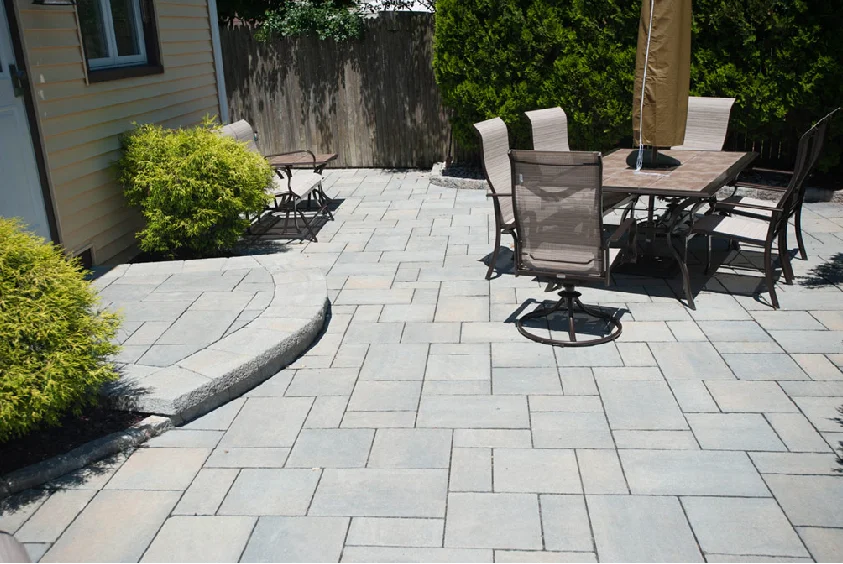
What Makes a NJ Patio Contractor Stand Out From the Rest
Any patio’s finished surface looks good in the first few months after installation. What makes a contractor stand out from the rest becomes evident two or three winters later — if the surface has moved, cracked, or begun draining water toward the house rather than away from it. The difference almost always comes down to three factors: the quality of site preparation, appropriate licensing and insurance, and real design ability.
Don’t Overlook Site Preparation
When it comes to patio installation in New Jersey, the key to a long-lasting, level patio is proper site preparation. This includes excavating to the depth of the local frost line and then building a compacted gravel sub-base. The sub-base should be 6 to 8 inches for paver systems. If this step is done correctly, your patio will stay level for 20 years. If it’s rushed or done incorrectly, your patio may start heaving after the third freeze-thaw cycle. Some contractors who underbid jobs may skimp on this step by using a thinner base layer or not doing compaction testing. Before you sign a contract, ask the contractor about their excavation depth and base preparation process.
Permits, Insurance, and Licensing
In New Jersey, all home improvement contractors must register with the New Jersey Division of Consumer Affairs under the Home Improvement Contractor (HIC) registration program. If a contractor is reluctant to provide their HIC registration number, it’s a warning sign. In addition to registration, make sure they have both general liability insurance and workers’ compensation coverage — you can ask for insurance certificates directly. Many NJ municipalities also require permits for patio construction, especially for structures above a certain size or those attached to the house. A reputable contractor will pull those permits for you and know exactly what your township requires.
Design-Build Contractors vs. Labor-Only Contractors
Labor-only patio contractors will install the patio as you specify, but they may not notice a drainage issue before it becomes a problem, suggest a layout that improves the flow of traffic from the back door, or recommend a material that matches your home’s exterior. Design-build contractors who offer both planning and installation services generally provide better long-term results because the person making design decisions also understands the structural limitations of the site.
Top Patio Materials for New Jersey’s Climate
Living in New Jersey, you know that the weather can be tough. Our hot, humid summers and harsh winters with frequent freeze-thaw cycles can be hard on certain patio materials. Not all materials will hold up the same way here as they might in a milder climate. The three most popular choices each have their own benefits, depending on your budget, the look you’re going for, and how much upkeep you’re willing to do over the long term.
Why Choose Paver Patios: Strength, Easy Maintenance, and Style
There’s a reason why concrete pavers are the go-to patio surface in New Jersey. They are more equipped to handle freeze-thaw cycles compared to poured concrete slabs because they are individual units that can slightly flex with ground movement rather than cracking under pressure. If a section does shift — which is less likely with proper base preparation — individual pavers can be removed, the base can be releveled, and the units can be reset without causing any disturbance to the rest of the surface.
For the best design flexibility, paver systems are the top choice. Brands like Belgard, Unilock, and Techo-Bloc offer a wide variety of pavers that mimic natural stone at a fraction of the price. For most NJ homeowners, a paver patio is the best balance between aesthetics, durability, and cost, especially when installed over a properly compacted base.
Natural Stone (Bluestone, Flagstone, Brick): The High-End Choice
- Bluestone: The top natural stone pick in NJ — it’s dense, slip-resistant, and weathers beautifully in the local climate
- Irregular Flagstone: Provides a natural, handcrafted appearance with wide joints usually filled with gravel or ground cover plantings
- Thermal Bluestone: A textured, non-slip surface finish perfect for pool surrounds and areas often exposed to moisture
- Brick: Traditional aesthetic with strong durability, although color fading over time is a factor in sun-exposed installations
Natural stone patios demand high-end pricing — generally $25 to $43 per square foot installed — but they also offer an aesthetic that no manufactured product can fully replicate. The variation in tone, texture, and edge profile that comes with real bluestone or fieldstone is what makes high-end NJ properties look uniquely different from generic hardscape jobs.
However, the downside is that installing natural stone requires a higher level of skill. Irregular flagstone, in particular, requires a seasoned mason who knows how to calculate joint widths, manage height differences across individual pieces, and place each unit with enough bedding material to prevent rocking. A bad flagstone installation looks worse than a bad paver installation, and it costs more to fix it.
Each type of stone has different maintenance requirements. Bluestone needs to be sealed periodically to keep its color and avoid stains, while unsealed fieldstone develops a natural patina that many homeowners like. Regardless of the type of stone, you should plan to repoint the joints every 7 to 10 years depending on how much traffic the patio gets and how much it’s exposed to the weather.
Natural stone is the best patio investment for the right property and the right contractor. It adds curb appeal that can be measured, photographs very well, and tends to keep its visual quality longer than any other alternative that is manufactured. The key is to match the material with a contractor who has real masonry experience – not just a lot of hardscape installation.
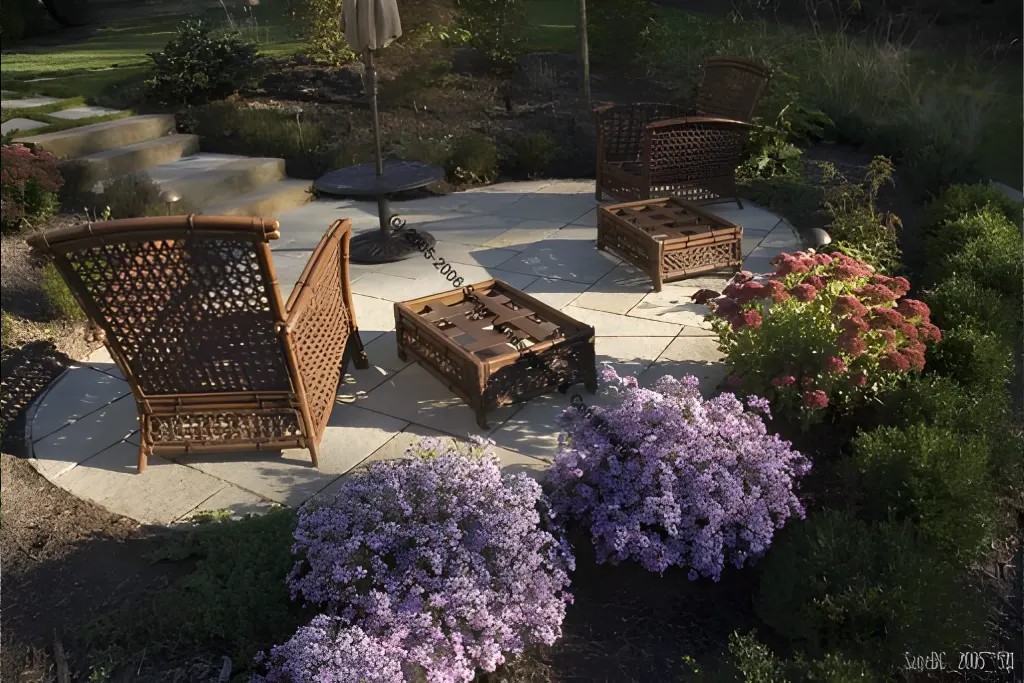
Concrete Patios: The Most Affordable and Adaptable Choice
- Broom-Finished Concrete: This is the basic, entry-level option. It’s functional, neat, and the cheapest option, costing around $10 to $18 per square foot installed
- Stamped Concrete: This option is textured and colored to look like stone or brick patterns. It adds a visual element and is mid-range in terms of cost
- Exposed Aggregate: This is a non-slip finish that is created by washing the surface before the concrete sets, which reveals the stone mix underneath
- Colored Concrete: This option has integral pigment mixed throughout the slab for a consistent color that won’t fade like surface-applied stains can
Concrete is the most economical patio material in New Jersey. When it’s properly installed over a well-compacted base with control joints cut at the correct intervals, it can last reliably for 15 to 20 years. The control joints are very important because they give the slab designated places to crack as the ground moves. This keeps those cracks hidden instead of running across the middle of your patio surface.
In New Jersey’s weather, the major drawback of poured concrete is its repairability. When a paver patio moves, you can lift and reset individual sections. However, when a concrete slab cracks severely, you’re usually faced with the option of a complete or partial replacement. This is why many seasoned NJ contractors suggest pavers over concrete, even for projects on a tight budget — the higher initial cost often compensates for itself the first time a repair is averted.
However, there are certain scenarios where concrete is the best choice: large surface areas where the cost of pavers is too high, projects that require a very smooth surface finish, or residential builds near commercial properties where a uniform look is important. The important thing is to make sure your contractor uses the right concrete mix for New Jersey’s climate — it should have a minimum compressive strength of 4,000 PSI and air entrainment to withstand freeze-thaw stress without surface spalling.
How to Evaluate Patio Installation Estimates in New Jersey
When you have several patio estimates from New Jersey contractors in your hands, the final dollar amount on each one is the least important point of comparison. What you really need to look at is what each estimate includes — specifically the depth of excavation, the type and thickness of the sub-base material, the edge restraint system, the drainage provisions, and whether permitting fees are included or billed separately. An estimate that’s $1,500 less than the others but doesn’t include a 6-inch compacted gravel base layer isn’t a better deal. Make sure every contractor provides their base preparation specifications in writing before you sign anything. Also find out if the estimated price includes debris removal and final grading, because those costs can add up quickly if they’re added on later as surprise line items. Get at least three estimates, check each contractor’s HIC registration number on the New Jersey Division of Consumer Affairs website, and call at least two references from projects they completed within the last two years.
Why Sage Landscaping is the Top Pick for Central NJ Residents
When you compare the competition, Sage Landscaping is a cut above the rest. They’re unlike any other patio contractor in New Jersey for one key reason: they have over 40 years of local experience, a landscape architect trained at Rutgers leading the charge, and a verified history of more than 20,000 finished projects throughout Somerset, Union, and Morris Counties. This isn’t just a marketing ploy — it’s a body of work that shows a consistent level of quality over several decades in a tough market.
What this means for you is that when you hire Sage, they’ll start with a site assessment that will identify any potential drainage problems, grading issues, or conflicts with utilities before they start digging. And because they take an integrated approach to their projects, the design, hardscaping, drainage, and any other elements you want to include, like an outdoor kitchen or a pool surround, will all be coordinated from the get-go, instead of being patched together by different subcontractors working from different plans.
Central New Jersey homeowners who want a patio that looks just as good in year fifteen as it does in year one should look no further than Sage Landscaping. While their 4.8-star rating from verified customers is impressive, what’s even more impressive is that they’ve been consistently earning it since the 1980s.
Common Questions
These are the most frequently asked questions by New Jersey homeowners before they start their patio installation project.
What is the Cost of Patio Installation per Square Foot in New Jersey?
The cost of patio installation in New Jersey ranges from $10 to $43 per square foot as of 2026, depending on the type of material used and the conditions of the site. A standard 300-square-foot patio will cost around $2,976 to $13,020 in total. Concrete is at the lower end of this range, natural stone is at the upper end, and paver systems usually fall in between at $15 to $30 per square foot installed. These prices are approximately 24% higher than the national average due to the local labor rates, the cost of materials, and the requirements for permits that are specific to municipalities in New Jersey.
Do I Need a Permit to Build a Patio in New Jersey?
Depending on the municipality, permit requirements for patio construction in New Jersey can vary. Many townships require a permit for patios above a certain square footage, patios attached to the home’s structure, or any project that includes grading changes or drainage modifications. A licensed New Jersey contractor will know exactly what your specific township requires and should pull all necessary permits on your behalf as part of the project. Never work with a contractor who suggests skipping permits to save time or money — it creates liability issues when you sell the home and can result in mandatory demolition if the work doesn’t meet local code.
What is the typical timeline for patio installation in NJ?
For most residential patio installations in New Jersey, the actual construction phase usually takes between two and five days. This can vary depending on the size of the patio, the type of material used, and the specific site conditions. Concrete patios need to cure for at least 28 days before they reach their full strength, but they can typically be walked on within 24 to 48 hours. Patios made with pavers or natural stone can be used immediately after they are installed. The lead time for scheduling — especially during the busy spring and summer seasons — can be four to eight weeks with the best contractors, so it’s a good idea to contact them sooner than you might think.
Which Patio Material Is the Most Resilient for New Jersey’s Weather?
Concrete pavers are usually the most resilient option for New Jersey’s unique weather conditions. The freeze-thaw cycles that characterize NJ winters place a lot of strain on rigid surfaces like poured concrete slabs, which are prone to cracking as the ground shifts with the seasons. Paver systems, on the other hand, allow for this movement at the joint level rather than at the surface, and individual units can be releveled if they do settle — without the need to replace the entire patio.
Bluestone, a dense natural stone, is also a durable choice when installed correctly. It performs well in New Jersey’s climate because it has a low absorption rate and is highly resistant to freeze-thaw damage. When both are professionally installed over a properly compacted base, there is little difference in durability between pavers and natural stone. The quality of the base preparation is always more important than the surface material alone.
How Can I Verify the Licensing and Insurance Status of a Patio Contractor in NJ?
It only takes about five minutes to check the credentials of a New Jersey patio contractor, and doing so could save you from substantial financial and legal risk. Here’s what you need to check:
- HIC Registration: Confirm the contractor is registered with the New Jersey Division of Consumer Affairs as a Home Improvement Contractor — you can verify registration status directly through their online portal
- General Liability Insurance: Request a certificate of insurance naming you as an additional insured for the duration of the project — this protects you if property damage occurs during construction
- Workers’ Compensation Coverage: Any contractor with employees must carry workers’ comp — without it, you can be held liable for injuries that occur on your property
- Business Longevity: Check how long the company has been operating under the same name and ownership — fly-by-night operations frequently change names after negative reviews accumulate
- Verified Reviews: Cross-reference ratings on Google, Houzz, and the Better Business Bureau rather than relying solely on testimonials posted on the contractor’s own website
Any contractor who hesitates to provide insurance certificates or their HIC number immediately upon request should be removed from your consideration list without further discussion. Legitimate, established contractors keep these documents current and share them without friction because they understand it’s a standard part of doing business in New Jersey.
It’s also worth asking specifically whether the contractor carries completed operations coverage — a form of liability insurance that extends protection after the project is finished, covering issues that emerge from the work itself rather than accidents during construction. Most homeowners don’t know to ask for it, but reputable contractors carry it as a matter of course.
Lastly, ensure to verify if the contractor has any unresolved complaints filed with the New Jersey Division of Consumer Affairs. The search tool is open to the public and takes less than two minutes to use. A single complaint from years ago with a documented resolution is not the same as a pattern of unresolved disputes — understand which one you’re looking at before you hand over a deposit.
Simply put, the top patio contractors in New Jersey make it easy to verify their work because they have nothing to hide. Those who don’t are giving you a red flag before the first shovel even hits the ground.