Hardscaping Ideas: Top Choices and Materials Selections for NJ
- In NJ, paver patios are the most popular hardscaping option, and depending on your budget, style, and maintenance tolerance, you can choose from bluestone, travertine, and concrete pavers.
- Multi-level hardscaping can turn difficult NJ yards into amazing outdoor living spaces — with the right terracing and retaining wall strategy, both sloped and flat properties can be transformed.
- Sage Landscape Contractors has been serving Central New Jersey for over four decades, applying Rutgers-trained design expertise to hardscaping projects in Somerset, Union, and Morris Counties.
- Water features have become a common hardscape upgrade — with surprisingly low maintenance requirements, pondless waterfalls and spillway bowls provide a high visual impact.
- Most NJ homeowners overlook one hardscaping decision that could make or break the entire design — and it has nothing to do with the materials you choose.
Your backyard could be your best outdoor room — and in New Jersey, more homeowners are discovering that every season.
Hardscaping is the key to any successful outdoor area. It’s what transforms a simple backyard into a space where people want to hang out. Patios, walkways, retaining walls, outdoor kitchens, fire features, and water elements — when these are designed well and built to last, they completely change how a property feels and functions. For NJ homeowners specifically, getting hardscaping right means working with the region’s unique climate, soil conditions, and freeze-thaw cycles that can damage inferior materials within just a few years.
For more than four decades, Sage Landscape Contractors have been creating and constructing hardscapes throughout Somerset, Union, and Morris Counties. The design trends they are currently witnessing indicate a definite change: homeowners in NJ are looking for outdoor areas that are attractive, easy to maintain, and can withstand the harsh New Jersey winters.
Key Takeaways: NJ Hardscaping Trends Worth Knowing
NJ Hardscaping Is Evolving Fast — Here’s What’s Leading the Way
Hardscaping in New Jersey has come a long way from what it used to be a decade ago. The old standard of a simple concrete slab or basic brick walkway has given way to something far more intentional. Today’s NJ homeowners are treating their outdoor spaces like extensions of their interior living areas — complete with defined zones for dining, lounging, cooking, and entertaining.
There are a few key reasons for this change. Firstly, the materials we use have improved significantly. Items like porcelain pavers, natural bluestone, and architectural concrete now provide a level of durability that can withstand New Jersey’s harsh winters, without having to compromise on appearance. Secondly, the idea of outdoor living has evolved. Things like fire features, outdoor kitchens, and water elements are no longer just for high-end properties – they’re appearing in mid-range backyard renovations throughout Central Jersey.
There’s also been a change in design philosophy. The overly ornate styles of the past have given way to clean lines, neutral color palettes, and a seamless blending of hardscape and planting beds. The most successful NJ hardscape projects now look as though they were always meant to be, as if the outdoor space was predestined to look exactly as it does.
Here’s what’s hot in NJ hardscaping right now:
- Large-format pavers (24″ x 24″ and larger) for a sleek, modern look
- Multi-level patio designs that create separate outdoor spaces
- Built-in seating walls that remove the need for extra furniture
- Pondless water features that add ambiance without the high maintenance
- Outdoor kitchens with built-in grills, countertops, and refrigeration
- Permeable paving solutions that help manage NJ stormwater runoff
- Natural stone retaining walls that also serve as design features
Paver Patios: Still the Most Loved Hardscape Feature in NJ
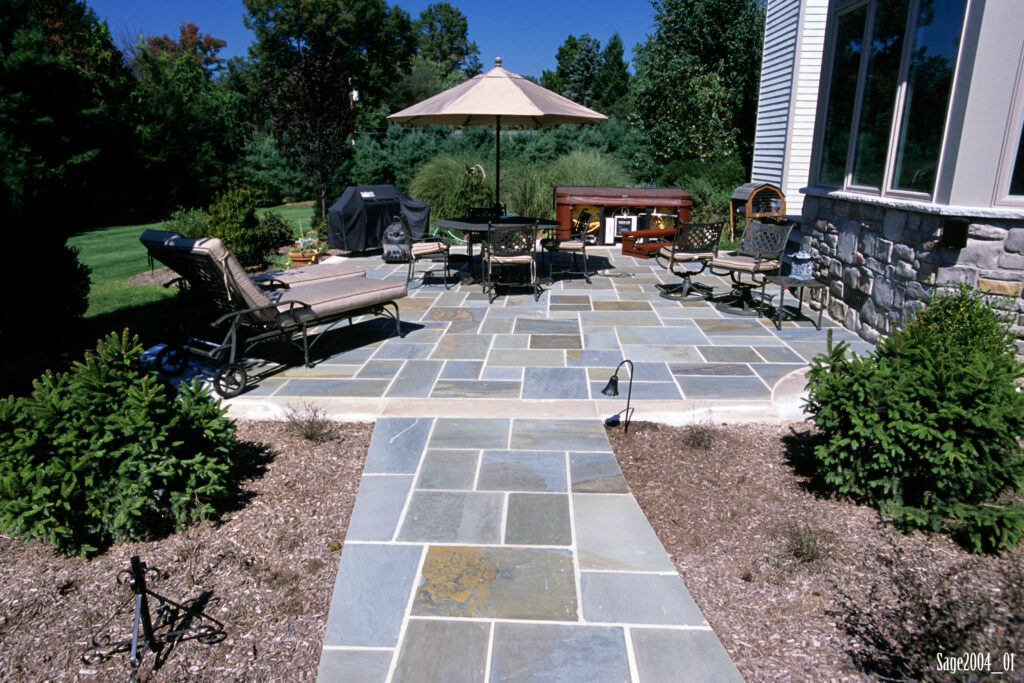
There’s one hardscaping element that is a must-have in almost every NJ backyard renovation, and that’s the paver patio. It’s versatile, durable, and comes in a variety of materials and styles. A well-designed paver patio is the base that every other outdoor feature is built on.
Choosing Between Bluestone, Travertine, and Concrete Pavers for Your Yard
Many homeowners underestimate the importance of material selection. Each choice has its own set of pros and cons when it comes to aesthetics, durability, and long-term expense.
- Bluestone: This natural stone, quarried in Pennsylvania and New Jersey, has a classic look that never goes out of style. It’s able to withstand the freeze-thaw cycles that are common in this area, and it ages beautifully, developing a weathered look over time. It’s a great match for both traditional and modern homes. However, it does need to be sealed periodically to prevent stains.
- Travertine: This porous limestone has a warm, old-world look. It doesn’t get as hot as concrete in the summer, which makes it a popular choice for pool areas. However, it does require more maintenance in the wet winters of New Jersey, and its natural pits may need to be filled in over time.
- Concrete Pavers: This is the most affordable option, and it offers the most design flexibility. Modern concrete pavers from manufacturers like Belgard and Techo-Bloc can mimic the look of natural stone very convincingly. They come in hundreds of different shapes and colors, and if one gets damaged, it’s easy to replace. This is the top choice for New Jersey homeowners who are trying to balance their budget with their desire for a beautiful yard.
Porcelain pavers are also becoming more popular in New Jersey. They’re non-porous, resistant to frost, and virtually maintenance-free, which makes them a great fit for the local climate. The downside is that they’re more expensive and they need to be installed very precisely. They’re less forgiving than concrete pavers if the base isn’t prepared perfectly.
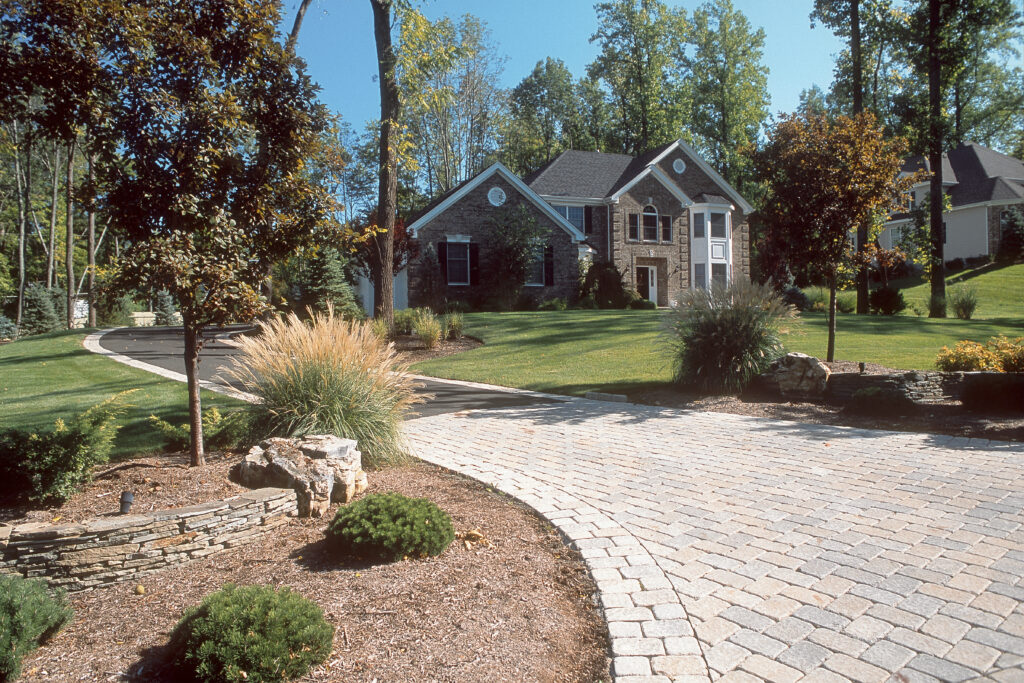
The Impact of Paver Patterns on a Space
The pattern you select for your paver installation can have just as much of an impact on the design as the material you use. A running bond pattern provides a clean, linear aesthetic that works well with modern homes. Herringbone patterns not only add visual interest, but are also more structurally sound under vehicle traffic, making them perfect for driveways. Ashlar patterns, which randomly mix three different paver sizes, give the appearance of natural flagstone and are a great choice for large patios where you want some texture without the formality. For smaller spaces, a simple stack bond with large-format pavers can help keep the area from feeling too busy.
Reasons NJ Homeowners Combine Patios With Built-In Seating Walls
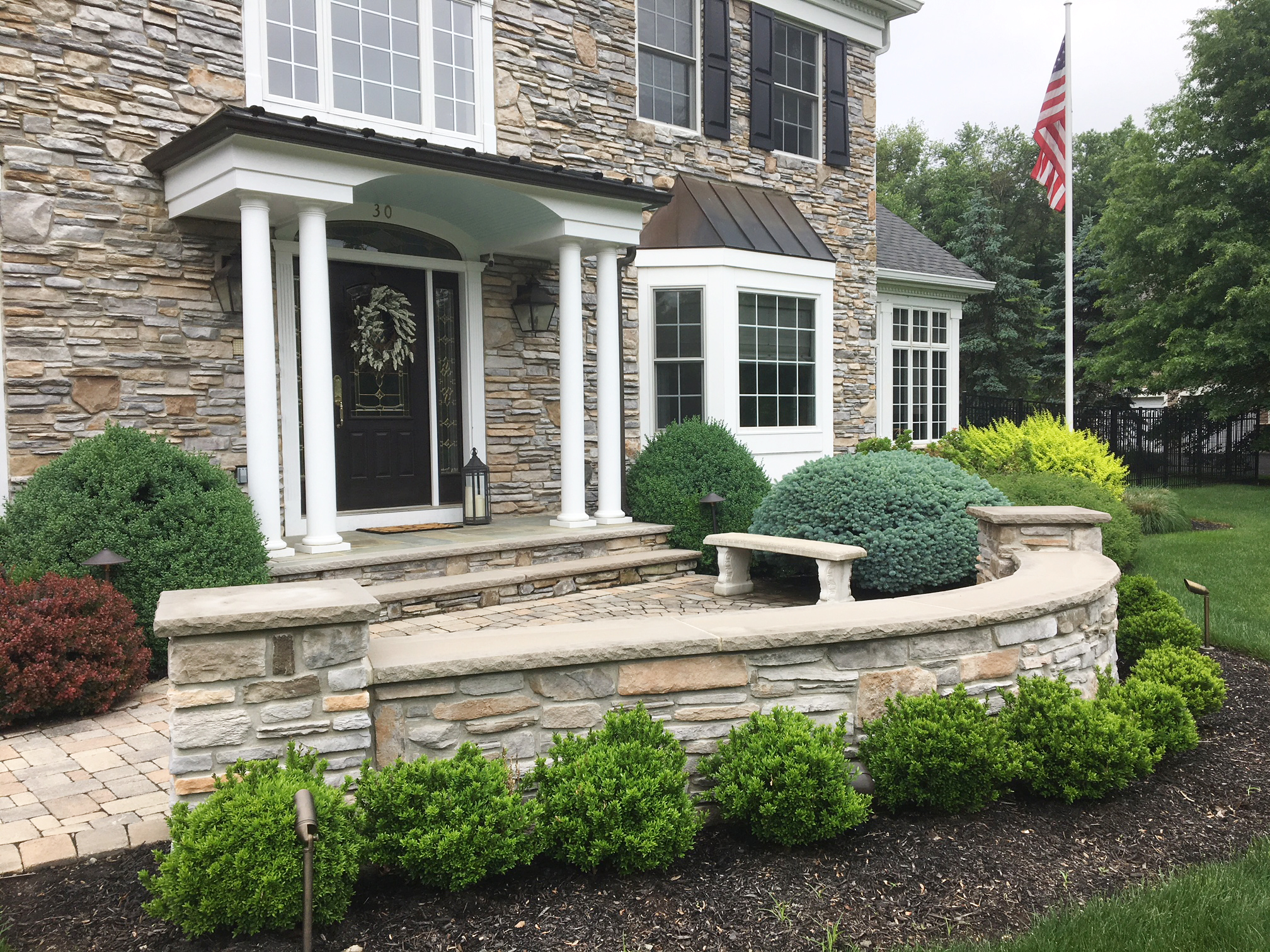
Built-in seating walls address a genuine issue: outdoor furniture is often moved, it fades, and it occupies space. A low stone or paver cap wall around the edges of a patio provides defined boundaries, offers additional seating for entertaining, and lends the whole area a completed, architectural feel that standalone furniture simply cannot match. In NJ backyards where space is a valuable commodity, this dual-purpose feature is one of the most intelligent investments a homeowner can make.
Multi-Level Hardscaping Transforms NJ Yards Into Beautiful Spaces
Whether your yard is sharply sloping or completely flat, multi-level hardscaping offers design opportunities that single-plane layouts cannot. Changes in elevation, even slight ones, add visual appeal, create distinct activity areas, and give a yard a sense of depth and purpose.
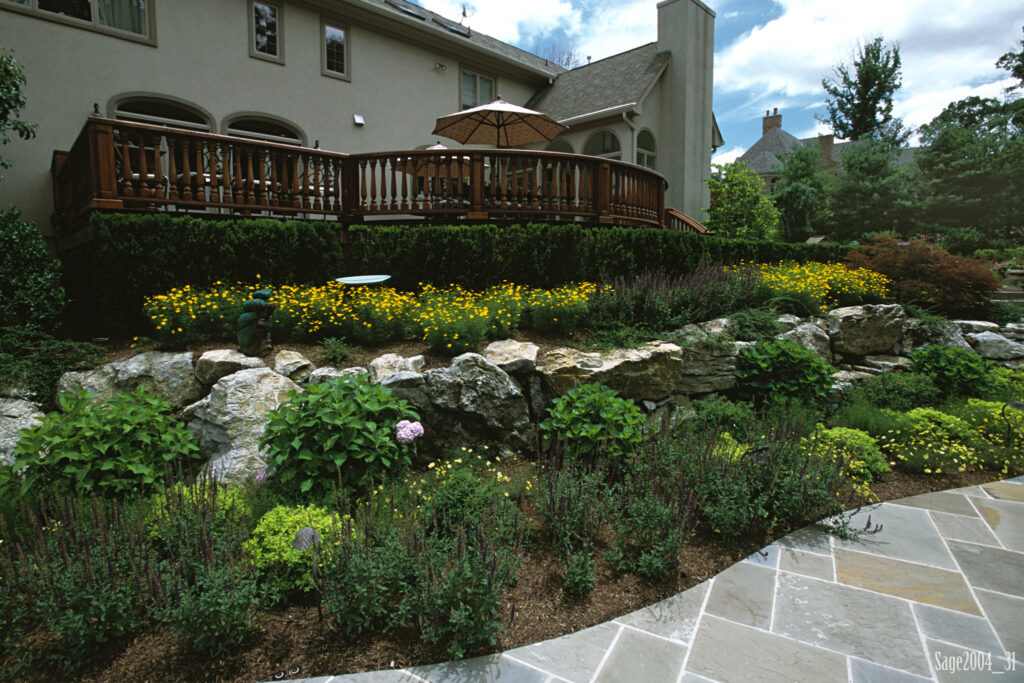
How Terraced Designs Create Functional Outdoor Zones
By terracing a sloped NJ yard, you essentially create a series of flat, usable platforms that are connected by steps and retaining walls. The upper tier might host a paver patio with an outdoor kitchen directly off the house. A middle terrace could serve as a fire pit gathering area. The lower level might transition into lawn or garden beds. Each zone has its own purpose, its own mood, and its own visual character — but they all connect into one cohesive design. This approach also dramatically improves drainage and erosion control, which matters on NJ’s clay-heavy soils where runoff can become a serious problem after heavy rain.
Functional and Aesthetically Pleasing Retaining Walls
Retaining walls in NJ have two primary functions: they must withstand substantial soil pressure and they must be visually appealing. The most effective retaining wall systems, as determined by experienced NJ landscapers, include natural fieldstone, dry-stacked bluestone, and segmental retaining wall blocks such as Allan Block and Versa-Lok. Natural stone walls have a natural quality that seamlessly integrates with planted landscapes. Segmental block systems are engineered with precision and are particularly well-suited for walls that must withstand significant grade changes — some systems are designed for walls that are over six feet tall.
The difference between a retaining wall that endures and one that crumbles within five years is nearly always due to the base preparation and drainage. It’s essential to have the correct crushed stone backfill, a drainage pipe behind the wall, and a compacted gravel base beneath the first course for any retaining wall project in NJ. If you skimp on these elements, the wall may shift, bow, or collapse after just one NJ winter.
NJ Homeowners Love the Addition of Water Features to Their Hardscapes
There’s something about the sound and motion of water that makes an outdoor space feel more elevated. Water features have gone from a luxury item for the few to one of the most in-demand hardscape elements in NJ backyards. The reason is simple: they’re effective on every level. They can help to drown out neighborhood noise, serve as a focal point, attract wildlife, and bring a sense of calm that you can’t get from any other landscape element.
Pondless Waterfalls: Minimal Upkeep, Maximum Effect
Just as the name implies, pondless waterfalls are a circulating waterfall and stream system that flows water over rocks and pebbles and then disappears into a hidden reservoir underneath the ground, instead of flowing into a pond. This is a great option for NJ homeowners who love the aesthetic and sound of a natural waterfall but don’t want the responsibility of maintaining a pond.
The process involves water being pumped from an underground basin, up through a man-made stream bed, over a stone face, and then cascading back down into the gravel-covered reservoir beneath. This eliminates the need to manage standing water, treat algae blooms, and worry about the safety of small children near open water. Aquascape is a system frequently used by NJ contractors for pondless installations, and their components are specifically designed to withstand the freeze-thaw demands of Zone 6b-7a climates.
Pondless waterfalls are a versatile design element. They can be situated in a patio corner, incorporated into a retaining wall, or placed as an independent centerpiece at the end of a garden path. The realistic stonework of a well-constructed pondless waterfall can make it appear as though it is a part of the landscape, rather than merely placed upon it.
Advantages of Pondless Waterfalls
- Low maintenance: All you need to do is keep the water reservoir topped up during dry periods, clean the pump filter once a season, and make sure to remove the pump before the first hard freeze of winter.
- Size variety: Pondless water features can be as small as four feet wide, perfect for a small patio accent, or as large as a 20-foot cascading stream, ideal for larger properties.
- Sound control: A well-sized pondless waterfall can effectively drown out road noise and the sounds of neighbors, a huge plus in NJ’s crowded suburban areas.
- Installation is quick: A standard residential pondless waterfall usually takes an experienced NJ landscape contractor two to three days to install.
Pairing a pondless waterfall with landscape lighting transforms the feature into an entirely different experience after dark. Low-voltage submersible LED lights placed at the base of the fall create a glowing, dramatic effect that makes the water feature the focal point of the entire backyard at night.
Modern Landscapes with Fountain Walls and Spillway Bowls
NJ homeowners who want a more architectural, contemporary water feature will find that fountain walls and spillway bowls offer clean geometry and a sophisticated look that naturally pairs with modern paver patios and minimalist planting designs. A spillway bowl is a cast concrete or stone basin mounted on a pedestal or wall face, with water sheeting over its lip and falling into a lower basin or buried reservoir below. Stacked spillway bowl systems — where water cascades through two or three bowls at different heights — create dramatic vertical interest without requiring much horizontal space, which makes them ideal for smaller NJ backyards where square footage is limited.
How Water Features and Native NJ Plantings Complement Each Other
When it comes to water feature installations, the best ones don’t just focus on the stone and water elements — they also incorporate the surrounding planting beds. Native NJ plants such as Swamp Milkweed (Asclepias incarnata), Blue Flag Iris (Iris versicolor), and Cardinal Flower (Lobelia cardinalis) thrive naturally in the moist-edge conditions created near water features. Ferns, native grasses like River Oats (Chasmanthium latifolium), and moisture-tolerant ground covers help to soften the hard edges of stone work and give the impression that the water feature has always been a part of the natural landscape. This layered approach — stone, water, and native planting working together — is what sets a professionally designed NJ water feature apart from one that merely appears installed.
Outdoor Kitchens and Fire Features: From Luxury to Standard
Five years ago, the idea of an outdoor kitchen was a luxury that only high-end properties could afford. Today, it’s a different story. Outdoor kitchens are now a standard feature in many mid-range backyard renovations. NJ landscape contractors are installing them regularly, thanks to the improved quality and affordability of prefabricated outdoor kitchen components. Plus, the demand for functional outdoor entertaining spaces has grown significantly.
Fire features have also seen a surge in popularity. Built-in fire pits and outdoor fireplaces are some of the most sought-after hardscape additions in NJ, largely due to the extended outdoor entertaining season they offer. A strategically placed fire feature can transform a September evening in a NJ backyard into a cozy outdoor experience that lasts through October and November.
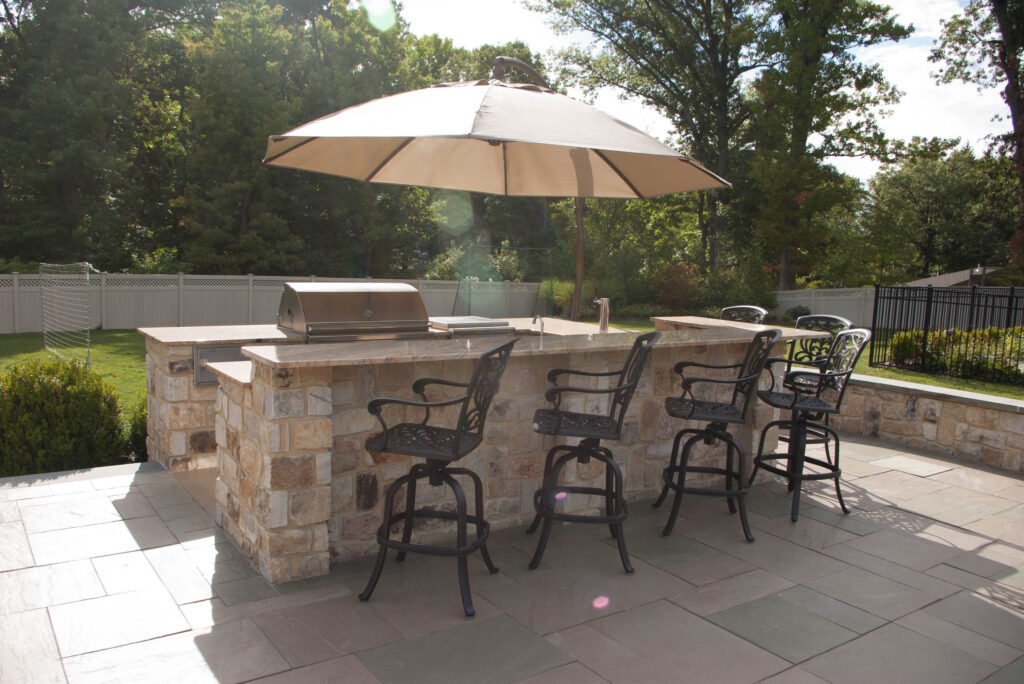
Essentials for a Practical Outdoor Kitchen Design
One of the biggest mistakes in outdoor kitchen design is treating it as an afterthought — simply placing a grill in a stone surround and considering it finished. A truly practical outdoor kitchen requires a work triangle just like an indoor kitchen: a main cooking area, a prep surface, and a storage and serving area that seamlessly flow together without forcing the cook to cover unnecessary distances. For NJ backyards, this usually means a built-in grill (Napoleon and Weber both manufacture built-in models preferred by NJ contractors), a minimum of four linear feet of countertop in a resilient material like granite or porcelain slab, and covered storage underneath for tools and propane.
Having a refrigerator, a side burner, and a built-in sink can take your setup from being just functional to being exceptional. If you want to have a sink, it’s best to have a plumbing rough-in during construction. Trying to add it later can be costly and disruptive. Cabinetry that is outdoor-rated and made of stainless steel or concrete board with a weatherproof finish can handle the humidity and temperature swings in NJ without warping, rusting, or deteriorating. If you cover your kitchen with a pergola or a solid roof structure, you can protect your surfaces and considerably extend the season in which you can use your kitchen.
Choosing Between Fire Pits and Fireplaces: What’s Best for Your Outdoor Space?
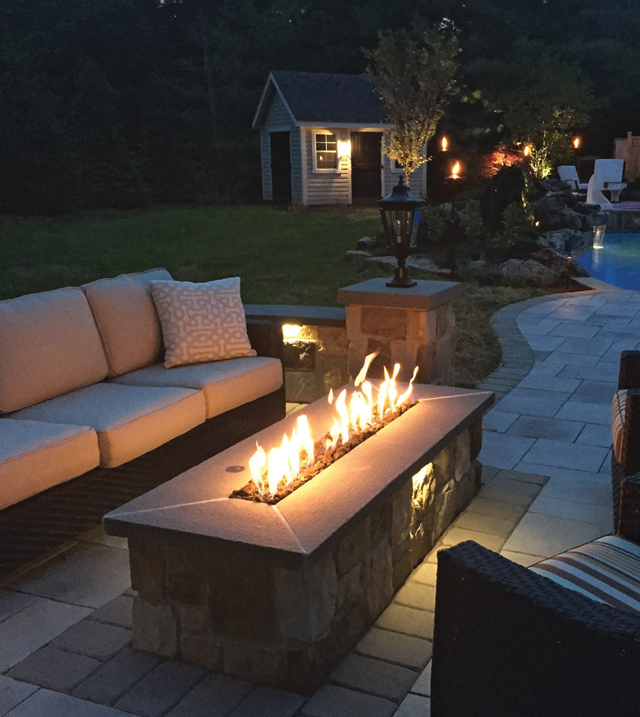
When deciding between a fire pit and an outdoor fireplace, think about how you want your guests to interact. Fire pits are great for socializing — they allow guests to gather in a circle around the fire, which promotes conversation and creates a laid-back, casual environment. A circular or square paver-cap fire pit with built-in seating walls is one of the most effective ways to utilize backyard space in NJ landscape design. The seating wall serves two purposes: it eliminates the need for separate chairs and clearly defines the fire area.
On the other hand, outdoor fireplaces generate a directional focal point. They function like an indoor fireplace, pulling everyone to face the same direction. This is ideal for a more formal outdoor dining or lounge setting. They also offer better flame visibility in windy conditions compared to open fire pits. This is important for NJ properties with less wind protection. The downside is the footprint. A well-proportioned outdoor fireplace needs more space and a more substantial foundation than a fire pit. The construction cost reflects this investment.
Current Trends in NJ Hardscaping: The Influence of Modern Landscape Design
Today’s most impressive hardscaping projects in NJ have one thing in common: a sense of deliberate simplicity. Unlike older designs, which often included a busy mix of materials, colors, and features, modern NJ landscape design follows the idea that each element should have a reason for being there and a clear function.
Just because it’s simple, doesn’t mean it’s dull or plain. It’s intentional. Picture a large bluestone patio with a single clean edge, a matching stone built-in seating wall, and a perfectly placed pondless waterfall. It’s more impactful than a backyard full of mismatched features vying for attention. The simplicity is what gives it a high-end feel.
The key to this approach is coordinating materials. NJ landscape architects are increasingly choosing a primary material — for example, a warm grey concrete paver — and then using that exact tone in every other hardscape element: the cap of the retaining wall, the surround of the fire pit, the treads of the steps. This creates a visual continuity that makes a yard feel like it was designed, not just put together.
- Limit your materials: Stick to two or three complementary materials for your hardscape to keep the design cohesive.
- Use level changes or material shifts to define zones instead of walls or fences whenever possible.
- Keep scale in mind: Oversized pavers on a small patio can feel out of place; small-format brick patterns on a large patio can feel busy. Make sure the scale matches the space.
- Edge everything with purpose: The transition between paver and lawn, paver and planting bed, or paver and stone is where the quality of the design is made or broken.
- Plan lighting from the beginning, not as an afterthought. Place conduit runs and junction boxes during construction before any surface is finished.
Sleek Lines, Neutral Palettes, and Geometric Structure
The current trend in NJ hardscaping is clean geometry — rectangular pavers laid in linear patterns, square fire pit surrounds, straight-edged planting beds. Neutral tones are popular: warm greys, charcoal, buff, and sand. These palettes photograph well, age gracefully, and complement the widest range of NJ home styles, from colonial and craftsman to contemporary and transitional. When color does appear, it comes from planting, not from the hardscape materials themselves.
Low-Maintenance Materials for Hardscaping in NJ
When it comes to low-maintenance hardscaping, NJ landscape contractors recommend several top materials. These include porcelain pavers, EP Henry and Techo-Bloc concrete pavers with integrated color technology, and natural bluestone with a thermal finish, which hides scratches and weathering better than a honed surface. For applications that require wood, Ipe or composite decking is the go-to choice. Polymeric sand is now the standard for filling paver joints in NJ installations, as it resists washout, weed growth, and insect intrusion, unlike traditional stone dust that needs to be replenished frequently.
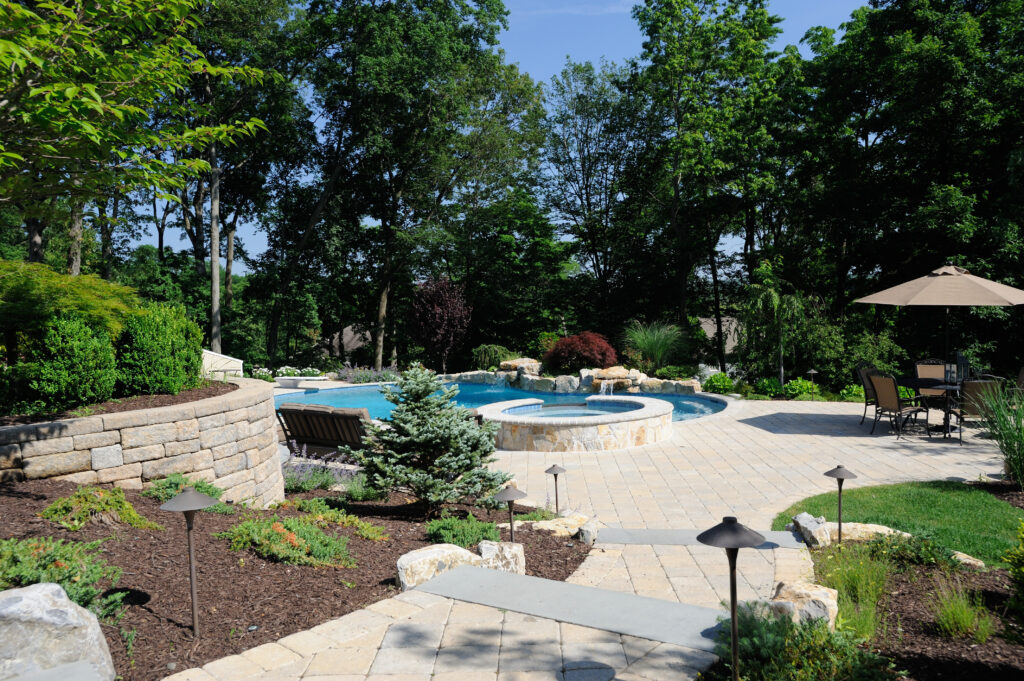
Seamlessly Merging Hardscape and Softscape
The key to making hardscape and plant beds feel cohesive instead of competing is managing the edges and echoing the materials. When a stone patio meets a plant bed, the transition should be crisp and deliberate — a steel or aluminum landscape edging strip set just below the paver height, or a soldier course of pavers set perpendicular to the field pattern to create a clear border. From there, the plant selection should reflect the character of the hardscape: ornamental grasses and architectural shrubs like Inkberry Holly (Ilex glabra) or dwarf conifers echo the clean lines of a modern paver patio far better than sprawling cottage-style plantings would. The aim isn’t to make the plants match the stone — it’s to make them feel like they were always growing in harmony with it.
Layering Plants around Hardscapes Creates a Cohesive Design
While hardscapes provide the backbone of the design, it’s the plants that breathe life into it. In NJ backyard design, the most visually stunning outdoor spaces are not just about the stone and pavers, but how the plants are arranged around, softening, and framing these hard surfaces. If the layer of plants is done correctly, the entire hardscape appears more purposeful. If done incorrectly, even a pricey paver patio can seem stark and incomplete.
Top Plants for New Jersey Patios and Walkways
When choosing plants for the borders of your New Jersey hardscape, you’ll need to consider the state’s climate, which ranges from Zone 6b to 7a. This means that the plants must be able to withstand cold winters, hot and humid summers, and periods of both drought and heavy rain. Here are some of the most reliable plants that New Jersey landscape designers often choose:
- Karl Foerster Feather Reed Grass (Calamagrostis x acutiflora): This upright, architectural plant offers interest in all four seasons. It beautifully complements the vertical lines of a pergola or fireplace structure.
- Knockout Rose series: These roses are low maintenance, disease resistant, and provide reliable seasonal color. They bloom from late spring through frost without the need for deadheading.
- Inkberry Holly (Ilex glabra): This plant is native to NJ, evergreen, and naturally rounded. It provides year-round structure without the need for pruning and can tolerate moist soil near drainage areas.
- Japanese Forest Grass (Hakonechloa macra): This shade-tolerant, ground-level grass softly spills over paver edges, adding movement and texture without aggressive spreading.
- Catmint (Nepeta x faassenii): This low-growing plant is drought-tolerant once established and produces blue-purple blooms that complement grey and charcoal paver tones exceptionally well.
- Little Lime Hydrangea (Hydrangea paniculata ‘Jane’): This compact hydrangea delivers bold seasonal interest without outgrowing its space along a patio edge or seating wall base.
Walkway borders, in particular, can benefit from low, mounding plants that define the path edge without overhanging it. A combination of Catmint on the sunny side and Japanese Forest Grass on shaded stretches can create a natural, flowing border that requires minimal intervention throughout the season.
Avoiding the High Maintenance of Seasonal Color
Many NJ homeowners make the mistake of only planting for one season around their hardscapes. While annuals do provide color during the summer, they die every fall and need to be replanted each spring. This cycle can be costly and time-consuming. A smarter strategy is to create a planting palette that is interesting in all four seasons by using a layered structure.
Begin with a year-round foundation: dwarf conifers, broadleaf evergreens such as Inkberry or Mountain Laurel (Kalmia latifolia), and decorative grasses that maintain their structure throughout the winter. Incorporate spring-flowering shrubs like Spirea or native Serviceberry (Amelanchier canadensis) for interest in the early season. Include summer perennials such as Echinacea, Black-eyed Susan (Rudbeckia hirta), and Agastache for mid-season color that also draws in pollinators. Finish with late-season performers: Asters, ornamental kale for containers near the patio, and the seed heads of Karl Foerster grass that beautifully capture morning frost through November and December. This four-season framework requires almost no replanting once established — just seasonal cleanup and light pruning.
Turn Your NJ Yard Into a Dream
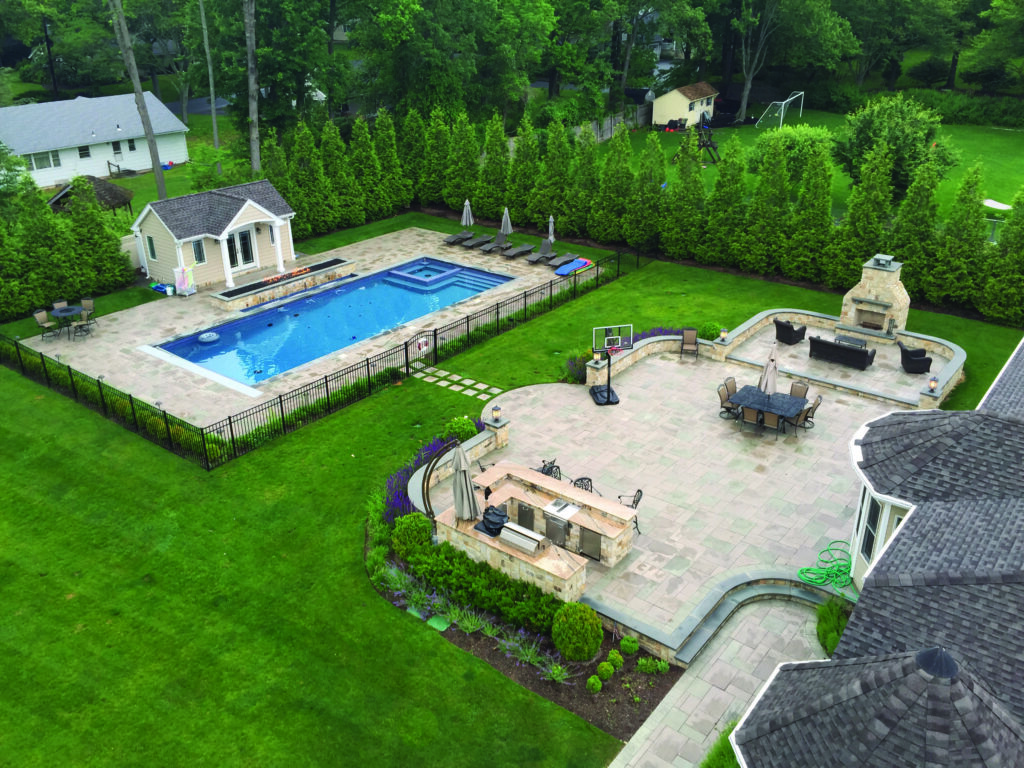
Every NJ backyard you’ve admired — the multi-level patio with the pondless waterfall, the outdoor kitchen with the pergola overhead, the fire pit surrounded by bluestone seating walls and ornamental grasses — began with a conversation and a plan. Nothing was left to chance, and nothing is out of your reach. What makes the difference between a yard that remains ordinary and one that becomes a true outdoor living space is the decision to tackle it with purpose: selecting the right materials for NJ’s climate, planning the zones before breaking ground, and working with people who know what really lasts in this region. Sage Landscape Contractors has specialized in this kind of comprehensive hardscape design and build throughout Somerset, Union, and Morris Counties for over forty years.
Commonly Asked Questions
What Is the Top Hardscaping Feature for NJ Backyards?
In NJ backyards, paver patios are the leading hardscaping feature by a wide margin. Concrete pavers from companies such as Techo-Bloc and EP Henry are the most popular because they balance price, design versatility, and resilience under NJ’s freeze-thaw conditions. The most frequently added features to patio installations are built-in seating walls and fire pits.
Which Materials Are Most Durable in New Jersey’s Climate?
In New Jersey’s freeze-thaw climate, porcelain pavers, thermal-finish natural bluestone, and high-quality concrete pavers with integrated color technology are the most durable hardscape materials. All three can endure numerous freeze-thaw cycles without significant cracking or surface degradation, provided they are installed over a properly compacted and graded base. The lifespan of any paver installation can be greatly extended by using polymeric sand jointing compounds, which prevent washout and weed intrusion between joints.
What is the Average Cost of a Hardscaping Project in NJ?
The cost of a hardscaping project in NJ can vary greatly depending on the scope of the project, the materials used, and the condition of the site. A basic patio made with concrete pavers and a simple design could cost anywhere from $15 to $25 per square foot. More complex projects using natural bluestone or porcelain pavers typically cost between $25 and $45 per square foot. If you’re looking to install a full outdoor living space with an outdoor kitchen, a fire feature, retaining walls, and a water element, you could be looking at anywhere from $50,000 to over $150,000, depending on the complexity of the project.
The main factor affecting hardscape pricing in NJ is site preparation. If a property needs a lot of grading, has poor drainage, or is difficult to access, it will require a lot more labor before the first paver can be placed. It’s very important to get a detailed, itemized estimate that breaks down material costs, labor, and base preparation. This will allow you to accurately compare quotes from different NJ contractors.
Does Hardscaping Increase the Value of My NJ Home?
Definitely! High-quality hardscaping consistently increases the value of NJ homes. Outdoor living features like paver patios, outdoor kitchens, and fire features not only increase the functional square footage of your home, but they also set your home apart in NJ’s competitive real estate market. The return on investment for these features varies by neighborhood and feature, but well-executed hardscape projects in NJ’s Somerset, Union, and Morris County markets have historically recouped a significant portion of their cost at resale, not to mention the increased daily enjoyment you get while you own the property.
Is a Permit Necessary for Hardscaping Projects in New Jersey?
In New Jersey, the need for a permit for hardscaping varies depending on the municipality, the type of project, and the project’s size. As a rule, basic patio and walkway installations on private property that don’t change drainage or impervious coverage beyond local limits often do not require a permit. However, retaining walls above a certain height — usually four feet in most NJ municipalities — do require a permit and engineered drawings. Outdoor kitchens with gas lines and electrical connections require separate trade permits. Structures like pergolas and gazebos almost always require a building permit in NJ.
Before diving into any major hardscaping project, make sure to check the requirements with your local zoning and building department. A seasoned NJ landscape contractor will be well-versed in the permit requirements for your specific municipality and should take care of the application process as part of the project’s scope.
Operating without the necessary permits can lead to serious issues: it can make selling the house more difficult, you could be fined, and you may even be asked to remove the work that was done without a permit. It’s not a step you should skip. Sure, I can help with that. However, I will need the original AI content to rewrite it into human content.