Installing Fire Pits: NJ Contractor on Frost-Tolerant Base Build
Ever wonder why your neighbor’s fire pit cracked apart after just one winter? New Jersey’s freeze-thaw cycles generate over 2,000 PSI of destructive pressure—and most fire pit bases aren’t built to handle it.
Key Takeaways
- Water expands 9% when it freezes, creating destructive pressure that can crack fire pit bases and destroy structural integrity over New Jersey’s harsh winter cycles.
- Proper excavation depth, compacted angular gravel drainage, and low-porosity materials are required for building fire pits that survive NJ’s freeze-thaw conditions.
- New Jersey mandates elevated, non-combustible containers for all outdoor fires, with permanent masonry installations often requiring local permits.
- Professional installation prevents costly winter repairs by ensuring proper base preparation and material selection from the start.
New Jersey homeowners dream of cozy fire pit evenings, but many find their investment cracked, shifted, or completely destroyed after just one winter. The culprit isn’t poor craftsmanship—it’s the state’s brutal freeze-thaw cycles that can turn improperly installed fire pits into expensive yard disasters.
New Jersey’s Freeze-Thaw Cycles Destroy Improperly Installed Fire Pits
New Jersey’s climate presents unique challenges for outdoor hardscaping projects. The state experiences repeated temperature swings throughout winter, with freezing nights followed by thawing days. This constant expansion and contraction creates enormous pressure on improperly constructed fire pit bases, leading to structural failures that often don’t become apparent until spring.
Most homeowners underestimate the power of this natural phenomenon. When temperatures drop below freezing, any trapped moisture begins expanding with tremendous force. Fire pits installed without proper drainage or base preparation become victims of this relentless cycle, resulting in cracked pavers, shifted stones, and completely compromised structural integrity.
Expert landscape design and planning services understand these local climate challenges and incorporate frost-protection strategies from the initial design phase. The difference between a fire pit that lasts decades and one that fails after its first winter often comes down to understanding New Jersey’s specific soil and weather conditions.
Why Most Fire Pit Bases Fail in New Jersey Winters
1. Water Expands 9% When It Freezes, Creating Destructive Pressure
The science behind freeze-thaw damage is straightforward but devastating. When water freezes, it expands approximately 9% in volume, generating pressures exceeding 2,000 pounds per square inch. This expansion force can crack even the densest concrete pavers and shift retaining wall blocks with ease.
In fire pit installations, this expansion occurs in multiple locations simultaneously. Water trapped in joints between pavers expands outward, while moisture beneath the base pushes upward through frost heave. The combination creates a destructive force that overwhelms inadequate foundations and poorly selected materials.
2. Certain Soil Types Retain Water and Increase Frost Heave Risk
New Jersey’s clay-heavy soils compound freeze-thaw problems significantly. Clay particles hold water much longer than sandy or well-draining soils, creating perfect conditions for frost heave. When clay soil freezes, it doesn’t just expand—it pushes upward with enough force to lift entire sections of hardscaping.
Local contractors familiar with New Jersey’s soil composition understand that clay requires specialized base preparation techniques. Standard installation methods that work in sandy coastal areas often fail spectacularly when applied to the clay soils common throughout central and northern New Jersey counties.
3. Poor Drainage Leads to Ice Buildup and Structural Damage
Inadequate drainage transforms minor moisture issues into major structural problems. Without proper water management, even small amounts of trapped water become destructive ice formations during freeze cycles. This ice doesn’t just push outward—it creates expanding wedges that progressively worsen existing cracks and separations.
Fire pits installed on compacted soil or solid surfaces without drainage provisions become collection points for water. Snow melt, spring rains, and even morning dew can accumulate beneath the structure, setting up conditions for catastrophic freeze damage during the next cold snap.
Building a Frost-Tolerant Base That Survives NJ Climate
1. Excavate to Sufficient Depth Based on Soil Conditions and Design
Proper excavation depth varies significantly based on New Jersey’s diverse soil conditions and the specific fire pit design. In clay soils, excavation typically extends 8-12 inches below the finished grade to allow for adequate base material placement. Sandy soils may require less depth, but still need sufficient excavation to accommodate proper drainage layers.
The excavation process involves more than just digging a hole. Professional installations include sloping the excavated area slightly away from the center to promote water movement toward drainage areas. This subtle grading prevents water from pooling beneath the fire pit during New Jersey’s wet spring seasons.
2. Install Compacted Angular Gravel for Superior Drainage
Angular gravel forms the backbone of successful freeze-thaw protection in New Jersey installations. Unlike rounded stone, angular gravel particles lock together when compacted, creating a stable base that resists shifting while maintaining excellent drainage characteristics.
The installation process involves placing gravel in lifts of 2-3 inches, compacting each layer thoroughly before adding the next. This methodical approach ensures uniform density throughout the base while creating interconnected void spaces that allow water to drain away from the fire pit structure. Most successful installations use 4-6 inches of compacted angular gravel as the minimum base depth.
3. Select Low-Porosity Materials Rated for Freeze-Thaw Cycles
Material selection proves critical in New Jersey’s harsh climate conditions. Low-porosity materials absorb less water, reducing the internal pressure created during freeze cycles. Dense concrete pavers, natural granite, and engineered stone products specifically rated for freeze-thaw exposure provide the durability necessary for long-term success.
Low water absorption is critical for optimal performance, though the specific percentage varies by material type. Concrete pavers typically require maximum absorption rates around 5% (ASTM C1262), while refractory bricks may have 5-10% absorption while still providing effective freeze-thaw resistance. Professional contractors verify material specifications before installation to ensure compatibility with local climate demands.
Material Selection for New Jersey Fire Pit Durability
Dense Stone and Concrete Pavers Resist Ice Damage
Dense stone and properly manufactured concrete pavers offer superior resistance to freeze-thaw damage through their low porosity and high compressive strength. Granite, dense fieldstone, and commercial-grade concrete pavers rated for de-icing salt exposure handle New Jersey’s winter conditions while maintaining structural integrity season after season.
The manufacturing process for quality concrete pavers includes air entrainment and specific aggregate selection designed to withstand repeated freeze-thaw cycles. These pavers undergo testing that simulates hundreds of freeze-thaw cycles, ensuring they maintain structural integrity under real-world conditions that destroy inferior materials.
High-Heat Refractory Brick Liners Withstand Intense Temperatures
Refractory brick liners provide protection for fire pit interiors exposed to direct flame and extreme temperatures. These specialized bricks withstand temperatures exceeding 2,000 degrees Fahrenheit while resisting thermal shock from rapid temperature changes common in outdoor fire applications.
The installation process requires high-temperature mortar specifically formulated for refractory applications. Standard masonry mortar fails under extreme heat, leading to joint failure and structural compromise. Professional installations use refractory mortar that maintains bond strength across the full temperature range from winter freezing to summer fire temperatures.
New Jersey Building Codes and Safety Requirements
Elevated, Non-Combustible Containers Are Mandatory
The New Jersey Department of Environmental Protection strictly prohibits open burning directly on the ground, mandating elevated, non-combustible containers for all outdoor fires. This regulation ensures fire containment while protecting surrounding vegetation and structures from heat damage and ember spread.
Compliance involves using containers constructed from approved materials including steel, concrete, stone, or brick. The elevation requirement prevents ground contact that could ignite subsurface organic matter or root systems. Most installations incorporate fire-resistant bases extending at least 12 inches beyond the fire container perimeter.
Permanent Masonry May Require Local Permits
Permanent masonry outdoor fireplaces fall under New Jersey Uniform Construction Code regulations and often require permits before construction begins. Local zoning departments evaluate proposed installations for setback compliance, structural adequacy, and neighborhood impact considerations.
The permit process typically involves submitting detailed plans showing exact placement, construction methods, and safety clearances. Many municipalities require professional design stamps for permanent installations exceeding specific dimensions or incorporating gas connections. Checking local requirements before beginning construction prevents costly modifications or removal orders.
Professional Installation Prevents Costly Winter Repairs
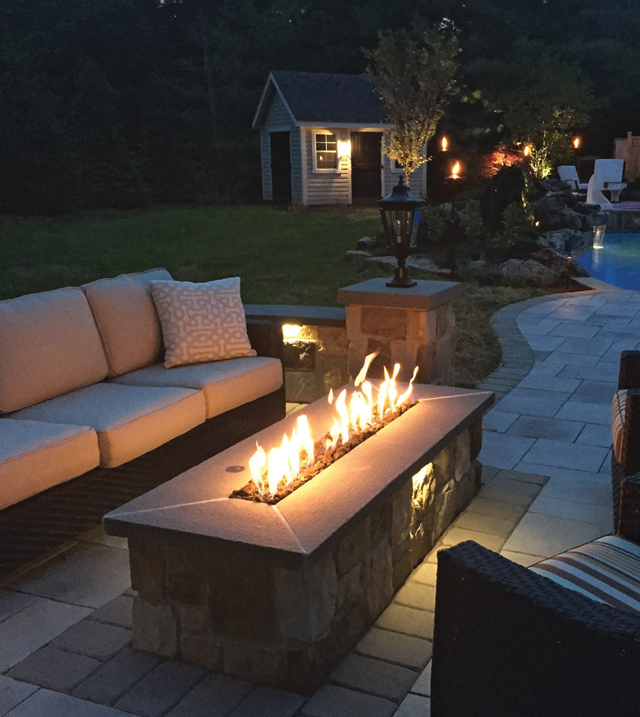
Professional fire pit installation provides protection against New Jersey’s challenging climate conditions through expert material selection, proper base preparation, and code-compliant construction techniques. Experienced contractors understand local soil conditions, drainage requirements, and building code nuances that ensure long-term success.
The investment in professional installation typically proves cost-effective compared to repair expenses from failed DIY attempts. Replacing cracked pavers, re-leveling shifted structures, and addressing drainage problems often costs more than proper initial installation. Professional installations include warranties that protect homeowners against climate-related failures.
Expert contractors also handle permit requirements, utility location services, and safety inspections that ensure compliance with local regulations. This approach eliminates the risk of code violations that could require expensive modifications or complete reconstruction of non-compliant installations.
For expert landscape design and professional fire pit installation that withstands New Jersey’s demanding climate, connect with us at Sage Landscape Contractors & Tree Experts.