Outdoor Kitchen Design | NJ Landscape Contractor on Freeze-Thaw Materials
Did you know New Jersey experiences 30-40 freeze-thaw cycles each winter—and each one could be cracking your outdoor kitchen countertops from the inside out? Here’s why standard materials fail spectacularly, and which engineered alternatives actually survive.
Key Takeaways
- New Jersey’s freeze-thaw cycles destroy most standard outdoor kitchen materials, requiring specialized materials like granite, porcelain slabs, and marine-grade stainless steel to prevent cracking and warping.
- Proper installation timing is critical – scheduling hardscape construction for early spring or fall allows materials to cure before repeated freezing begins.
- Water management prevents costly failures through proper drainage slopes (1-2% away from structures) and below-frost plumbing installation at 32-48 inches deep.
- Marine-grade polymer cabinets outperform traditional materials in New Jersey’s humid conditions, resisting moisture absorption that causes wood to rot and metal to corrode.
Building an outdoor kitchen in New Jersey means battling some of the most challenging weather conditions on the East Coast. The state’s notorious freeze-thaw cycles, combined with high humidity levels, can turn a beautiful outdoor cooking space into a cracked, warped, and rotting disaster within just a few seasons if the wrong materials are chosen.
Why New Jersey’s Weather Destroys Most Outdoor Kitchen Materials
New Jersey’s climate creates a perfect storm for outdoor kitchen destruction. When water penetrates materials and then freezes, it expands with tremendous force – up to 9% more volume than liquid water. This expansion creates internal pressure that can crack unsealed or saturated granite, splits wood, and causes joints to fail. The state typically experiences dozens of freeze-thaw cycles per winter, often ranging from 30-40, meaning this destructive process repeats over and over.
Summer humidity compounds the problem by allowing moisture to penetrate deeper into materials before winter arrives. Sage Landscape Contractors understands these unique challenges after years of building outdoor kitchens that withstand New Jersey’s harsh conditions. Wood cabinets absorb moisture like sponges, leading to swelling, warping, and eventual rot. Standard concrete can develop hairline cracks that become major structural problems after repeated freezing.
The economic impact hits homeowners hard. Outdoor kitchens built with inadequate materials often require significant and costly repairs or complete rebuilds within a few years, turning a modest investment into a much larger expense. The key lies in selecting materials specifically engineered to handle these extreme conditions from the start.
Best Countertop Materials That Handle NJ Freeze-Thaw Cycles
1. Granite: Durable Choice That Requires Annual Sealing
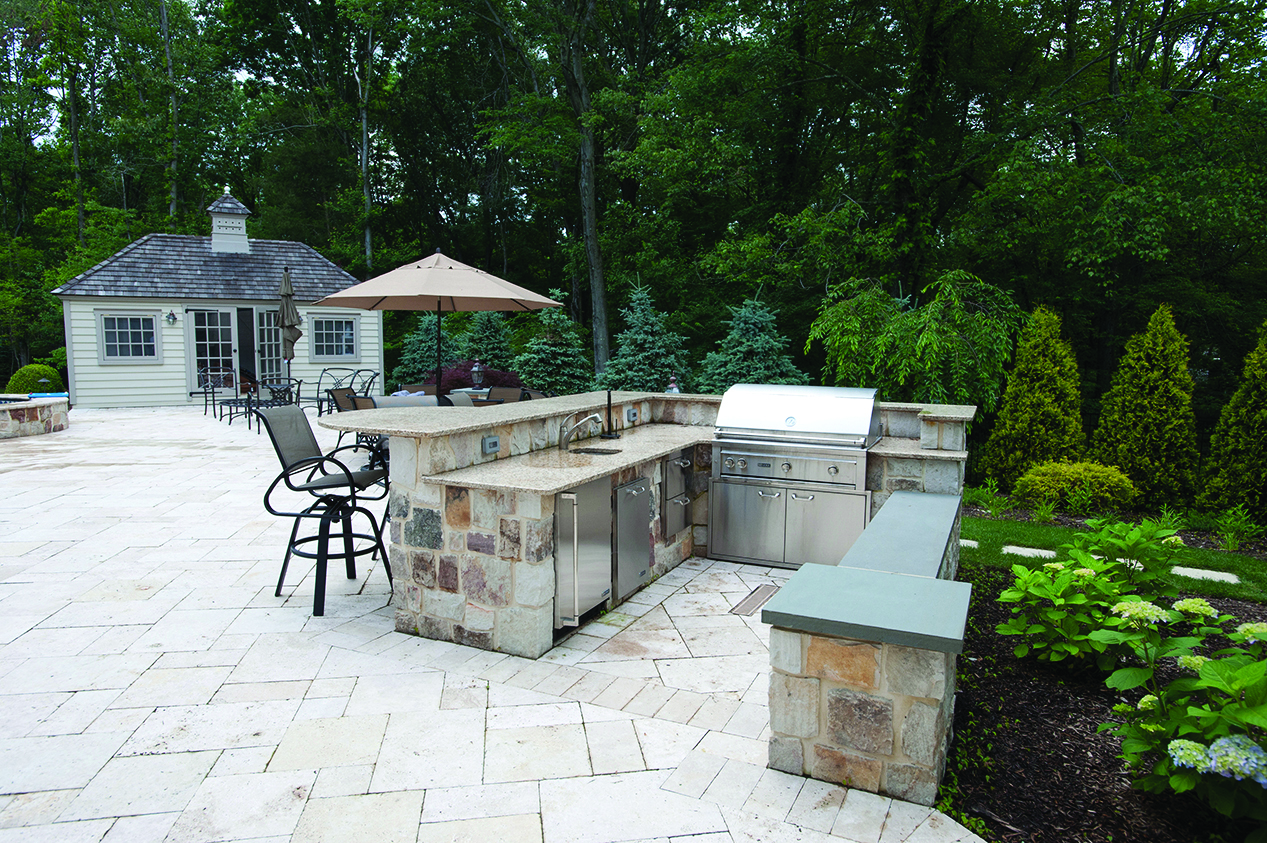
Granite stands as the gold standard for New Jersey outdoor kitchen countertops due to its incredibly low porosity and exceptional resistance to freeze-thaw cracking. This natural stone can handle direct contact with hot grills reaching 500°F+ and then withstand sub-zero temperatures the same night without developing stress cracks.
The secret lies in granite’s tight crystal structure, which leaves minimal space for water penetration. However, granite isn’t maintenance-free. Annual sealing with a penetrating sealer creates an additional barrier against moisture infiltration. Quality granite countertops properly sealed can last for many years in New Jersey’s climate, making the investment worthwhile despite higher upfront costs.
2. Porcelain Slabs: Ultra-Compact Engineering
Porcelain slabs represent the cutting edge of outdoor countertop technology. These ultra-compact surfaces are engineered through extreme heat and pressure, creating a virtually non-porous material that laughs at freeze-thaw cycles. Unlike natural stone, porcelain requires zero sealing and maintains its appearance for a very long time.
The manufacturing process creates a material that’s actually denser and stronger than natural stone. This reduces structural load requirements and installation complexity. Porcelain slabs can be manufactured in large formats up to 10 feet long, minimizing seams where water might penetrate. UV stability means colors won’t fade even under New Jersey’s intense summer sun.
3. What to Avoid: Softer Stones That Crack
Marble, limestone, and sandstone might look beautiful in showrooms, but these softer stones spell disaster in New Jersey’s climate. Their porous nature allows water penetration, and their softer composition can’t handle the internal pressure created by ice expansion. Even sealed versions of these materials are still susceptible to developing hairline cracks.
Concrete countertops, while popular for their customizable appearance, require expert installation and annual maintenance to prevent water infiltration. Standard concrete mixes without proper additives will crack under freeze-thaw stress, making them unsuitable for most New Jersey applications.
Cabinet Materials That Won’t Warp or Rot in NJ Humidity
1. Stainless Steel: 304 Grade vs Marine-Grade 316
Stainless steel cabinets offer unmatched durability in New Jersey’s challenging environment, but not all stainless steel performs equally. Grade 304 stainless steel provides excellent corrosion resistance for most inland New Jersey locations, containing 18% chromium and 8% nickel for protection against moisture and temperature extremes.
For properties near the ocean or areas with salt exposure from winter road treatments, marine-grade 316 stainless steel becomes essential. The addition of molybdenum creates superior resistance to chloride corrosion. This upgrade can add to cabinet costs but prevents the premature pitting and discoloration that affects lesser grades in coastal environments.
2. Marine-Grade Polymer: The Hidden Champion
High-density polyethylene (HDPE) and other marine-grade polymers represent the most underrated option for New Jersey outdoor kitchens. These materials are completely non-porous, meaning they can’t absorb water that later freezes and causes damage. Unlike wood that swells and shrinks with humidity changes, polymer cabinets maintain dimensional stability year-round.
Modern polymer cabinets can be manufactured to mimic wood grain or smooth painted finishes, offering aesthetic appeal without maintenance requirements. They’re impervious to insects, won’t support mold growth, and can be easily cleaned with standard household products. While offering various color options, some may find the aesthetic range of polymer cabinets different compared to painted wood or powder-coated metal alternatives.
Flooring Solutions That Resist Ice Damage
1. Porcelain Pavers for Maximum Durability
Porcelain pavers engineered for outdoor use provide the ultimate flooring solution for New Jersey outdoor kitchens. These pavers are manufactured with extremely low water absorption rates (less than 0.5%), virtually eliminating freeze-thaw damage. The manufacturing process creates a material denser and stronger than natural stone while maintaining slip-resistant textures essential for safety around cooking areas.
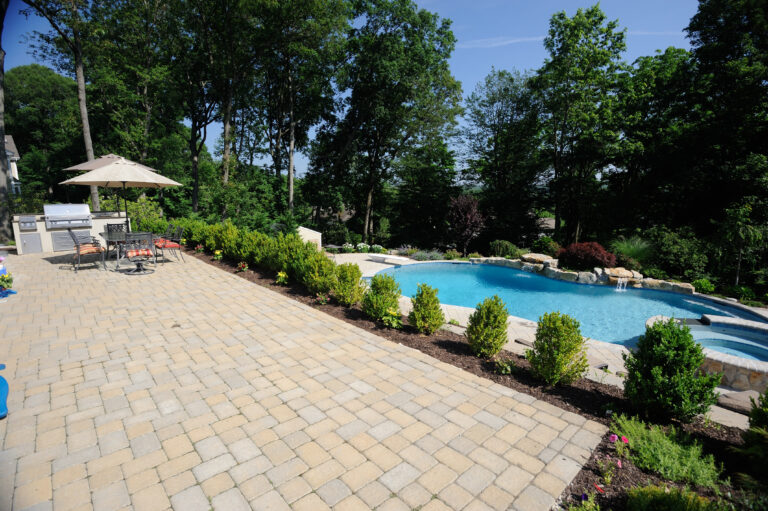
Installation requires proper base preparation with adequate drainage and the use of polymeric sand in joints to prevent water infiltration. Quality porcelain pavers can handle the weight of heavy appliances and resist staining from grease and food spills. Their consistent sizing also makes replacement of individual pavers possible if damage occurs, unlike poured surfaces that require extensive repair.
2. Natural Stone Selection Criteria
When natural stone is preferred for aesthetic reasons, selection criteria become critical for New Jersey installations. Bluestone, granite, and dense sandstones with low absorption rates can perform adequately with proper installation. The stone must be thick enough to handle freeze-thaw stress without cracking.
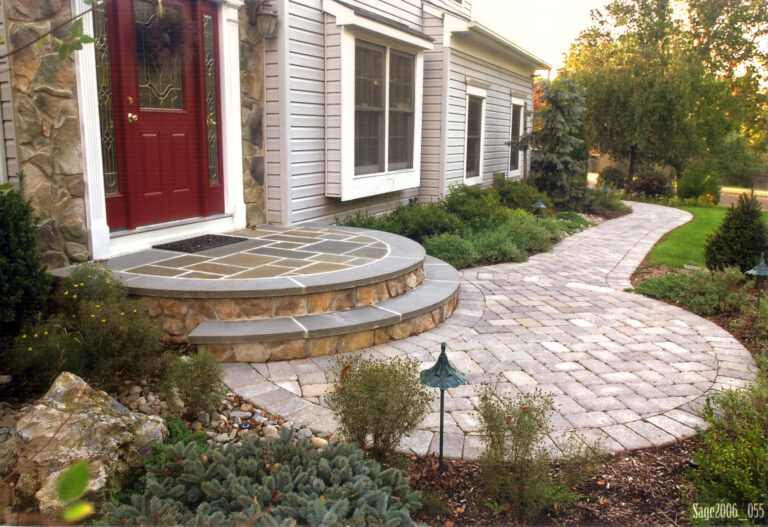
Proper installation includes a compacted stone base and may incorporate geotextile fabric to enhance stability and prevent settling during freeze-thaw cycles. Joint materials must be specifically formulated for freeze-thaw resistance to prevent washout and subsequent paver movement.
Critical Installation Timing to Prevent Costly Failures
1. Off-Season Planning for Better Results
Timing outdoor kitchen installation correctly can mean the difference between decades of reliable service and costly early failures. The ideal construction window in New Jersey runs from early April through late October, allowing concrete and mortars adequate curing time before the first hard freeze. Scheduling major hardscape work for early spring or early fall provides optimal conditions for material curing.
Concrete and mortar need adequate time at proper temperatures to achieve design strength. Installing during extreme summer heat can cause rapid moisture loss, leading to weak, crack-prone surfaces. Professional contractors plan material deliveries and installation sequences to maximize curing time while working around New Jersey’s unpredictable weather patterns.
2. Proper Drainage Requirements
Water management forms the foundation of successful outdoor kitchen installation in freeze-thaw climates. The entire kitchen area must slope away from the house at 1-2% grade – approximately 1/4 inch per foot – to prevent water accumulation under appliances and at wall bases. This seemingly minor detail prevents the water pooling that leads to catastrophic freeze damage.
Drainage systems should include proper aggregate bases that won’t hold water. French drains around the kitchen perimeter collect and redirect surface water before it can penetrate under the structure. Additional protection against moisture infiltration helps prevent long-term damage.
3. Below-Frost Plumbing Essentials
For plumbing, water supply lines must extend well below the frost line to prevent freezing. New Jersey’s frost depth typically reaches 32-48 inches, requiring water supply lines to run well below this level to prevent freezing. Professional installation includes shut-off valves with drain ports installed below the frost line, allowing complete system drainage before winter. This critical detail prevents burst pipes that can cause thousands in damage and require excavation for repairs.
Proper plumbing design includes insulation for any exposed pipe runs and heat tape where code permits. These winterization procedures must be completed before the first hard freeze to prevent costly spring repairs.
Sage Landscape’s Years of NJ Outdoor Kitchen Experience
The outdoor kitchen industry has evolved from basic brick and wood structures that required constant maintenance to today’s engineered materials that can withstand decades of freeze-thaw cycles with minimal care. Extensive experience in a region translates into practical knowledge about local soil conditions, drainage patterns, and microclimates that affect material performance.
Seemingly minor installation details – like joint spacing, base preparation, and drainage slopes – can significantly determine the longevity of an outdoor kitchen. Real-world testing and experience provide invaluable insights that benefit new projects. For homeowners ready to invest in a truly durable outdoor kitchen designed specifically for New Jersey’s demanding climate, seeking expert contractors who understand the unique challenges of freeze-thaw cycles and humid summers ensures your investment withstands decades of harsh weather conditions.