Spring Tree Care & Removal in New Jersey: A Practical Guide for Homeowners
- Spring is the ideal season to identify any winter damage before the full growth of the canopy conceals any structural issues in your trees.
- Not all trees that leaf slowly are dead — New Jersey’s native oaks and other species can lag behind other trees by weeks, and there’s a simple scratch test that quickly reveals the truth.
- Mulching incorrectly is one of the most frequent errors NJ homeowners make in the spring, and it quietly harms tree roots over time.
- Some trees should never be pruned in the spring — trimming at the wrong time exposes them to disease and pest infestation.
- A professional spring inspection can help avoid significant storm damage — it’s far easier and safer to remove hazardous trees before the summer foliage and storm season arrive.
When winter finally releases its grip on New Jersey, your trees reveal exactly what they’ve endured — and spring is your opportunity to address it before it worsens.
Ice storms can leave behind cracked limbs, and slow-leafing trees can make you wonder if they’ll ever come back. There’s a lot to check out once the ground thaws. Many of the severe tree problems that homeowners deal with in the summer and fall could have been spotted in early spring. Homeowners just didn’t know what to look for.
Important Points: What New Jersey Homeowners Should Understand About Spring Tree Maintenance
Spring tree maintenance is not just about aesthetics. It’s about safety, the long-term health of your trees, and staying ahead of the havoc that summer storms wreak on New Jersey gardens each year. If done properly, a concentrated spring inspection and a few wise choices now could save you thousands in emergency removal expenses down the line.
Why Spring Is Crucial for Your New Jersey Trees
Spring is a special time of year when the damage from winter is clearly visible, but the summer foliage hasn’t yet sprung up to cover any structural issues. This view of the bare canopy is important – it allows you to spot cracks, dead branches, and weak branch unions that would be almost impossible to see once the tree is full of leaves.
Here are a few reasons why taking action in the spring is advantageous: we, at Sage Landscaping Services in New Jersey, can provide expert guidance and services to ensure your trees are healthy and well-maintained.
- Before the leaves come in and block your view, it’s easier to see what damage has been done over the winter.
- By structurally pruning in the spring, you are encouraging healthy growth, rather than waiting until the tree has overgrown and then reacting.
- Infestations of pests and diseases are much easier to manage if caught early in the spring, rather than waiting until mid-season.
- Before the heavy summer foliage comes in, adding wind resistance and extra weight to already compromised limbs, it is safer to remove hazardous trees.
Unfortunately, the climate in New Jersey doesn’t make this easy. Wet winters, ice storms, and freeze-thaw cycles can put a lot of stress on trees — especially older hardwoods like oaks, maples, and black cherries that are common throughout the state. It’s simply smarter to act in March or April, before the schedule fills up and before storm season starts.
What to Look for During Your Spring Tree Walk-Through
Before you pick up the phone or grab a pruning saw, take a leisurely stroll around your property. You don’t need any fancy tools for this — just some time, a keen eye, and knowing what to look for.
Here’s what you should be looking for during your walk:
- Inspect the canopy from various perspectives, not just from directly below the tree.
- Walk around the entire circumference of each mature tree, inspecting the base of the trunk and the soil around it.
- Take note of any branches that hang over structures — roofs, sheds, driveways, play sets.
- Look for asymmetry in the canopy, which can indicate internal decay or root problems.
- Examine the soil around the base for signs of heaving, cracking, or mushroom growth.
What to Look for on the Ground and at the Base
The base of a tree can tell you more than you might think. If the soil appears to be lifting or cracking on one side of the tree, it may be a sign of root failure — one of the most dangerous structural problems a tree can have because it develops out of sight.
If you see mushrooms or other fungus growing at the base of your tree or on the lower trunk, that’s a big problem. Fungi such as Ganoderma (also known as artist’s conk) is a sign of internal wood rot that could be quite advanced. By the time you see the fungus on the outside, the decay on the inside is often substantial.
Be sure to look for girdling roots, which are roots that coil around the trunk of the tree at or just below the surface of the soil. This is a frequent issue in New Jersey landscapes where trees were planted too deep or in soil that was too compacted, and it can slowly choke a tree over the course of several years.
Identifying Dead or Damaged Branches Above
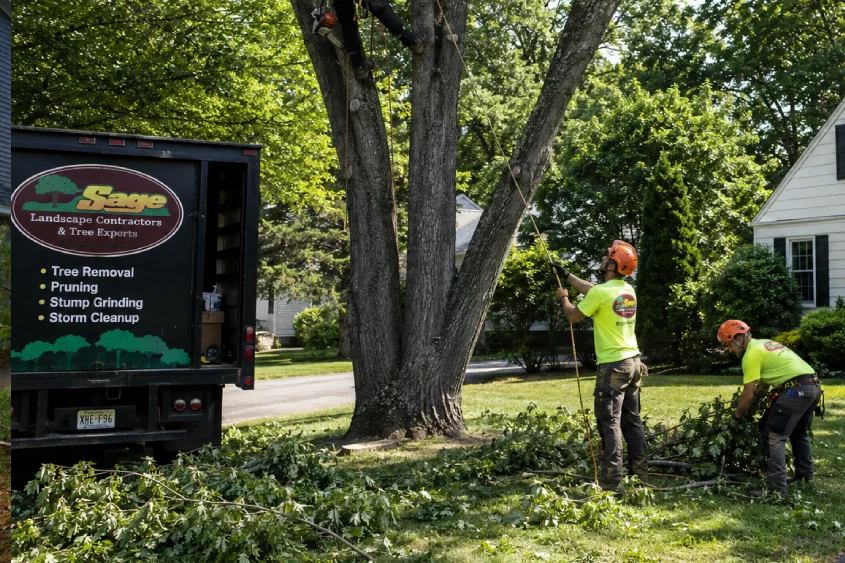
Before the leaves sprout, it’s easy to identify dead branches – they simply won’t have any buds or new growth while everything else around them starts to turn green. Keep an eye out for branches that look gray, brittle, or are still carrying dried leaves from the previous fall (a condition known as marcescence, which is common in oaks, but should be monitored closely if it appears on species that don’t usually hold onto their leaves).
Branches that have been damaged by storms often have rough points of breakage, bark that has split down its length, or hanging parts that are still somewhat attached to the tree — these are known in the arborist world as “widow makers.” These are a top priority. A branch that is under tension can fall unexpectedly, especially as the winds of spring begin to blow. For more information on handling such situations, you can contact us at Sage Landscaping.
Red Flags That a Tree Is Leaning or Structurally Unsound
A tree that’s leaning a little isn’t necessarily a problem — trees often grow at odd angles naturally. What you need to look out for is a tree that’s started to lean more than it used to, especially if the soil around the base of the tree has been disturbed. If the ground on one side of the tree appears to be lifting, it could mean the root plate is failing.
Major warning signs that you should have a professional evaluate before the summer storm season include deep cracks or splits in the main trunk, cavities that are large enough to fit your hand, and co-dominant stems, which are two trunks that grow from the same point and have a tight V-shaped union.
What to Prune and What to Leave Alone in the Spring
Spring pruning isn’t just about making trees look neat and tidy. It’s about getting rid of anything that’s dead, damaged, or potentially dangerous, and helping to shape the tree before it starts to grow. If you cut the wrong things or prune at the wrong time, you can really hinder a tree’s growth.
It’s usually best to prune in the late winter to early spring, right before the buds break. This allows the tree to quickly seal over the pruning wounds as growth begins, reducing the chance of disease and pests.
Choosing the Correct Branches to Prune in Spring
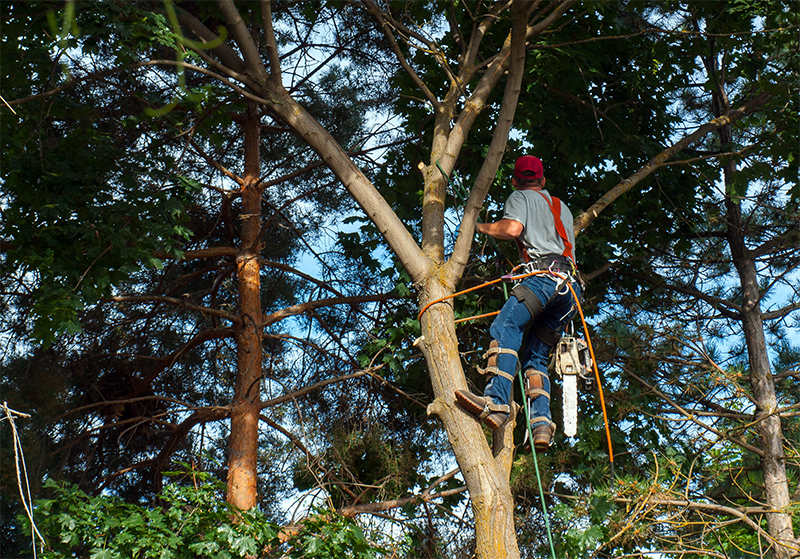
When pruning in the spring, concentrate on branches that fit the following descriptions.
Here are the branches you should prune:
- Dead or brittle branches that aren’t budding
- Storm-damaged limbs that are cracked, split, or hanging
- Crossed or rubbing branches that wound each other
- Limbs over structures like roofs, gutters, AC units, and walkways
- Suckers and water sprouts that grow straight up from the main branches or at the base
- Branches with obvious pest damage or cankers (sunken, discolored bark lesions)
You don’t want to give your tree a dramatic haircut. You just want to remove specific problem branches. This will improve airflow through the canopy, reduce disease pressure, and remove the limbs most likely to fail in a summer storm. And it won’t stress the tree by over-pruning.
Make sure to always trim just outside the branch collar — the slightly swollen ring of tissue where the branch and trunk meet. Flush cuts remove the collar and get rid of the tree’s ability to correctly seal the wound. Leaving a stub is just as bad, as it withers and creates a way for decay to enter.
Spring is Not Pruning Season for Some Trees
When it comes to pruning, timing is everything for some species. In New Jersey, pruning oak trees after April 1st greatly heightens the risk of oak wilt, a beetle-spread fungal disease that becomes active when the weather warms. Elm trees are at a similar risk for Dutch elm disease. Spring-blooming trees like dogwoods, redbuds, and magnolias should only be pruned right after they bloom — pruning before they bloom removes the buds they’ve been growing all winter.
The Safe Amount to Prune at One Time
It’s generally accepted that you shouldn’t cut more than 25% of a tree’s live canopy in one season. If you cut more than this, the tree becomes stressed and its energy reserves are depleted, which can lead to excessive water sprout growth. Water sprouts are thin, weak branches that grow quickly as a result of over-pruning.
Even a 25% change is significant for large, mature trees. If a tree requires major structural work, it’s often better to spread that pruning over two or three seasons instead of doing it all at once.
If you’re unsure, it’s better to remove less. A skilled tree surgeon can evaluate the tree’s health and create a step-by-step pruning plan that enhances the structure without harming the tree’s health.
Is Your Tree Dead or Just Slow to Leaf Out?
One of the most common questions homeowners in NJ ask in the spring is whether their tree is dead or just slow to leaf out. The answer isn’t always clear-cut. Some species, like oaks, hickories, and black walnuts, are late leafers. They may not show a lot of growth until mid-May in New Jersey.
Simple Tests Including the Scratch Test
- Lightly scratch a small section of bark on a small twig or branch using your thumbnail or a pocket knife.
- If the tissue beneath the bark is green or white, the branch is alive and growing.
- If the tissue is brown, dry, or brittle, that section is dead. However, test multiple spots before deciding the entire tree is dead.
- Start from the branch tips and work your way towards the trunk. If you find green tissue closer to the trunk, the tree is likely alive and just slow to push growth outward.
The scratch test is most effective on smaller branches and twigs, not on thick bark where it is difficult to get a clear reading. For large-diameter limbs or the trunk, look for other signs such as the flexibility of small twigs (living wood bends before it breaks), visible buds that are plump and intact, and whether any sections of the canopy are showing early growth.
Even seasoned homeowners can be thrown off by New Jersey’s late springs. A tree that appears completely dormant in early April may be perfectly healthy — especially if the trees of the same species in your neighbors’ yards are also slow to leaf. Make sure to compare before you make a decision.
By mid-May, if you’ve examined several sections of the tree’s canopy, looked for buds, and still can’t tell if the tree is alive, it’s time to hire a certified arborist. An arborist can evaluate the tree’s cambium health, root zone condition, and overall structure, which are all things a homeowner can’t do from the ground.
Indications That a Tree is Beyond Saving
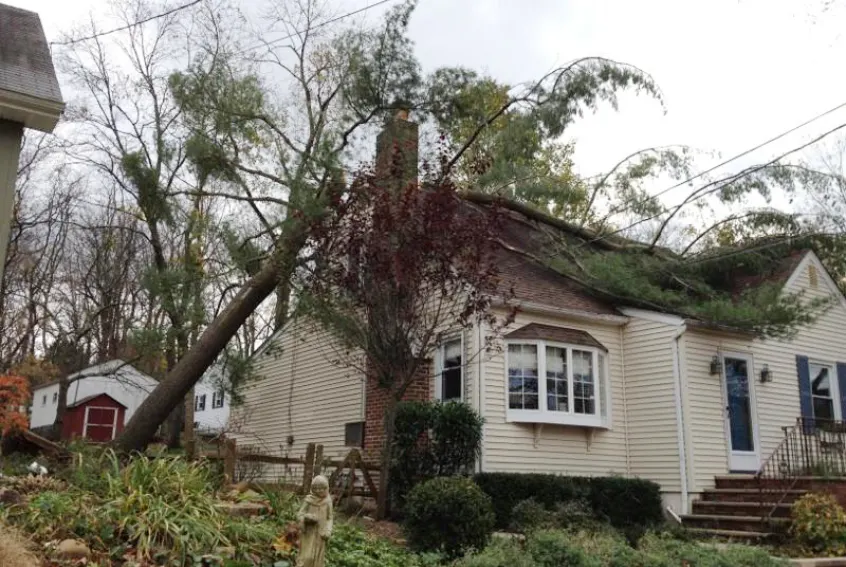
A tree that is completely dead — as verified by the scratch test at various locations — and has no visible bud growth by late spring is a sure sign that the tree is dead. If a tree has not sprouted leaves by mid-May in New Jersey, it is probably not going to recover.
When the structural damage reaches the heartwood, which is the dense inner core of the trunk, it’s another strong sign. If a cavity, crack, or section of decay extends into the center of the tree, the structural integrity is already compromised even if the tree is technically still alive. A living tree with a hollow center is not a safe tree.
Root failure is a problem that is difficult to bounce back from. If a large part of the root system has decayed, been cut off, or lost touch with solid soil, the tree can’t dependably hold up its own weight. No amount of pruning or fertilizing can alter this fact.
When to stop trying to save a tree:
• Scratch test returns brown, dry tissue at multiple canopy locations by late May
• Bark is sloughing off the trunk in large sections
• Cavity or decay has reached the center of the trunk
• Root plate is visibly lifting or soil is cracking around the base
• More than 50% of the canopy is dead or missing
• The tree is leaning significantly and the lean has increased since last season
When a Tree Needs to Come Down
Every homeowner wants to keep their mature trees — they provide shade, privacy, and real property value. However, holding onto a tree that has become structurally unsafe doesn’t just risk property damage. It risks lives. The decision to remove a tree should be based on risk, not sentiment.
Fortunately, spring provides the best opportunity to evaluate which trees are truly healthy and which ones have declined beyond the point of responsible care. Making this decision in April or May — before storm season — is always preferable to making it in August when a falling branch damages a fence, a car, or a roof.
Six Warning Signs That Indicate Removal
Keep your eyes peeled for any of the following during your spring walkthrough:
The following are some signs that your tree may need to be removed:
- Large dead sections throughout the canopy: This is a sign that more than half of the crown is dead or not producing leaves.
- Deep trunk cracks or splits: These can extend through multiple layers of wood and are a sign of serious damage.
- Significant cavities: Especially those at the base of the tree or at major branch unions, these can be a sign of internal decay.
- Visible fungal growth: If you see this on the trunk or root flare, it’s a sign of advanced internal decay.
- Root plate failure: This can be seen in the soil lifting, cracking, or roots visibly pulling free on one side of the tree.
- A new or worsening lean: Especially if combined with any of the above symptoms, this can be a sign of a serious problem.
However, it’s important to remember that one red flag doesn’t always mean your tree needs to be removed immediately. The context is important. For example, a small cavity on an otherwise healthy tree in an open yard is different from the same cavity on a tree hanging over a bedroom. A certified arborist can evaluate the risk in context and give you an honest recommendation, rather than a blanket answer.
Why Spring Is the Best Time to Schedule Removal
Spring is the best time to schedule tree removal because it is before the rush. By June, tree companies in New Jersey are overwhelmed with storm damage calls and non-emergency removal requests are delayed for weeks, sometimes even months. If you book in March or April, you can schedule faster, have more flexibility with timing, and often get better prices.
There is also a practical safety benefit. Getting rid of a tree before it is fully leafed out means there’s less weight in the canopy, less wind resistance during the job, and a clearer view of the tree’s structure for the crew doing the work. The heavy foliage of summer adds a lot of weight to limbs that are already compromised, making removal more complicated and, in some cases, more hazardous.
- Before surrounding vegetation fills in, it’s easier to access the tree
- Rigging is simpler and safer due to lighter canopy weight
- There’s a full growing season ahead to replant, regrade, or redesign the space
- Before storm season demand spikes, there’s a shorter wait time
If you’re unsure whether a tree needs to be removed, a spring inspection is the best next step. This allows for an honest assessment when the tree is easiest to evaluate, and provides time to make a considered decision instead of a reactive one.
What About the Stump and Roots After the Tree is Gone?
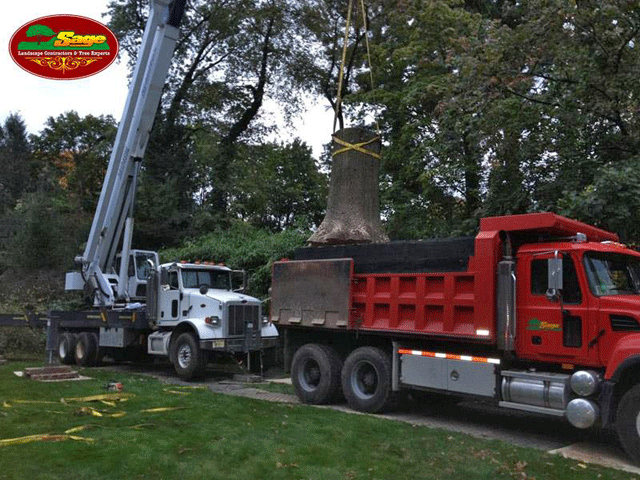
When a tree is removed, it’s just the trunk and the branches that are taken away, not the stump. Stump grinding is usually a different service, and it’s a good idea to know what you’re getting into before the workers show up.
After a Tree is Removed, What Are Your Stump and Root Options?
Grind the Stump: Using a mechanical grinder, the stump is ground down 6 to 12 inches below grade. The remaining wood chips can be used as mulch or removed. The root system stays in place and decomposes naturally over the years.
Remove the Entire Stump and Major Roots: The entire stump and major roots are excavated. This is more disruptive to the surrounding area but necessary if you’re planning to build, pave, or replant a large tree in the same spot.
Leave the Stump As It Is: An option if the stump is in an out-of-the-way location. Be aware that some species will continue to send up shoots from the root system for several seasons.
Grinding is the most common choice for residential properties in New Jersey. It’s quick, relatively inexpensive, and leaves the area ready for loam and seed within a day. If you’re planning to put a new tree in the same location, discuss root zone clearance with your arborist — some species have aggressive root systems that can interfere with new plantings if not properly managed.
No matter what you decide, it’s crucial to discuss your stump removal options with the tree service company right from the start. It shouldn’t be an afterthought once the tree is already down. Cost, access to equipment, and site preparation all play a role, and it’s much simpler to plan ahead than to arrange for a second crew visit later.
Tasks You Can Handle vs. When to Contact a Professional
There’s a distinct and crucial difference between spring tree care a homeowner can safely manage and jobs that truly need a skilled professional with the correct tools. Recognizing this difference isn’t about being overly careful — it’s about preventing a routine task from becoming a crisis.
The basic rule of thumb is simple: if you can do it safely from the ground using simple hand tools, then it’s fine to do it yourself. However, if you need to use a ladder or a chainsaw, or if you’re working near a building, the risks suddenly increase significantly. That’s when it’s time to call in the professionals.
Safe Spring Tree Care Tasks for Homeowners to Do Themselves
Most homeowners can safely rake up winter debris and fallen branches from around the base of trees, apply mulch to the root zone, clear out dead leaves from shrub beds, and snip off small dead twigs that can be reached from the ground with hand pruners. These tasks are low-risk, genuinely helpful for tree health, and don’t require any special training. If you’re trimming anything, keep cuts clean and avoid tearing the bark — a sharp pair of bypass pruners makes a significant difference over an old, dull blade.
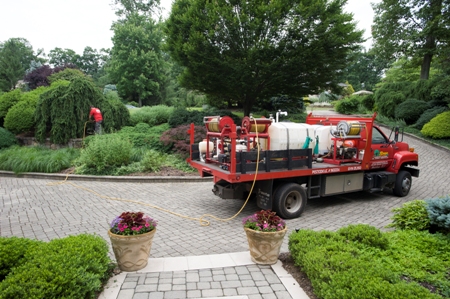
Work That Should Always Be Done By a Licensed Tree Expert
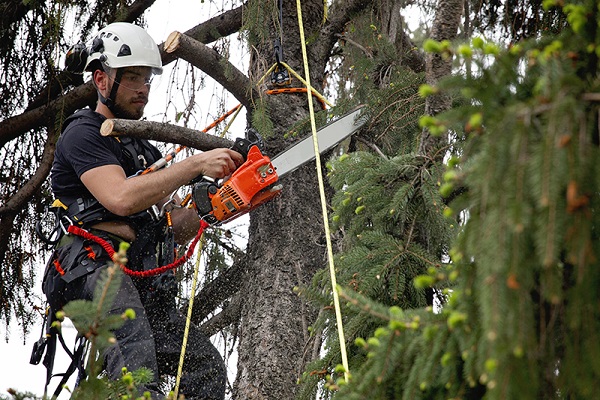
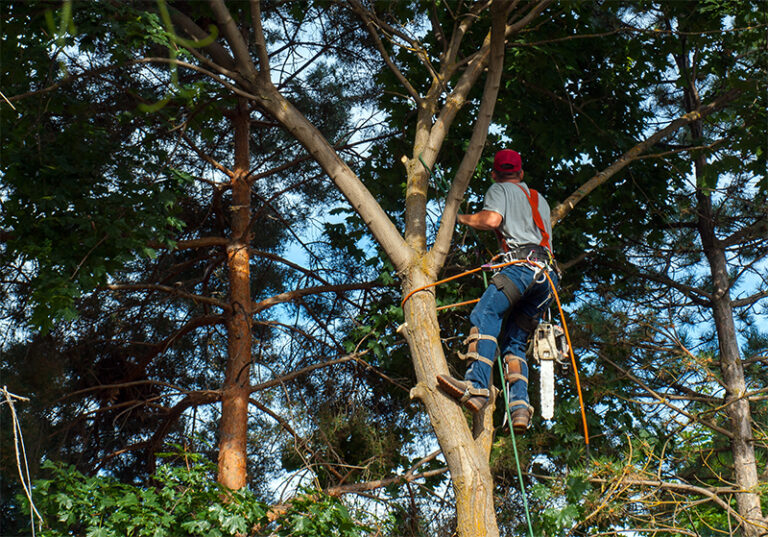
Pruning that requires a ladder or climbing equipment, any work involving a chainsaw, branches over 2 inches in diameter, any limb near power lines, and the removal of any tree that has structural problems — these are all jobs that should be done by a professional. New Jersey has tree experts who are licensed through the state’s Department of Environmental Protection, and hiring a licensed professional also ensures that there is proper liability coverage if something goes wrong on your property. It’s not just about skill — it’s about having the right insurance, equipment, and training for work that can have serious consequences if it goes wrong.
Proper Mulching and Fertilizing Techniques for Trees in the Spring
Mulching is a high-impact, low-cost way to help your trees thrive in the spring, but it’s also one of the most common things homeowners do incorrectly. When done right, a proper mulch ring can help retain moisture, regulate soil temperature, suppress weeds, and slowly feed the soil as it breaks down. However, when done incorrectly — such as piling it against the trunk in the classic “mulch volcano” shape — it can trap moisture against the bark, promote rot, attract pests, and can even girdle the tree over time.
How to Properly Mulch Around a Tree
When mulching, spread it in a broad, flat circle that extends 3 to 4 feet from the trunk, or further for bigger trees. The mulch should be 2 to 4 inches deep. Make sure to leave a clear space of 2 to 3 inches between the mulch and the trunk. This is important because the bark needs to breathe, and if it’s constantly in contact with moisture, the tree can quickly become rotten.
Opt for organic mulch options such as shredded hardwood, wood chips, or pine bark instead of dyed rubber mulch or decorative stone. These organic materials decompose over time, enhancing soil structure and promoting beneficial microbial activity in the root zone. It’s best to replenish your mulch layer each spring instead of just adding new mulch on top of old, compacted layers. If the existing layer is already 4 inches deep, rake it loose before adding anything new.
Is Fertilizing Your Trees in Spring Necessary?
Generally, healthy trees that are growing in reasonably good soil do not need routine fertilization. New Jersey’s native soils, especially in areas with established deciduous tree populations, tend to have adequate nutrient levels when organic matter is well managed. However, trees that show signs of nutrient stress — such as pale or yellowing leaves, reduced annual growth, or thin canopy density — may benefit from a slow-release fertilizer applied in early spring before leaf-out. If you’re not sure, a soil test from your county’s Rutgers Cooperative Extension office will tell you exactly what’s present and what’s deficient before you add anything.
What New Jersey Homeowners Need to Know About Tree Removal Regulations
In New Jersey, tree removal regulations can vary greatly from one municipality to the next. Some towns require permits for the removal of trees with a certain trunk diameter, even if the tree is on private property. Other towns have ordinances in place to protect mature trees, street trees, or trees located in designated riparian buffer zones near bodies of water. Before you remove a significant tree, make sure to check with your local municipal offices. A quick phone call to the town’s zoning or construction department can save you from fines that can range from a few hundred dollars to a few thousand dollars depending on the municipality. A licensed New Jersey tree expert will generally be familiar with local permit requirements and can help guide you through the process as part of the job.
Bring in an Expert Before the Storms Hit
One of the best things you can do for your mature trees as a New Jersey homeowner is to get a professional inspection in the spring. A certified arborist will be able to spot structural problems, signs of pests, and diseases that you wouldn’t be able to see from the ground. They can also give you a prioritized list of what needs to be done before the summer storms start to stress out your trees. Don’t wait until a branch falls on your roof to find out what your trees needed back in April.
Commonly Asked Questions
Is it a good idea to remove a tree in New Jersey during the spring?
Yes — spring is a great time to schedule non-emergency tree removal in New Jersey. The tree is lighter before the full canopy leafout, the crew can see the structure more clearly, and it’s generally easier to get to the tree before the surrounding vegetation grows in. You also avoid the summer rush that comes after storm season, which usually means shorter wait times and more flexible scheduling. If you book in March or April, you’ll have the entire growing season afterward to replant, regrade, or landscape the area.
How can I tell if my tree is dead or just late to bloom?
The most dependable way to determine this is by doing a scratch test: lightly scratch the bark on a small twig using your thumbnail or a small knife. If the tissue underneath is green or white, the branch is alive. If the tissue is brown, dry, or crumbly, that section is dead. To get an accurate assessment, perform this test in several areas across the canopy — start at the tips of the branches and work your way toward the trunk to see where the live tissue starts and stops.
When you do the scratch test and find green tissue near the trunk but dead tips throughout the tree, it might just be that your tree is stressed, not dead. Wait until mid-May before making a final decision — late-leafing trees like oaks, hickories, and black walnuts often take four to six weeks longer than maples and ornamentals to leaf out. If there’s still no sign of life by mid-May, you should have a certified arborist take a look before you decide to remove the tree.
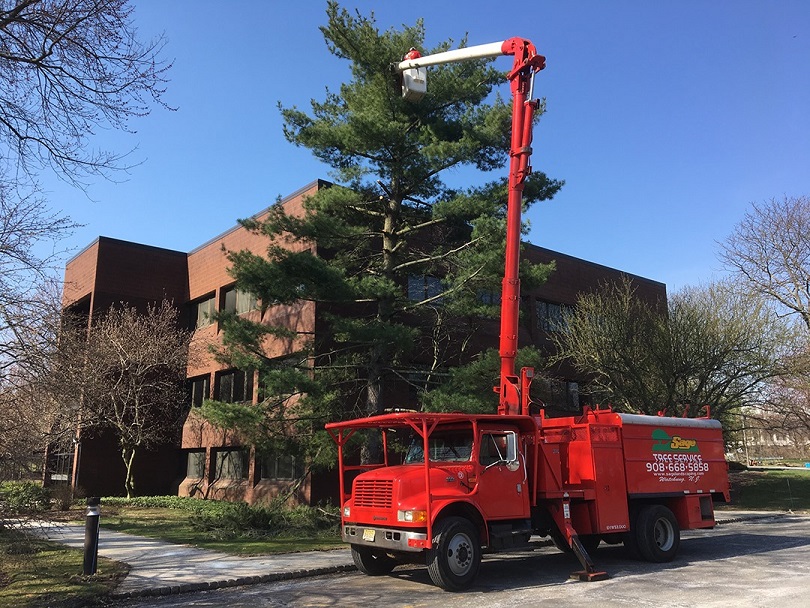
Is it safe to prune my trees in the spring?
- Small dead twigs and branches that you can reach safely from the ground with hand pruners — yes.
- Branches under 1 inch in diameter on low-growing shrubs or young trees — generally fine.
- Anything requiring a ladder, a chainsaw, or working near a structure — leave it to a licensed professional.
- Oaks and elms — avoid pruning after April 1st due to oak wilt and Dutch elm disease risk.
- Spring-flowering trees like dogwood and magnolia — prune immediately after flowering, not before.
The main consideration is always safety — yours and the tree’s. Using sharp, clean tools is as important as knowing what to cut. Bypass pruners make cleaner cuts than anvil-style pruners, and clean cuts seal over faster, reducing disease entry points.
Even the most seasoned homeowners can sometimes misestimate the weight of a branch and the direction it will fall. A branch that seems like it can be handled from the ground can act in unexpected ways once it’s partially cut, particularly if it’s under strain from growing at an odd angle or from other branches. When there’s any uncertainty, the expense of a professional pruning visit is almost always less than the expense of repairing any damages.
Should you decide to prune on your own, never top a tree. Topping, which is the act of cutting the main leader or large scaffold branches back to stubs, is one of the most harmful things you can do to a tree’s long-term health and structure. It causes weak, fast-growing water sprouts, removes the tree’s natural form, and creates large open wounds that invite decay.
Before you begin any extensive work on your mature trees, it’s a good idea to schedule a professional evaluation. Even if you’re thinking about handling some of the maintenance yourself, it’s helpful to know which branches need to be dealt with first and which ones can be left alone. This will give you a clear plan of action and prevent you from unintentionally causing damage with your pruning efforts.
Do I need a permit to remove a tree in New Jersey?
It depends on your specific municipality. New Jersey does not have a single statewide tree removal permit requirement, but many individual towns and townships do — and the rules vary widely. Some municipalities require permits for any tree above a certain diameter (often 6 to 10 inches at chest height). Others have protections specifically for certain species, heritage trees, or trees within buffer zones near streams and wetlands. Towns in Morris County, Bergen County, and Monmouth County, among others, have active tree preservation ordinances that carry real fines for violations.
Before you get started, give your local zoning or building department a quick call. It’s a five-minute task that could save you from a hefty fine. If you’re working with a licensed New Jersey Certified Tree Expert (CTE), they’ll usually know your local requirements and can guide you through the removal process. This is a credential given by the NJ DEP.
What’s the safe distance between my house and a tree?
It’s not just about how far the tree is from your house. You also have to consider how tall the tree is, how healthy it is, and what it could fall on. A healthy tree that’s 20 feet away from your house is less of a concern than a half-rotten tree that’s 30 feet away. You have to think about how tall the tree is compared to what it could fall on, not just how close it is to your house. For expert advice, consider reaching out to us at Sage Landscaping Services in New Jersey.
Most tree care professionals agree that if a tree is as tall as the distance between it and a building, it should be closely watched. This means that if you have a tree that’s 50 feet tall and it’s within 50 feet of your house, you should have it inspected regularly, especially if it’s getting older or if there are any signs of structural changes. Trees that are directly over your roof, bedroom, or main outdoor living areas should be given the most attention, no matter how big or small they are.
Just because a tree is close to your home doesn’t mean it’s a risk, as long as it’s healthy and well taken care of. However, if that same tree has any of the issues we talked about before, like decay, root problems, or a lean that’s getting worse, then how close it is to your house definitely matters when deciding how quickly you need to do something about it. If you’re not sure, getting a professional to assess the risk can give you a clear, written record of what the situation is.
At Sage Landscaping, we offer expert spring tree inspections, pruning, and removal services throughout New Jersey. We aim to help homeowners safeguard their properties and ensure their trees are in good health before the storm season hits.