Chlorine Splash & Chemical Drift Tolerance for Pool Hedges | NJ Contractor
Think chlorine won’t damage your poolside hedges? Those yellowing leaves and stunted growth tell a different story. Discover which hedge species actually survive pool chemicals—and the crucial spacing mistake that could be killing your plants right now.
Key Takeaways
- Pool chemical splash and drift can cause yellowing leaf margins, stunted growth, and plant decline in sensitive hedge species
- Skip Laurel and select Arborvitae varieties are suitable for poolside placement with proper spacing, while ornamental grasses like Pampas provide exceptional resistance
- Strategic placement with 3-6 foot buffer zones (up to 10 feet for sensitive species) minimizes direct chemical exposure
- Regular rinsing and proper maintenance schedules can help extend hedge life around pool environments
- Professional installation ensures optimal plant selection, spacing, and long-term success for chlorine-tolerant privacy screening
Creating privacy around your Central New Jersey pool shouldn’t mean sacrificing plant health to harsh pool chemicals. The reality is that chlorine splash, chemical drift, and salt water can devastate even the hardiest landscaping if you don’t choose the right species or placement strategy.
Chemical Damage Signs Every Pool Owner Recognizes
The telltale signs of chemical damage appear first on new growth – yellowing or browning leaf margins that start small but spread quickly. Stunted growth becomes noticeable within a season, and plants that once thrived begin showing overall decline. The damage intensifies during summer months when pool chemical levels run highest and wind patterns carry drift further from the water.
Direct splash zones suffer the worst impact, but even plants positioned several feet away can experience chemical burn from airborne particles. The damage compounds over time, weakening plants’ natural defenses and making them susceptible to secondary problems like pest infestations and disease.
Understanding these early warning signs helps pool owners act quickly to protect their landscaping investment. Professional landscape contractors specializing in poolside plantings can assess existing damage and recommend targeted solutions before minor issues become major replacements.
Proven Chlorine-Tolerant Hedge Species for NJ Pools
1. Ornamental Grasses: Pampas and Maiden Grass
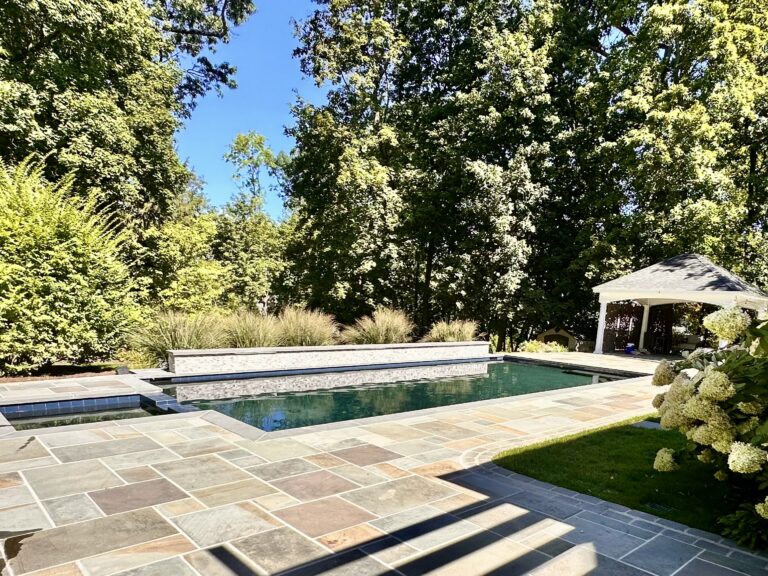
Ornamental grasses top the list for chemical tolerance around pools. Pampas grass (Cortaderia selloana) and Maiden grass (Miscanthus sinensis) demonstrate exceptional resistance to chlorine splash and salt spray. These hardy grasses naturally resist chemical damage better than most woody plants.
These grasses create stunning vertical screens reaching 6-10 feet at maturity. They provide excellent privacy during growing season and maintain attractive dried plumes through winter. The natural movement adds visual interest that rigid evergreen hedges can’t match.
2. Suitable Evergreens: Skip Laurel and Select Arborvitae
Skip Laurel (Prunus laurocerasus ‘Schipkaensis’) offers reliable performance in poolside conditions with proper placement. Its glossy broadleaf evergreen foliage provides formal screening year-round, growing 2 feet annually to reach 10-18 feet. The species tolerates both full sun and partial shade conditions common around pool areas.
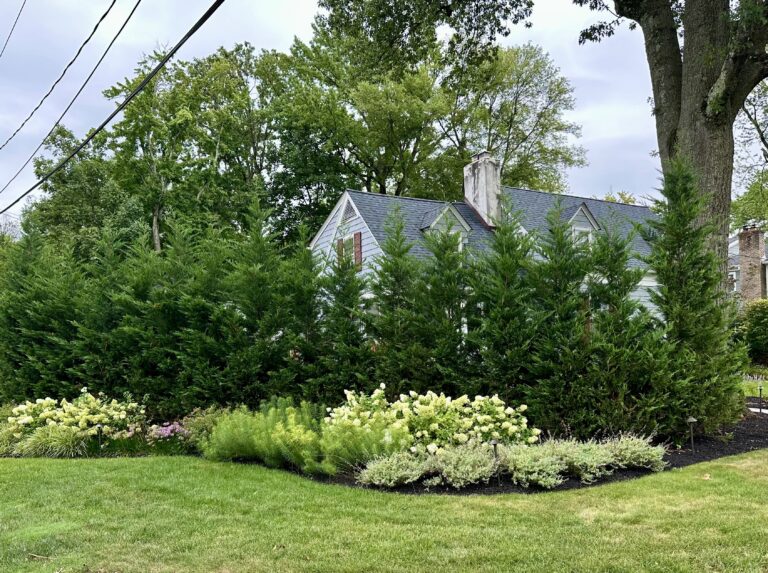
Among Arborvitae varieties, ‘Green Giant’ and ‘Emerald Green’ are suitable for poolside placement when positioned beyond direct splash zones. Green Giant grows rapidly (3-5 feet per year) creating substantial privacy screens, while Emerald Green offers compact growth perfect for smaller pool areas with space constraints.
3. Regional Climate Considerations for Zone 7a
Central New Jersey’s Zone 7a climate allows broader plant selection than northern regions, but poolside chemicals create unique stress factors. Winter salt damage from de-icing compounds near pool equipment areas compounds chemical exposure from summer pool operations. Selecting plants rated for Zone 6b provides extra cold hardiness as insurance against chemical stress weakening winter tolerance.
Native species like American Holly (Ilex opaca) and Eastern Red Cedar (Juniperus virginiana) demonstrate superior regional adaptation. These natives support local wildlife while providing the privacy screening pool owners demand.
Strategic Placement to Minimize Chemical Exposure
Recommended 3-6 Foot Buffer Zone (up to 10 feet for sensitive species)
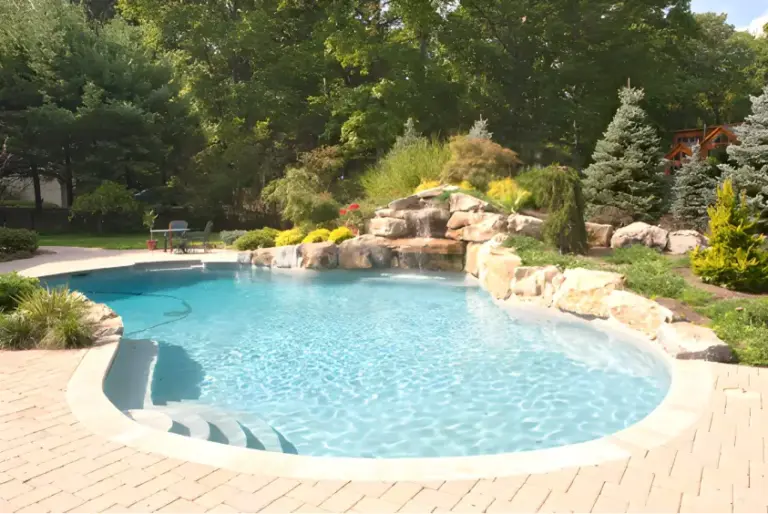
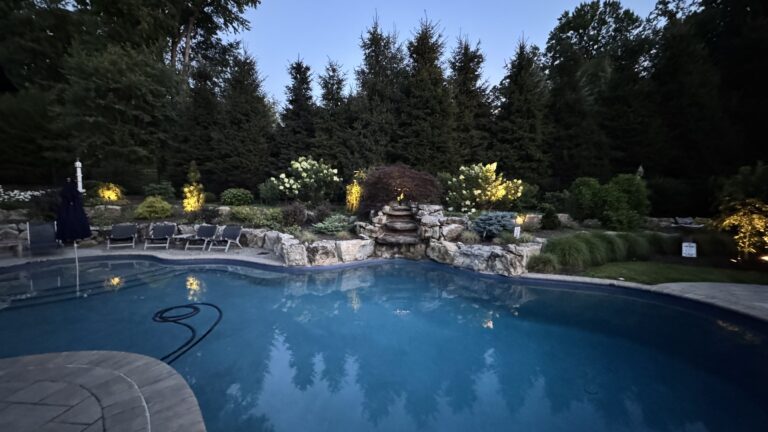
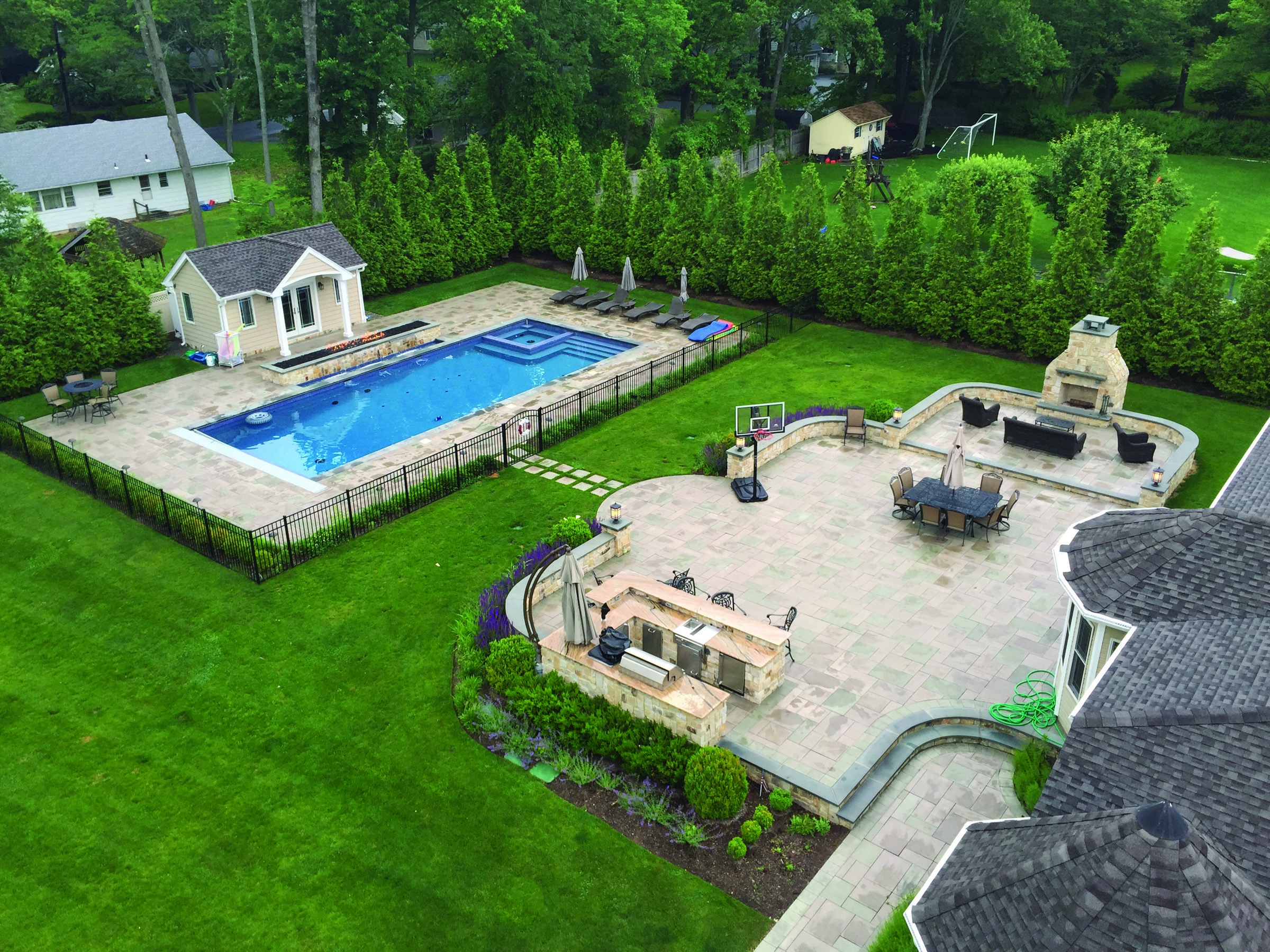
The most effective strategy for protecting hedges involves creating adequate buffer space between pool edges and plantings. A minimum 3-foot buffer works for highly tolerant species like ornamental grasses, while moderately sensitive evergreens require 6-foot spacing. Sensitive species need 10-foot buffers or more to avoid direct chemical contact.
This spacing also provides practical benefits – room for pool maintenance equipment, easier access for plant care, and space for hardscaping elements like walkways or storage. The buffer zone can incorporate decorative elements like mulched beds, decorative stone, or low groundcovers that bridge the visual gap between pool and hedge.
Wind Direction and Drift Patterns
Prevailing wind patterns dramatically affect chemical drift distribution around pools. Understanding seasonal wind patterns helps determine optimal hedge placement and species selection.
Plants positioned downwind from pools experience more chemical exposure than those on the upwind side. Strategic landscape design accounts for these patterns, placing more tolerant species in high-exposure areas while reserving sensitive plants for protected locations. Consider installing temporary wind barriers during peak pool season to further reduce chemical drift.
Maintenance Practices That Extend Plant Life
1. Regular Rinsing to Wash Away Chlorine Splashes and Dilute Soil Residue
Weekly rinsing with fresh water dramatically reduces chemical buildup on foliage and in surrounding soil. Early morning rinses work best, allowing plants to dry before evening moisture promotes fungal problems. Focus water application on leaf surfaces and the root zone, diluting accumulated chemicals before they cause permanent damage.
During peak pool season, increase rinsing frequency for plants within 10 feet of the pool. Use soaker hoses or drip irrigation systems to provide consistent soil dilution without wasting water. This simple maintenance practice can help significantly extend hedge lifespan in chemical-exposed locations.
2. Proper Access Spacing for Pool Equipment
Pool equipment requires regular servicing, and cramped access paths often result in plant damage or removal. Plan hedge spacing to accommodate equipment replacement, cleaning, and repairs. Heat pumps, filters, and chemical storage areas need clear access paths that won’t interfere with mature hedge growth.
Consider the full-size dimensions of replacement equipment when planning permanent plantings. What fits today might not accommodate larger, more efficient units in future upgrades. Flexible landscape design prevents costly plant removal during equipment updates.
3. Seasonal Monitoring and Care Schedules
Spring monitoring focuses on winter damage assessment and early chemical burn detection. Summer care emphasizes regular rinsing and stress monitoring during peak pool use. Fall preparation includes deep watering to help plants enter dormancy with adequate moisture reserves.
Document plant performance annually with photos and notes. This information helps identify declining specimens before they fail completely, allowing for proactive replacements. Regular soil testing in the root zone reveals chemical accumulation levels and guides remediation efforts.
Professional Installation Ensures Long-Term Success
Professional landscape contractors bring essential expertise in soil preparation, proper spacing, and species selection for challenging poolside conditions. They understand local soil conditions, drainage patterns, and microclimate factors that affect plant establishment and long-term health.
Experienced installers also coordinate with pool contractors and local authorities to ensure plantings comply with safety regulations while achieving privacy goals. They provide ongoing maintenance guidance and can establish care schedules that extend hedge life significantly beyond typical DIY installations.
The investment in professional installation pays dividends through reduced plant replacement costs, faster establishment, and superior long-term performance in chemically challenging pool environments.
For expert guidance on chlorine-tolerant hedge selection and professional installation around your Central New Jersey pool, visit Sage Landscape Contractors & Tree Experts to discuss your privacy landscaping needs.